
Will the Ontario Food Terminal Expansion Actually Lower Your Grocery Bill?

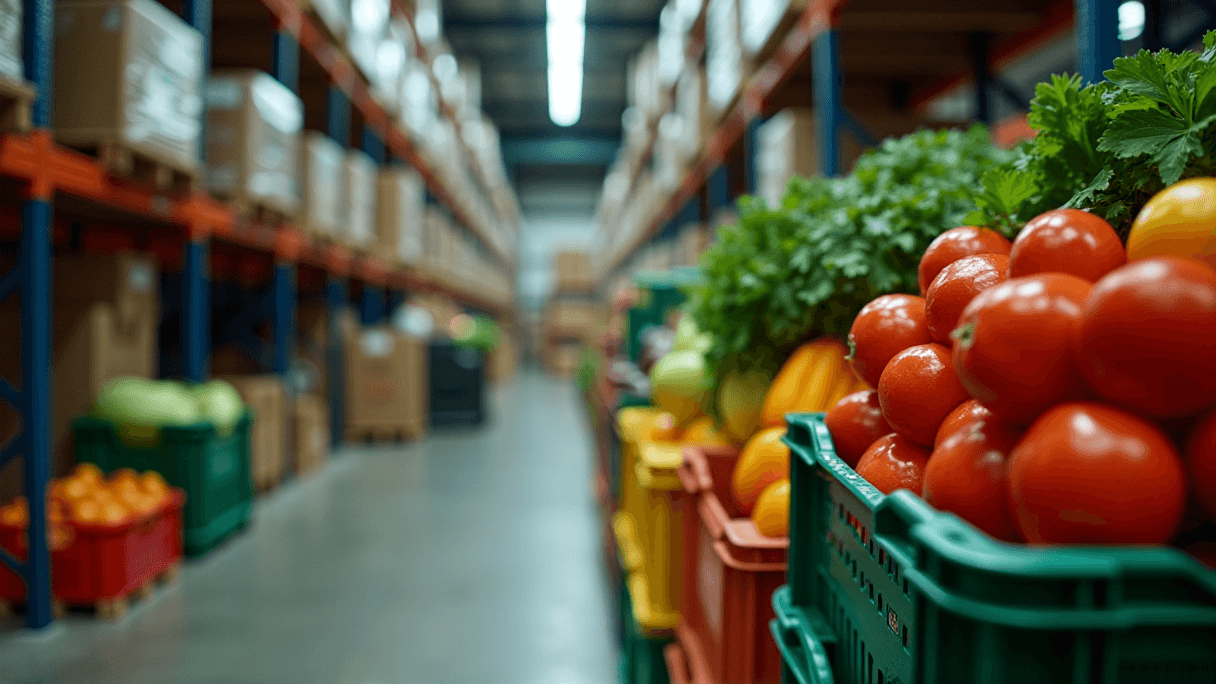
AI-generated image · Bay Street Wire
The federal government is betting $3 billion on food security, but experts warn that increased competition may stabilize prices rather than slash them.
For the average shopper, the hope is simple: more space at the wholesale level equals lower prices at the checkout. As the federal government rolls out Canada’s first-ever National Food Security Strategy, as CBC Toronto first reported, a centerpiece of the plan is the expansion of the Ontario Food Terminal (OFT) in Etobicoke.
Prime Minister Mark Carney has announced a federal investment of more than $3 billion over the next 10 years to increase domestic food production and affordability. A significant portion of this—$1 billion—is dedicated to the new Food Link Fund, designed to bolster food hubs and terminals. The roadmap includes expanding the OFT by the end of this year, alongside the creation of two new terminals and the expansion or establishment of 10 smaller food hubs by the end of 2028.
From the perspective of those on the ground, the expansion is a matter of survival and efficiency. Hutch Morton, whose family wholesale business specializes in packaged salads and berries, describes the OFT as the "lifeblood" of his company and many others in the Toronto community. Morton suggests that any investment connecting growers to retail and food service is a universal benefit, noting that "a rising tide lifts all boats."
For producers like Raymond Den Boer, president of Den Boer Farms in Otterville, Ont., the current lack of space is a direct threat to product quality. Den Boer, who grows roughly 102 hectares of vegetables, reports that overflow often forces him to set up outside. This exposes produce to extreme temperatures that can deter customers or compromise freshness. He believes an expansion would ensure products stay colder and have a longer shelf life.
Retailers are also eyeing the expansion as a way to break supply chain monopolies. Vicky Lee of Little Harvest Market, which operates at The Well, visits the OFT five times a week to source fresh, local produce. Lee told CBC Toronto that more suppliers entering the terminal would increase variety and prevent a single supplier from holding a monopoly on specific products, which she believes would lead to better prices.
However, whether these wholesale efficiencies actually trickle down to the consumer is a point of contention. A more cautious perspective is offered by Sylvain Charlebois, director of Dalhousie University’s Agri-Food Analytics Lab. While he acknowledges that creating these "portals into the marketplace" increases options, reduces waste, and enhances supply chain efficiency, he warns against expecting a price drop.
According to Charlebois, the strategy is more likely to stabilize prices and reduce the volatility of drastic price swings than it is to make food cheaper overall. Citing the persistent problem of food inflation, Charlebois told CBC Toronto that claiming prices will definitively drop is "close to impossible."