
The Long Wait: Toronto's Market Slowdown is a Lateral Move for the Squeezed

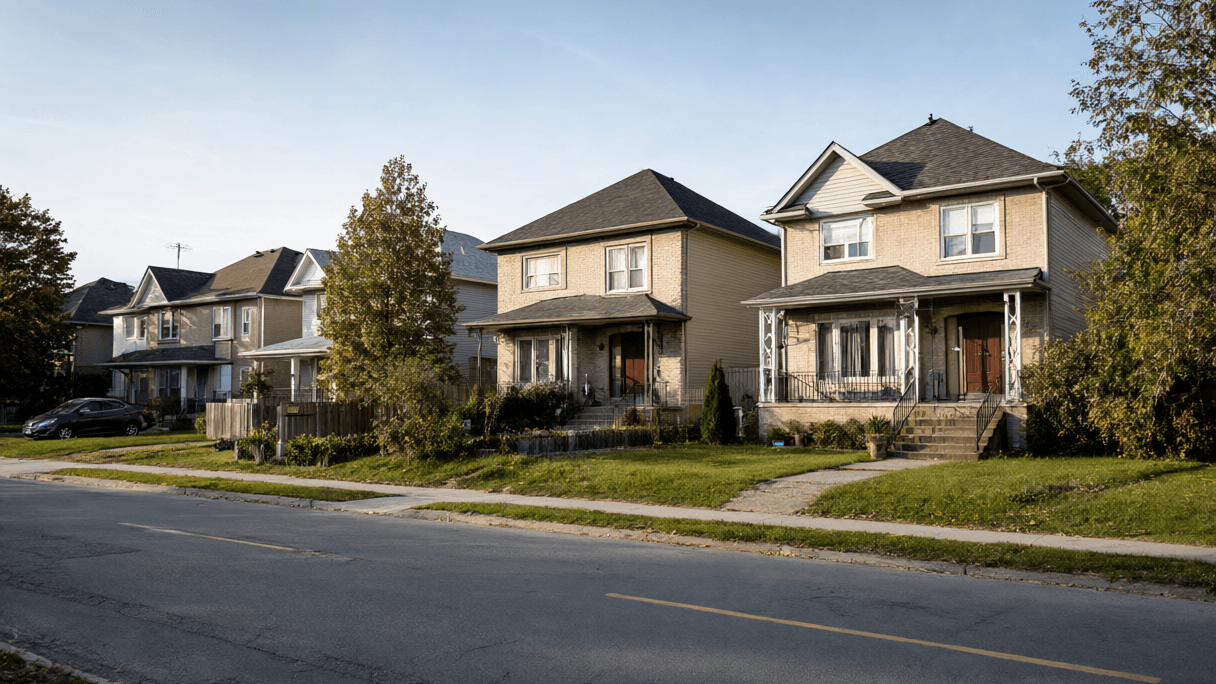
AI-generated image · Bay Street Wire
Homes are sitting longer on the market than they did during the 2022 peak, but for first-time buyers and renters, the 'buyer's market' remains a distant dream.
For anyone tracking the Greater Toronto Area (GTA) real estate market, the most visible change lately isn't necessarily the price tag—it's the calendar. As BlogTO first reported, the frantic, overnight bidding wars of early 2022 have been replaced by a sluggish pace that has sellers waiting weeks, and sometimes months, for a closing.
According to an analysis by the digital real estate platform Wahi, reported by BlogTO, the average number of days homes spend on the market has risen year-over-year. The contrast to the market peak in the first quarter of 2022 is stark. Back then, detached homes were flying off the market in just nine days. By the second quarter of 2026, that average climbed to 25 days—nearly three times the duration of the peak.
Condos are experiencing the most significant drag. Wahi's data shows condos averaged 36 days on the market in Q2 2026, an increase from 32 days during the same period in 2025. In early 2022, these units typically sold in less than two weeks. Ryan McLaughlin, an economist at Wahi, attributes this shift to several macroeconomic pressures, including an ongoing trade war, federal reductions in immigration targets, and a "mass exodus of investors."
From a pocketbook perspective, this slowdown creates a theoretical advantage for buyers. McLaughlin notes that because inventory levels are near historic highs, condo buyers currently have more leverage to negotiate both pricing and conditions.
However, for the average first-time buyer or renter, this "opportunity" is often a lateral move. While detached homes (25 days) and semi-detached homes (which rose from 18 days in Q2 2025 to 20 days in Q2 2026) are taking longer to sell, the baseline of affordability remains the primary hurdle.
This is most evident in the resilience of the townhouse market. Data from BlogTO indicates that townhouses spent an average of 24 days on the market in Q2 2026. McLaughlin explains that townhouses have become a preferred middle ground for first-time buyers who are priced out of detached homes but are unwilling to settle for a condo.
While the "sold" sign is taking longer to appear, the fundamental struggle for housing remains. The market is cooling, but for those still standing on the sidelines, the pace of sales is a secondary concern to the fact that the city remains fundamentally expensive.