
Waste Management Regression: Provincial Pivot to Incineration and Landfills

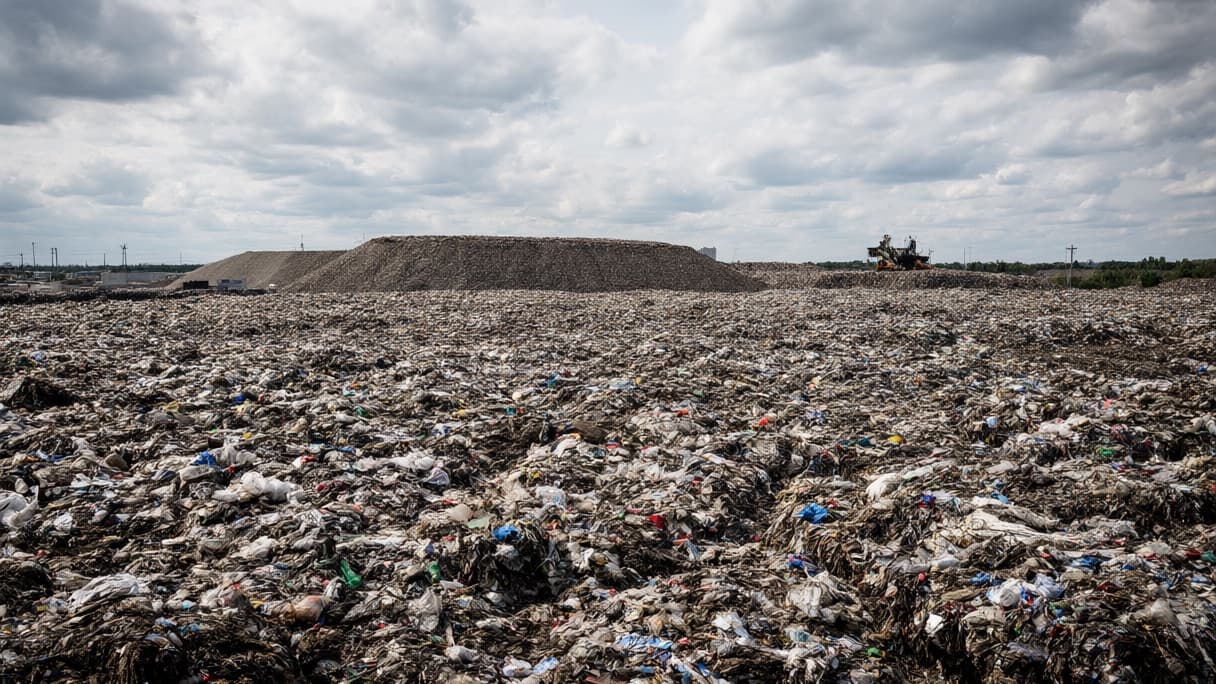
AI-generated image · Bay Street Wire
Environment Minister Todd McCarthy's push for expanded waste capacity as a response to U.S. tariffs threatens long-term sustainability goals.
Ontario is facing a waste crisis that is being met with a policy shift toward the past. As CBC Toronto first reported, Environment Minister Todd McCarthy has signaled a desire to increase the province's reliance on landfills and waste-to-energy incineration, framing the move as a necessary reaction to geopolitical pressure.
According to CBC Toronto, the catalyst for this shift is a recent executive order signed by U.S. President Donald Trump, which places a 50 per cent tariff on trash from Canada. McCarthy warned that if this tariff remains in place, Ontario's landfills could reach capacity within five years. Even without the tariff, McCarthy noted that the province's landfills will be full within 10 years, adding that Ontario has not constructed a new landfill site in two decades.
To accelerate this expansion, the provincial government has tabled the Building Ontario Faster Act. CBC Toronto reports that this omnibus bill aims to streamline the permitting and approval processes across all ministries, specifically targeting new incinerators and landfill sites. While McCarthy has publicly stated that municipalities can decline to host these sites, the legislation tells a different story. The bill seeks to repeal a section of the Environmental Assessment Act that currently mandates municipal support for landfill sites. This follows a pattern of provincial intervention; CBC Toronto notes that in 2025, Bill 5 was passed to exempt a former landfill in Dresden, Ont., from a full environmental assessment despite local opposition.
McCarthy has championed "energy from waste" as a solution, citing the Durham-York Energy Centre in Clarington and Emerald Energy from Waste in Brampton as successful examples. He argues that Europe and Great Britain have embraced incineration due to a lack of landfill space.
However, this approach is being criticized as a regression from sustainable waste reduction. Green Party Leader Mike Schreiner told CBC Toronto that the minister should consult scientists regarding the toxic air emissions produced by incineration and the toxic ash that still requires landfill disposal. Schreiner argued that the government should focus on reducing the volume of garbage entering landfills and protecting the blue box program rather than accelerating waste disposal.
Interim Liberal leader John Fraser has also questioned the government's framing of the issue. Speaking to CBC Toronto, Fraser stated that the government cannot use Donald Trump and tariffs as a blanket excuse to implement policies without providing a proper explanation to the public.
As Toronto's main landfill nears capacity, the province's pivot toward incineration and expanded dumping represents a short-term fix to a trade dispute that may undermine broader environmental objectives.