
Volkswagen Battery Plant Delay Signals Friction in Ontario's EV Strategy

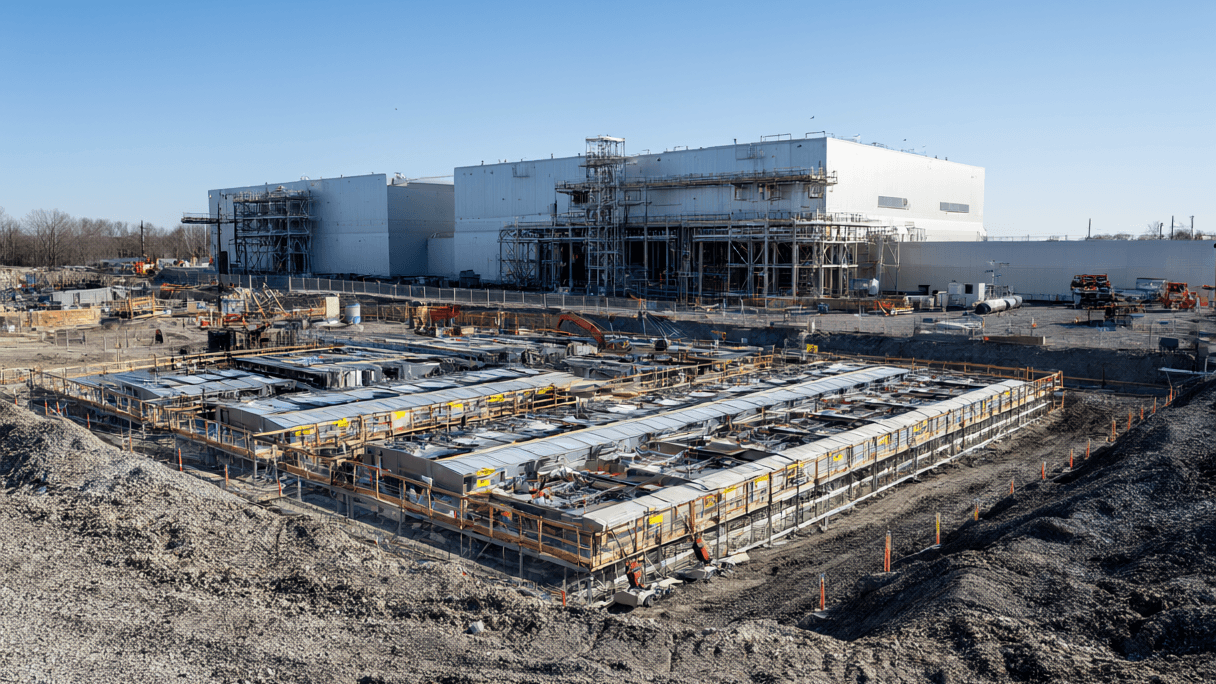
AI-generated image · Bay Street Wire
Production at the St. Thomas facility is pushed to 2029 as cooling demand tests the scale of federal and provincial industrial bets.
The viability of Ontario's aggressive electric vehicle (EV) industrial strategy is under scrutiny following the announcement that production at Volkswagen's PowerCo battery plant in St. Thomas will be delayed by two years. As CBC News first reported, the start of production has been moved to 2029 due to "evolving market demand."
The delay is part of a broader trend where major EV and battery projects across Ontario, British Columbia, and Quebec have been suspended, cancelled, or substantially changed. CBC News reports that some projects have even gone bankrupt as suppliers and automakers grapple with weaker-than-expected demand. This includes the General Motors CAMI Assembly plant in Ingersoll, which was converted to an EV plant in 2022 but saw production suspended in 2025.
Grieg Mordue, a retired McMaster University professor and former Toyota executive, told CBC News that the St. Thomas project highlights issues with scale and location. While PowerCo originally planned to produce batteries for roughly one million EVs annually, Mordue notes that Volkswagen's primary assembly hubs are in Mexico and the southern U.S., raising questions about where such a high volume of batteries will be utilized.
From a fiscal perspective, Innovation, Science and Economic Development Canada stated the federal government has contributed $700 million toward construction. The province of Ontario is responsible for one-third of the $13.2 billion in agreed-upon production subsidies. Mordue suggests the delay could actually lower the final subsidy bill for taxpayers, as incentives are scheduled to decline in 2030 and end in 2032.
Conversely, Joanna Kyriazis of Clean Energy Canada told CBC News that these investments are intended to last 50 to 70 years, framing the current slowdown as "growing pains" in a historic industry shift. This perspective is supported by Statistics Canada data, which shows a 37.4 per cent increase in new battery-only EV registrations during the second quarter of 2026 over the same period a year prior.