
Health-Care Workers Denounce Province's Plan to Remove Toronto Bike Lanes

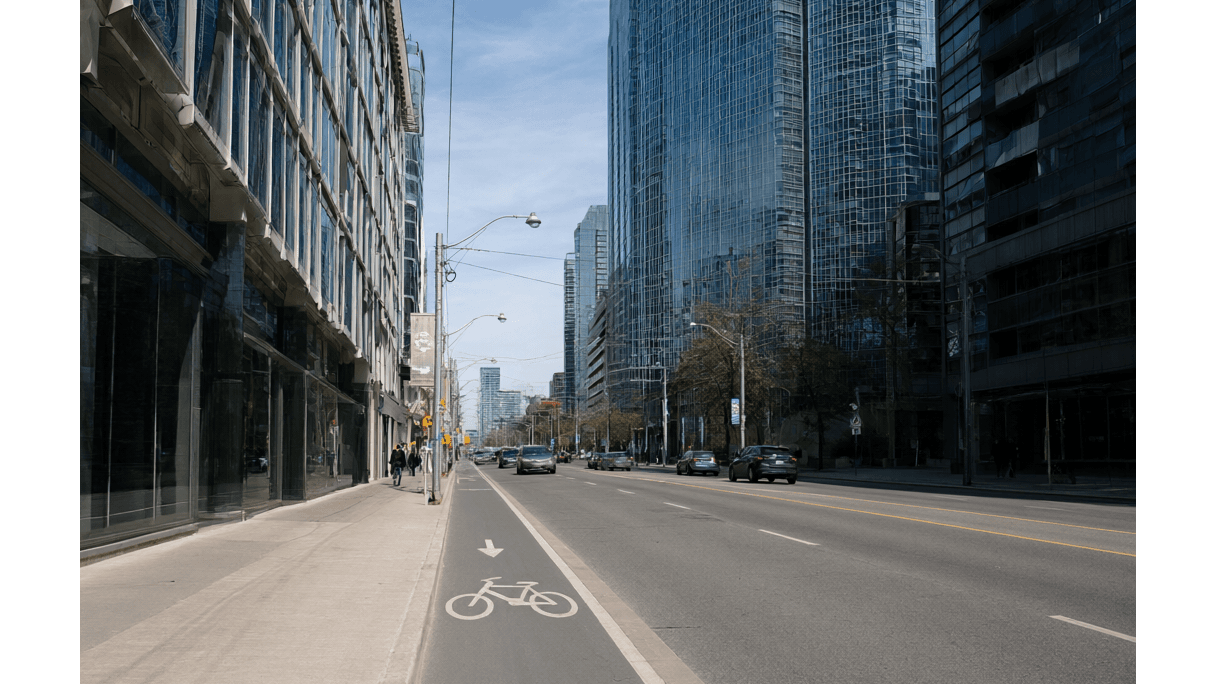
AI-generated image · Bay Street Wire
A coalition of medical professionals warns that Premier Doug Ford's push to restore vehicle lanes on three major Toronto roads prioritizes traffic flow over public safety.
A coalition of Ontario health-care workers is urging the provincial government to reverse its decision to remove protected bike lanes on three of Toronto's busiest roadways, as CBC Toronto first reported. The move comes after the Court of Appeal for Ontario ruled in August that Premier Doug Ford's government is permitted to remove 19 kilometres of cycling infrastructure.
The targeted removals will occur along University Avenue, Yonge Street, and Bloor Street. Legislation enabling these removals passed in 2024, though infrastructure remained in place following a legal challenge by Cycle Toronto.
On Tuesday, medical professionals held a news conference at University Avenue and Gerrard Street to highlight road safety risks. Samantha Green, a Toronto family physician and co-founder of Doctors for Safe Cycling, told CBC Toronto the decision is "not based on evidence," noting that approximately 650 health-care workers have signed a letter requesting the province abandon the plan.
Emergency doctor Edward Xie, a University of Toronto assistant professor, told CBC Toronto that injuries from unsafe infrastructure—ranging from scrapes to lacerated internal organs—further strain overwhelmed emergency departments.
The Ford government maintains the removals are necessary to combat gridlock, which Dakota Brasier, a spokesperson for the Ministry of Transportation, stated costs the provincial economy over $56 billion annually. While the province is investing $210 million in safety measures like roundabouts, CBC Toronto reports that documents from a July 2025 ruling indicated the government knew removing the lanes might not solve gridlock and could increase collisions.