
Toronto's Rental Dip: A Genuine Correction or a Seasonal Mirage?

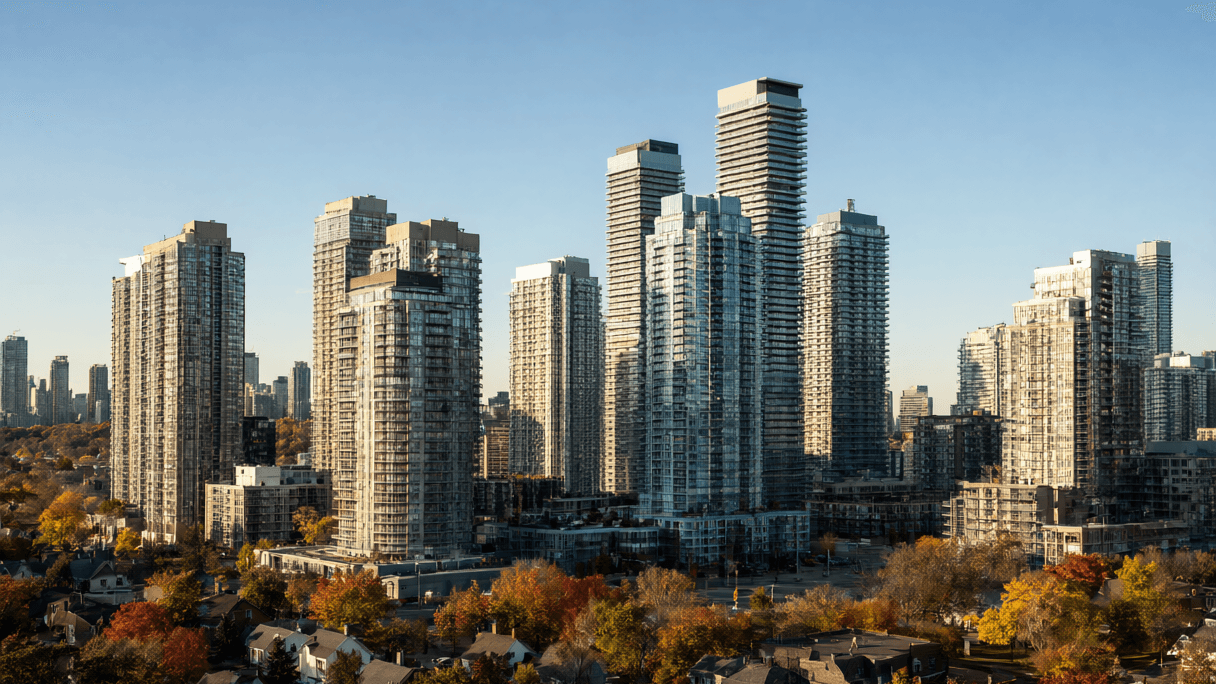
AI-generated image · Bay Street Wire
Opinion: While September's rent drop is the lowest in five years, renters should be cautious about whether this is a permanent shift or a temporary fluke.
For anyone hunting for a place to live in Toronto, the latest data looks like a beacon of hope. But as CBC Toronto first reported, before renters dive back into the market with full confidence, we need to determine if we are witnessing a fundamental correction in the rental market or simply the predictable ebb and flow of seasonal trends.
According to a report from real-estate firms Rentals.ca and Urbanation, average asking rents in Toronto for September fell to $2,554. This marks the lowest September level the city has seen in five years. More impressively, the city has seen 32 consecutive months of annual decline, with September rents sitting 1.4 per cent lower than the previous year.
On the surface, the argument for a genuine correction is strong. John Pasalis, president of Move-Smartley Realty, suggests to CBC Toronto that a "massive surge" in condo completions over the last few years has flooded the market with inventory, as investors purchased these units specifically to serve as small rental apartments. This supply spike coincided with a period where the federal government reduced the number of permanent residents entering Canada, effectively shifting the leverage toward the renter.
Furthermore, data from Statistics Canada indicates a broader improvement in affordability, noting that average weekly earnings have risen 19.4 per cent over the last five years. When you combine higher wages with a surge in condo inventory, it looks like the market is finally cracking under the weight of its own excesses.
However, there is a significant caveat: seasonality. Giacomo Ladas, communication director at Rentals.ca, told CBC Toronto that these figures align with typical seasonal trends. He noted that because asking rents have declined nationally throughout the summer, it is a "strong prediction" that they will continue to fall through the fall and winter. If this is merely a seasonal dip, the "correction" may be nothing more than a calendar quirk.
There are also signs that the slide may already be bottoming out. The Rentals.ca and Urbanation report suggests that Toronto and Vancouver are showing signs of stability. The report points to three factors that could trigger a return to positive rent growth: a peak in construction inventory, revised data showing a modest increase in population rather than a decline, and lower exposure to tariffs within the job markets of these two cities.
Despite the current dip, Toronto remains one of the most expensive markets in Canada. For one and two-bedroom units, the average rent was $2,556. Other GTA areas remain high as well, with North York at $2,528, Etobicoke at $2,431, Vaughan at $2,363, Mississauga at $2,337, and Brampton at $2,261.
In my view, while the 32-month streak of annual declines is a promising sign, the "stability" mentioned in the Rentals.ca and Urbanation report is a warning. If the population is increasing and new construction is peaking, the window of renter-friendly pricing may be smaller than it appears. We are seeing a reprieve, but whether it is a full-scale market correction or a seasonal fluke remains to be seen.