
Toronto's Cooling Towers: A Growing Public Health Risk?

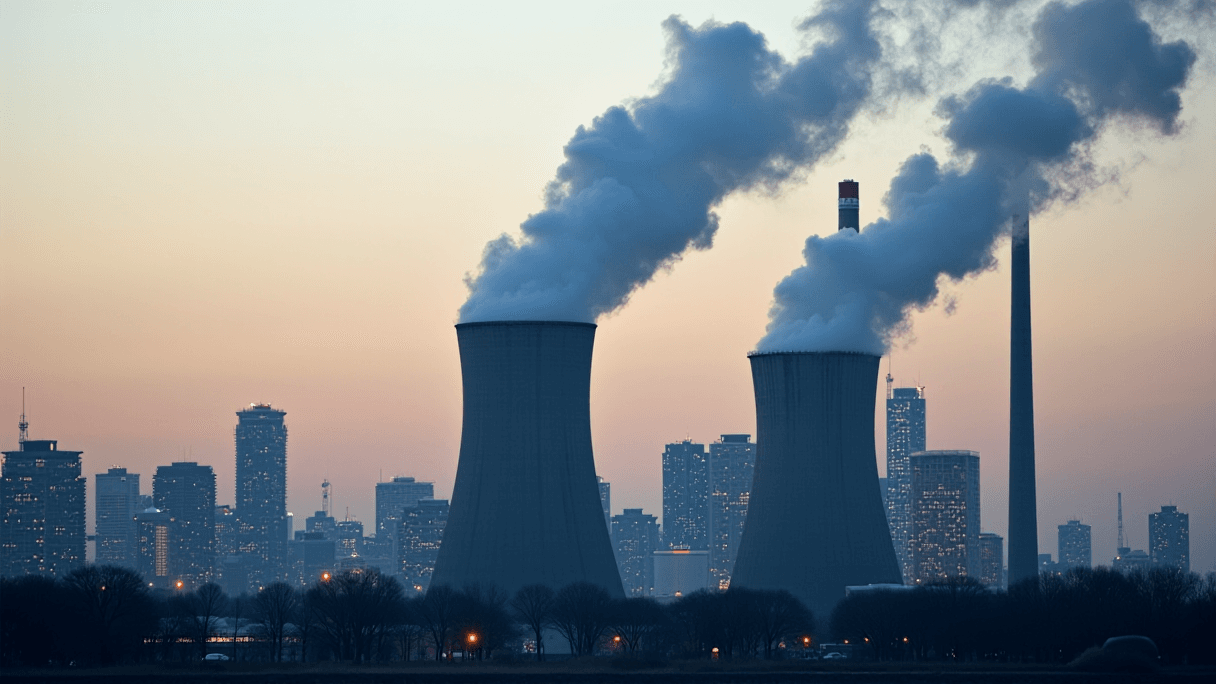
AI-generated image · Bay Street Wire
Opinion: As Toronto Public Health investigates a cluster of Legionnaires' disease cases, we must question if our urban water systems are becoming dangerous catalysts for outbreaks.
The latest reports from Toronto Public Health (TPH) should serve as a wake-up call for anyone who believes our city's infrastructure is keeping pace with our environmental realities. We are currently seeing a troubling pattern of illness that suggests our man-made water systems may be becoming breeding grounds for deadly bacteria.
According to reporting from CBC Toronto, CityNews Toronto, and a City of Toronto news release, TPH is currently investigating an outbreak of Legionnaires' disease centered around the intersection of Bathurst Street and Dupont Street. Six confirmed cases have been identified within a one-kilometre radius of that intersection. These individuals, who live, work, or visited the area, developed symptoms between July 2 and July 26.
While TPH maintains that the risk to the general public remains low and that the disease does not spread from person to person, the geographical clustering is impossible to ignore. Even more concerning is that investigators are working to determine if this current outbreak is linked to a previous one at Castleview Wychwood Towers, a local long-term care home. As reported by the City of Toronto and CityNews Toronto, five confirmed cases were identified at that facility, with the most recent person developing symptoms on July 19.
Caused by Legionella bacteria, Legionnaires' disease manifests as a severe type of pneumonia. As the City of Toronto and CBC Toronto explain, while these bacteria exist naturally in water, they proliferate in man-made systems. The list of culprits is a directory of urban convenience: cooling towers, decorative fountains, sprinkler systems, humidifiers, and hot tubs. The illness is contracted when people inhale tiny water droplets that contain the bacteria.
In my view, the fact that we are seeing multiple clusters in a concentrated area—particularly involving vulnerable populations like those at Castleview Wychwood Towers—points to a systemic failure. Older adults, smokers, and those with underlying health conditions are at the highest risk, making these outbreaks not just a medical issue, but a matter of urban equity and safety.
TPH is currently conducting environmental sampling and on-site inspections to find the source of infection, but as of August 17, 2026, no source has been confirmed. We cannot afford to wait for a "smoking gun" cooling tower before we rethink how these systems are maintained across the city.
If our urban infrastructure is aging and our summers are warming, we are essentially creating the perfect incubator for Legionella. We need more than "precautionary control measures"; we need a rigorous audit of the man-made water systems that dot our skyline. Until we address the systemic risk posed by these towers and fountains, we are simply waiting for the next cluster to emerge.