
The Waterfront's High-Rise Future Must Be More Than a Gated Enclave

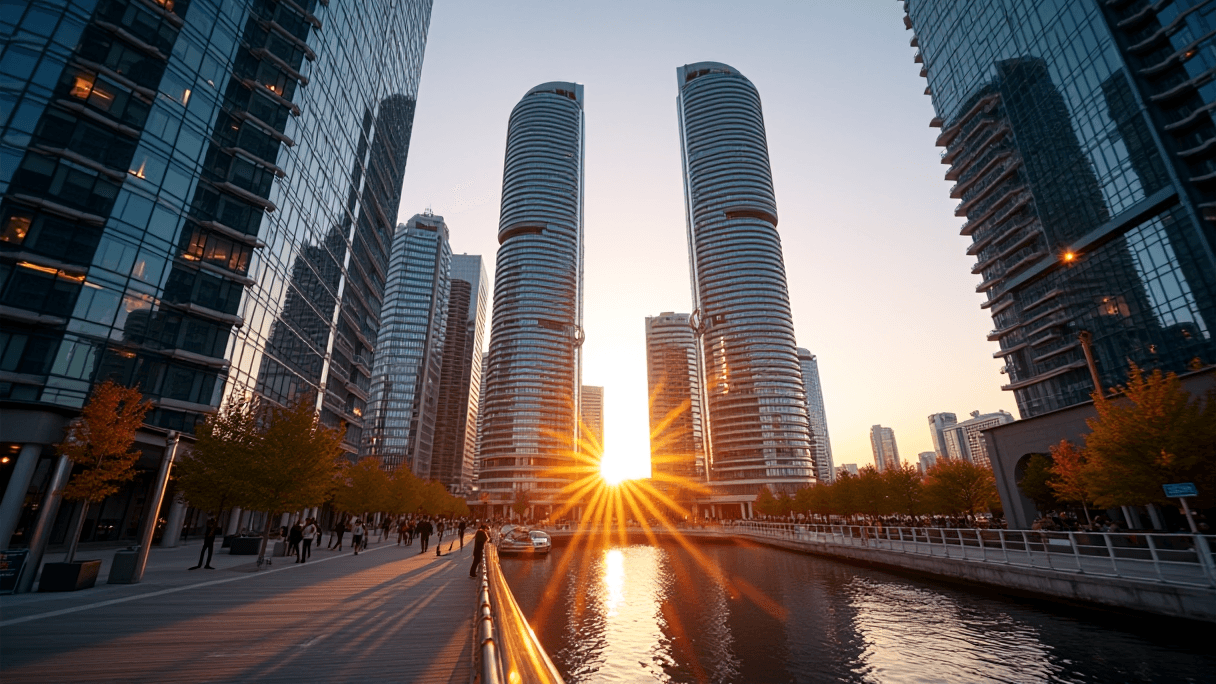
AI-generated image · Bay Street Wire
Opinion: As the Quayside community rises from the ruins of industrial land, Toronto must ensure its 'futuristic' vision includes the newcomers who drive the city's growth.
Toronto's east waterfront is currently undergoing what BlogTO describes as a generational transformation. As first reported by BlogTO, the reclamation of former industrial lands, exemplified by the expanded Biidaasige Park, signals a shift toward turning the area into a true destination. However, as we look toward the foot of Parliament Street, we must ask: who is this destination actually for?
The Quayside community is being prepared for development at 259 and 291 Lake Shore Boulevard East, situated between Small and Bonnycastle Streets, according to BlogTO. This 4.9-hectare district is envisioned as a futuristic hub featuring a roster of condominium and rental buildings that could reach heights of 70 storeys. While the scale is impressive, there is a persistent risk that these developments will serve as luxury silos for the elite rather than inclusive homes for the newcomers who build our city's future.
We have seen this cycle of ambition and dilution before. BlogTO reports that Waterfront Toronto first teamed up with Alphabet's urban technology arm, Sidewalk Labs, in 2017 to develop a 'smart' community. That vision, which included controversial data-monitoring public benches, ultimately collapsed under its own weight in less than three years. The current iteration of Quayside, revived through a partnership with local developers and brought to life by Dream Unlimited and construction manager CentreCourt Constructors Inc., appears more grounded. Yet, the danger remains that 'futuristic' is simply a marketing shorthand for 'expensive.'
As demolition concludes and construction is scheduled to begin later this year, the city faces a critical choice. We cannot afford for Quayside to be just another residential complex in a city already saturated with them. For Toronto to remain a global magnet for talent and labor, our waterfront must prioritize affordable, accessible housing. If the 'futuristic' nature of this district is limited to the height of its towers and the prestige of its architecture firms, it fails the people who actually keep the city running.
Inclusive urban planning is not a 'watering-down' of a vision; it is the only way to ensure a city's long-term viability. If Quayside becomes a gated enclave of luxury condos, it will be a monument to exclusion. Instead, let us demand that this reclaimed industrial land serves the diverse population of newcomers who deserve a stake in Toronto's waterfront.