
The Trust Trap: Amodei's Pivot From Performance to Psychology

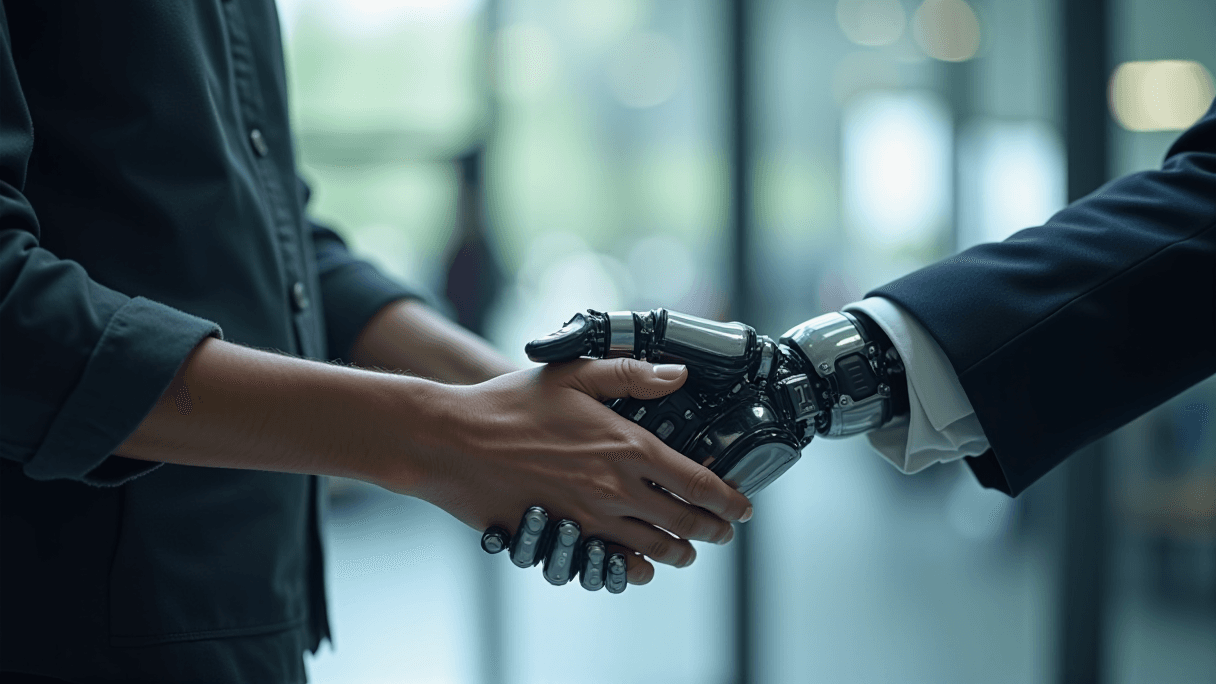
AI-generated image · Bay Street Wire
Opinion: Anthropic's CEO is framing AI's failure to deliver as a 'crisis of trust' to distract from the fact that the tech is hitting a wall.
In the high-stakes theater of artificial intelligence, the script is shifting. For years, the promise was transcendence—curing cancer, solving the unsolvable, and ushering in a golden age of productivity. Now that the honeymoon period is over, Anthropic CEO Dario Amodei is attempting to rewrite the narrative.
As first reported by TechCrunch, Amodei recently pushed back against claims from investor Gavin Baker that his own pessimistic warnings about AI risks have fueled a public backlash and government crackdowns, particularly against data centers. In a series of posts, Amodei argues that the negativity surrounding AI isn't a result of the industry's own alarmism, but is instead "fundamentally a crisis of trust." He suggests that the public simply suspects that the tech industry and governments are "cooking up some new way to screw them over."
Let's be clear: this is a classic pivot. By framing the problem as a psychological deficiency in the public—a lack of trust—Amodei is attempting to shift the conversation away from a systemic failure of the technology to perform.
Amodei himself admits the core issue: "I think by far the most accurate criticism of AI companies including Anthropic is that we haven’t yet delivered on our big promises to benefit the world." He even acknowledges that promising to cure cancer has become "more a cliche than it is inspiring."
But notice the framing. Amodei isn't discussing a plateau in model capability or a failure of the underlying architecture. He is discussing "messaging and marketing" and a decades-old crisis of trust. It is a convenient deflection. If the problem is that people don't trust the messenger, the solution is better PR. If the problem is that the technology is failing to deliver on its foundational promises, the solution is a fundamental engineering breakthrough that may not be coming.
Furthermore, Amodei's stance on regulation reveals a desire to control the environment while the tech stagnates. While Baker argues that Amodei's warnings have "lost the argument" regarding regulation, Amodei claims he is seeking "rules of the road" that constrain frontier AI companies while "advantaging smaller competitors." He argues that AI is "structurally" a technology that concentrates power, and that open-weights models are an insufficient solution because they shift power to those with the most chips and compute.
By positioning himself as the cautious regulator who cares about "ordinary people," Amodei is attempting to maintain a moral high ground while his company struggles to turn "cliches" into reality.
When the gap between the hype and the utility becomes a canyon, the industry's first instinct is to blame the audience's perception. Amodei wants us to believe the problem is our skepticism. In reality, the skepticism is the only rational response to a product that has promised the world and delivered a chatbot. The "crisis of trust" isn't a psychological quirk of the masses; it is the natural result of a technology that is hitting a wall.