
The Toronto Zoo's Climate Excuse is a Cop-Out

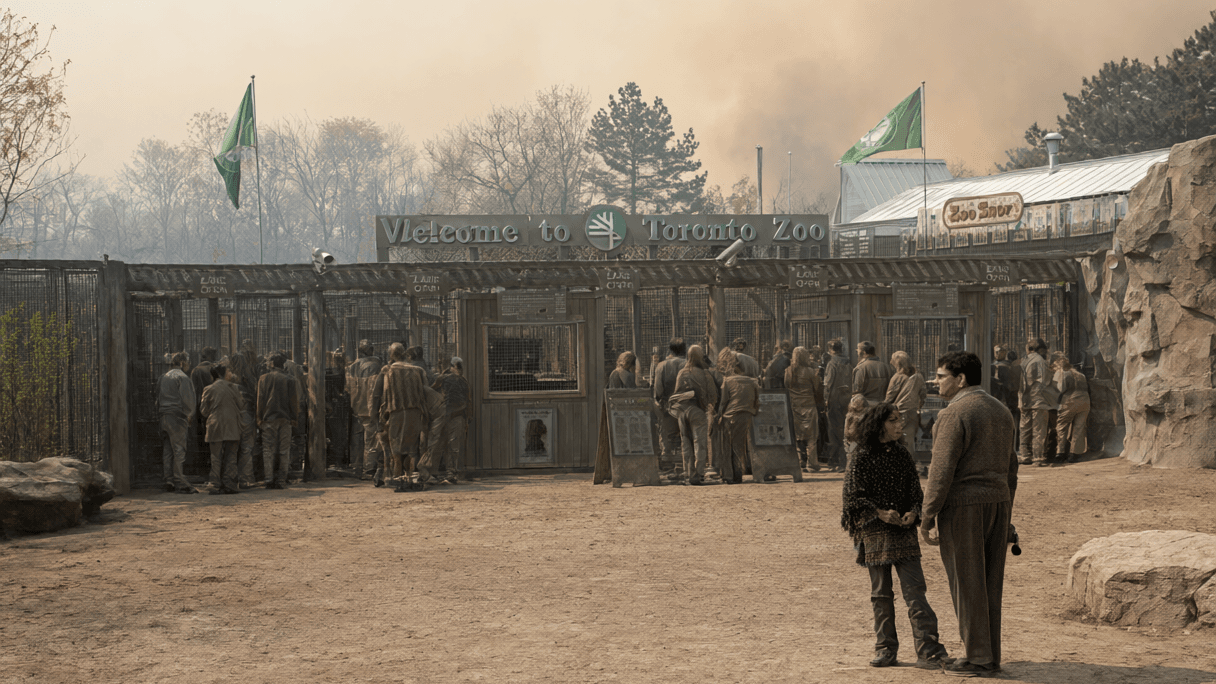
AI-generated image · Bay Street Wire
Opinion: Blaming wildfire smoke and snow for plummeting attendance ignores a fundamental truth—the zoo's product is too exposed and too stale to compete with a few degrees of heat.
Let's be clear: this is my opinion. I am not a meteorologist, nor am I a zoo keeper, but I am a student of the market. And right now, the Toronto Zoo is trying to sell us a narrative that is as thin as the air quality during a wildfire.
As Global News Toronto first reported, the zoo is leaning heavily into the 'climate change' defense to explain away a dismal year for attendance. In a report submitted to the city, zoo officials have essentially painted themselves as victims of the elements. Jamie Austin, the zoo’s chief transformation officer, pointed to extreme heat and wildfire smoke in July as the 'main culprit' for a dip in visitors. He noted that when air quality advisories tell people to stay inside, a trip to the zoo simply isn't a priority.
It is a convenient narrative. It shifts the blame from management to the atmosphere. But if you look at the numbers provided by Global News Toronto, the failure isn't just a one-month fluke; it is a systemic slide. By the end of September 2026, the zoo saw 1,095,286 visitors—a figure that sits nine per cent below their predicted target. Even more damning is the fact that July's visitor figures were 14 per cent below target.
But wait, the 'weather' excuse doesn't stop at the heat. Austin claims the first few months of 2026 were plagued by a cold, snowy winter that led to rare closures due to snow accumulation. Then came a 'cool, rainy spring.' It seems the Toronto Zoo is incapable of operating unless the weather is exactly 22 degrees Celsius with a light breeze.
Here is the contrarian take: if a few degrees of heat or a bit of rain can crater your business model, the problem isn't the weather—it's the product.
As Global News Toronto reports, the zoo's campus in Rouge National Urban Park is defined by exposed outdoor trails that lead guests to pavilions and enclosures. In other words, the zoo is essentially a very long walk in the sun. When the sky turns orange from northern Ontario wildfires or the humidity spikes, the 'product' becomes physically unpleasant. If your primary attraction requires guests to trek through the elements to see the animals, you haven't built a resilient attraction; you've built a weather-dependent gamble.
This isn't a new problem. Global News Toronto notes that zoo CEO Dolf DeJong pointed to heat waves and a November ice storm to explain why 2025 attendance dropped to just over 1.25 million, down from approximately 1.36 million in 2024. For two years running, the zoo has looked at the thermometer to explain why people aren't showing up.
Now, Austin tells us the zoo is looking at 'substantive preparations' for climate change resilience. According to Austin, the long-term plan focuses on adding more shelter, shading, and stations for both cooling and warming. While these sound like reasonable additions, they are reactive bandages on a stale experience. The admission that they need to make the site 'more comfortable' for guests year-round is a tacit admission that the current experience is uncomfortable.
Interestingly, the zoo is seeing a spike in September, with nearly 162,000 guests—13 per cent higher than predicted. Austin attributes this to the 'comfortable weather' of fall and events like the Glow in the Wild lantern festival, which runs through January 2027.
Notice the pattern? When the weather is perfect, people come. When it's not, they don't. That is the definition of a product that lacks a competitive moat. A world-class attraction doesn't just hope for a mild October; it creates an environment where the weather is irrelevant.
Austin claims the zoo has 'many indoor spaces to explore,' but if the core experience is still defined by those exposed trails, the indoor spaces are just footnotes. The zoo is trying to pivot to become an attraction that isn't so reliant on the summer season, but this pivot is happening far too late.
They are currently trying to lure people back with a baby wombat. While a 'little potato' is a great marketing hook, it doesn't solve the structural failure of the site. You cannot expect a baby wombat to offset the misery of a heat wave or the inconvenience of a rainy spring.
Stop blaming the clouds. Stop blaming the smoke. The Toronto Zoo isn't failing because the planet is warming; it's failing because it has failed to evolve its guest experience to match the reality of the environment it inhabits. Until the zoo stops treating 'comfort' as a luxury and starts treating it as a core requirement of the product, they will continue to be at the mercy of the forecast.