
The Spectacle of Dysfunction: Why Marathon Gridlock is a Leadership Failure

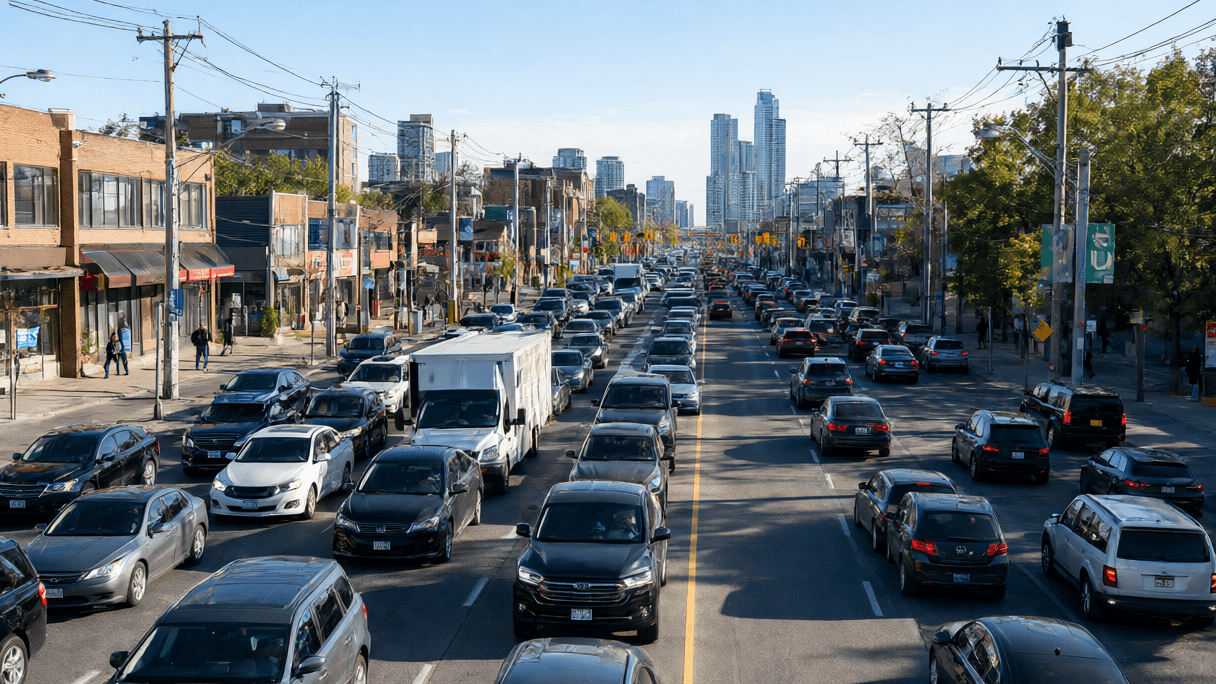
AI-generated image · Bay Street Wire
When the city asks thousands to use transit for a major event but fails to run the subways until the starting gun fires, the chaos isn't an accident—it's a policy choice.
The Toronto Waterfront Marathon is meant to be a celebration of the city's identity, but for those caught in the resulting gridlock, it serves as a stark reminder that our urban planning is often an afterthought to the spectacle.
As first reported by CityNews Toronto, the dysfunction reached a peak of absurdity this past Sunday. While city officials urged participants and spectators to utilize public transit to reach the downtown core, the subway system did not begin operations until 8 a.m.—the exact time the event was scheduled to start. This disconnect reveals a leadership void where the desire to host a world-class event is not matched by the basic logistical competence required to move people to it.
Mayoral candidate Brad Bradford highlighted this failure, noting that for an event drawing tens of thousands, starting the subways at 8 a.m. is fundamentally flawed. Bradford has pledged that if he is elected mayor, the subways will be running by 6 a.m. for the Toronto Marathon. It is a simple, common-sense fix, yet its absence speaks volumes about the current state of city coordination.
This isn't just about one race; it's about a city that feels permanently stuck. According to CityNews Toronto, Bradford claims that gridlock costs the GTA $40 million annually, with the average resident losing 100 hours a year to traffic disruptions—a figure he notes is nearly as high as that of New York City. While the city hired a traffic czar at the start of the year, Bradford argues the move has made little difference, asserting that congestion is trending upward.
Incumbent Mayor Olivia Chow has pointed to her own practical interventions to combat this. CityNews Toronto reports that Chow has spent $3 million to quadruple the number of traffic agents patrolling busy downtown intersections and has increased fines for those "blocking the box." Her plan also includes the implementation of smart traffic lights using real-time data and improved coordination for major events and construction.
However, the gap between "smart lights" and the reality of a frozen downtown core remains wide. Bradford is pushing for more aggressive systemic changes, including expanding transit signal priority and signal preemption across the entire streetcar network, the Crosstown LRT, and the Finch West LRT. He argues that current streetcar travel on Dundas, Adelaide, and Richmond often feels like a "rolling stop sign," making walking a faster alternative.
To solve the transparency issue, Bradford proposes that Metrolinx and the TTC publish work schedules 30 days in advance, ensuring residents actually know their transit options before they attempt to enter the core for major events. He also suggests shifting construction to overnight or off-peak hours and using city fleet cameras to detect potholes rather than relying on 311 calls.
Mayor Chow has pushed back against Bradford's record, stating in a CityNews Toronto report that he cannot be trusted on transit due to past actions involving raising fares and cutting TTC services.
Regardless of the political friction, the marathon chaos proves that the city is treating urban mobility as a series of patches rather than a cohesive strategy. When the transit system is out of sync with the city's own calendar, the result isn't just a traffic headache—it's a symptom of a leadership that prioritizes the image of a global city over the actual movement of its people.