
The Cost of Convenience: Erasing Safety in the Name of Traffic

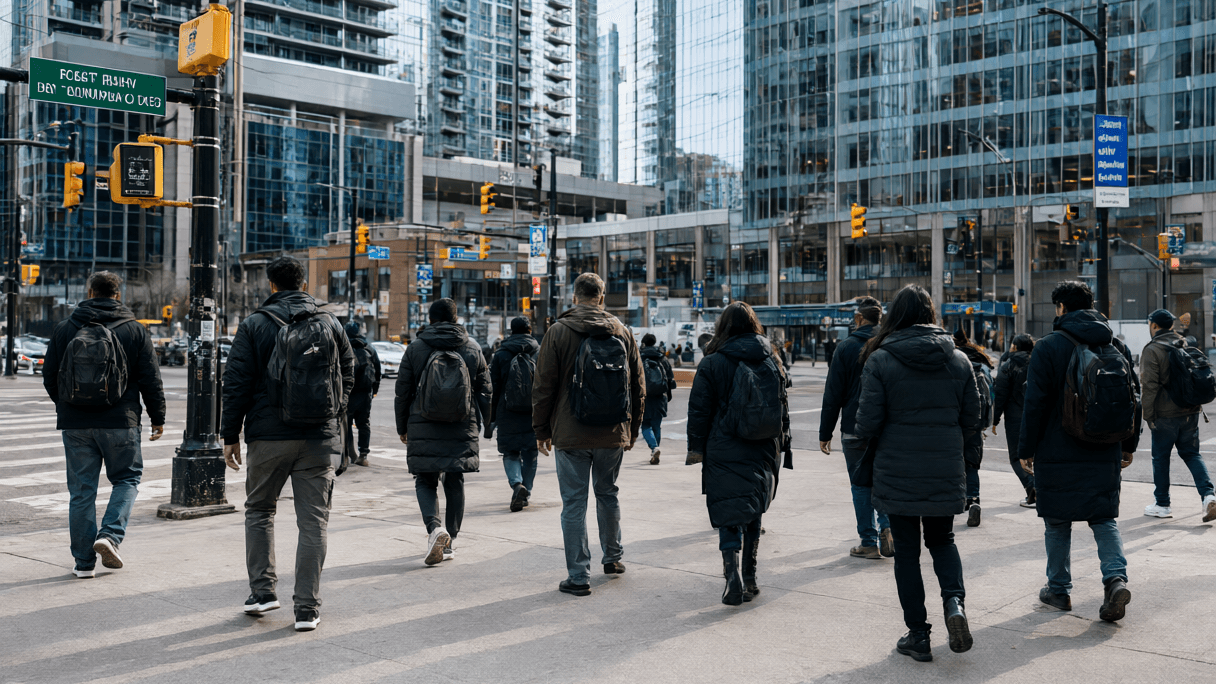
AI-generated image · Bay Street Wire
Gord Mackenzie argues that the removal of Etobicoke's bike lanes is a dangerous erasure of life-saving infrastructure, leaving citizens to build memorials where the city builds roadblocks.
OPINION: There is a profound, sickening irony currently unfolding on the streets of Etobicoke. As first reported by CityNews Toronto, work crews are methodically dismantling the bike lanes moving east from Islington Avenue, while advocacy groups respond by erecting a sculpture of red-painted bicycles, plastic skulls, and flowers. This memorial, placed near Bloor Street West and Islington Avenue, honors lives lost on Bloor, Yonge, and University during a two-decade struggle for safe streets.
We are witnessing a city—and a provincial government—that is more interested in the flow of traffic than the flow of life.
According to reporting from CityNews Toronto, the Ford government has decided to uninstall this infrastructure, a move that carries a staggering $48 million price tag. To the authorities, this is likely viewed as a logistical correction. To the people on the ground, it is a betrayal. Groups such as Cycle Toronto and Friends and Families for Safe Streets view these lanes as life-saving infrastructure, yet they are being ripped out of the asphalt regardless of the human cost.
Of course, there are those who welcome this regression. CityNews Toronto reports that the community group Balance on Bloor celebrated the removals, arguing that the lanes were underutilized and worsened traffic conditions. But since when did the convenience of a commute outweigh the right to survive a trip across town? When we prioritize the reduction of traffic congestion over the physical safety of cyclists, we are essentially deciding that a few saved minutes in a car are worth more than a human life.
The desperation of the protesters speaks to the stakes. CityNews Toronto details a series of arrests involving individuals who have used civil disobedience to slow the dismantling process. On October 13, Nina Thi Thi Tran, 25, was taken into custody after she sat on a curb barrier near the intersection of Bloor Street West and Lothain Avenue. Khoa Thanh Phan, 20, was arrested that same night for allegedly removing signage. Aly Vanwyck-Smart, 24, was arrested on October 22 after positioning themselves in a wheelchair atop a curb barrier near Bloor Street West and Royal York Road. Prajjwal Rajawat, 29, was arrested on October 19 near Bloor Street West and Islington Avenue.
These individuals are being charged with mischief and obstructing police, but their real crime is refusing to accept a city that treats safety as optional. They are trying to make the removal as inconvenient as possible because the alternative—a street without protection—is permanent.
It is a tragedy that we have reached a point where the only way to honor the dead is to build sculptures against hydro poles while the living are arrested for trying to save the next victim. The city is erasing the very tools that keep people alive, leaving us with nothing but red-painted bikes and a $48 million bill for a more dangerous city.
As advocacy groups gather at Tom Riley Park to mark the anniversary of briefly sending workers home, the message should be clear: safety is not a luxury to be removed for the sake of traffic flow. It is a necessity. If we continue to prioritize the car over the citizen, we aren't just removing bike lanes—we are clearing the path for more memorials.