
The Sovereignty Gap: Why Summit Lithium's M&A Flirtations Are a Warning Sign for Canada

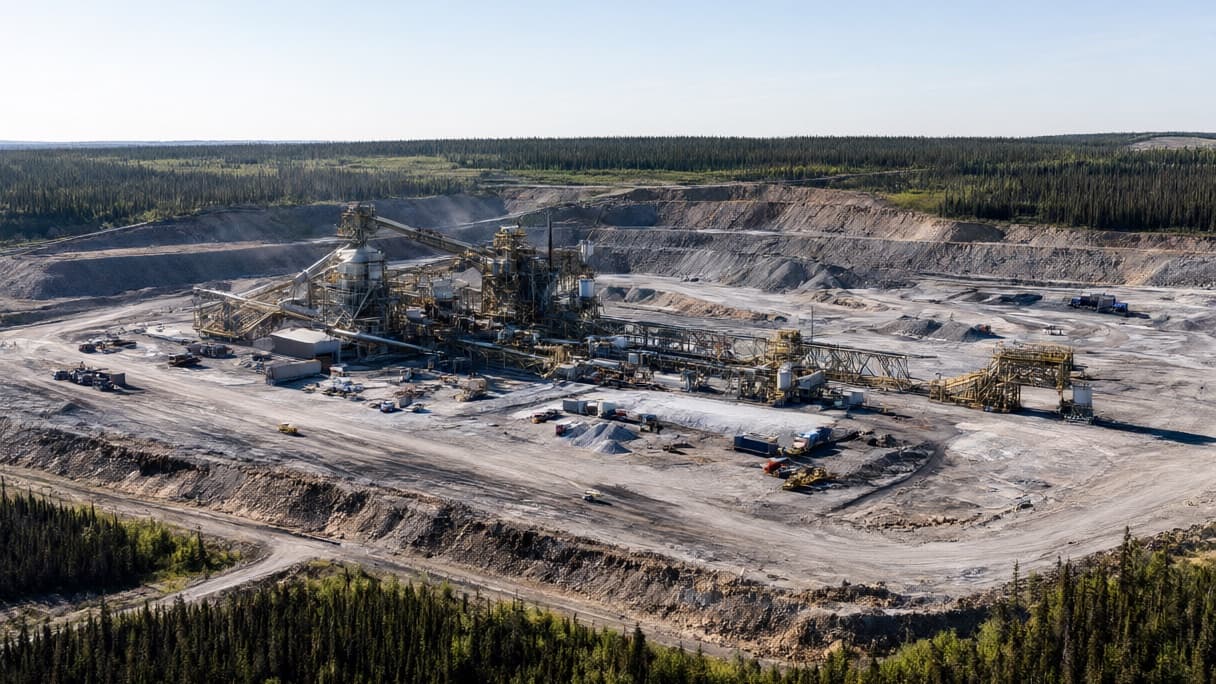
AI-generated image · Bay Street Wire
Opinion: The fact that one of Canada's most promising lithium extraction firms is looking toward international buyers to reach commercial scale exposes a systemic failure to build a domestic high-value refining ecosystem.
As a hardware nerd who spends my days obsessing over the semiconductor supply chain, I've learned that the distance between a 'patented system' and a 'commercial project' is where most deep-tech dreams go to die. In the industry, we call it the valley of death. But for Canada, the valley of death isn't just a financial hurdle for startups; it is a strategic void in our national industrial policy.
As BetaKit first reported, Calgary-based Summit Lithium Technologies is weighing strategic alternatives that could lead to the company being acquired by a foreign entity. Speaking at a policy briefing hosted by the National Angel Capital Organization (NACO), CEO Amanda Hall confirmed that the firm is pursuing mergers and acquisitions (M&A). Most telling of all, Hall noted that while the company is in the M&A process, "all of the buyers are international."
Let me be clear: this is an opinion piece, and my position is that this is a flashing red light for Canada's critical mineral sovereignty.
Summit Lithium is not some fringe experiment. Founded in 2018, the company developed a patented nanotechnology system designed to extract lithium—the lifeblood of the rechargeable battery and semiconductor-adjacent energy sectors—more efficiently and sustainably. They've been recognized on the Global Cleantech 100 list for 2025 and were featured in BetaKit's 'Most Ambitious' list. They have successfully raised over $100 million CAD in their lifetime, including a $25.5-million USD ($36.3-million CAD) round in March 2025 specifically intended to move the company from demonstration to commercialization plants.
Yet, despite this technical success and the backing of angel investors, the path to actual commercial scale seems to lead straight out of the country. In an email to BetaKit, Summit Lithium president and COO Joe Arencibia clarified that the company is exploring several paths, including grants and strategic partnerships, but he confirmed that the interested parties on the sale side are located outside of Canada. Arencibia argued that the best way to move to commercial scale is through "strategic/industrial partners versus more venture capital."
This is the crux of the problem. Canada is excellent at the 'extraction' part of the equation, but we are failing miserably at the 'industrial partner' part. When a company like Summit Lithium reaches the point where its technology is ready for the big leagues, it finds that the players capable of providing the necessary industrial scale are all foreign entities.
CEO Amanda Hall suggested that international buyers "like that we have a Canadian presence and they want to keep us here just under a new banner." While it is comforting to hear that Summit Lithium intends to keep its footprint in Calgary, owning the office building is not the same as owning the intellectual property or the strategic direction of the industry. If our most innovative critical mineral firms are merely 'Canadian branches' of foreign conglomerates, we haven't built a sovereign supply chain.
Summit Lithium is essentially a case study in the 'missing middle' of Canadian tech. Arencibia noted that the company is talking to government agencies in both Canada and the United States for funding programs, but the market reality is that the most enthusiastic buyers are international.
If Canada wants to be a serious player in the global semiconductor and battery race, we cannot continue to be a country that exports its innovation via M&A. We need a domestic ecosystem where a company can move from a $25.5-million USD funding round to a full-scale commercial plant without having to look across the border for a partner.
As Amanda Hall prepares to "close the circle" with the angel investors who supported her from the start, the tragedy is that the finish line for this Canadian success story appears to be a foreign acquisition. It is a reminder that without a concerted effort to bridge the gap between lab-scale nanotechnology and industrial-scale refining, Canada will remain a resource colony—even if the resources we are extracting are high-tech patents.