
The Edge Case: Why Helix's Local Voice ID Could Kill the Cloud Security Model

AI-generated image · Bay Street Wire
Opinion: If Helix can truly scale high-fidelity biometric verification on legacy hardware like the A15 Bionic, we are witnessing the beginning of the end for invasive, cloud-based identity proxies.
As a hardware nerd, I spend most of my time obsessing over the tension between model complexity and thermal envelopes. For years, the industry has operated under a comfortable, if flawed, assumption: if you want high-fidelity biometric security, you have to ship the data to a massive server farm, process it, and send back a 'yes' or 'no.' This cloud-dependency hasn't just created latency; it has created a privacy nightmare where users are forced to trade sensitive personal information for basic digital access.
Then comes Helix.
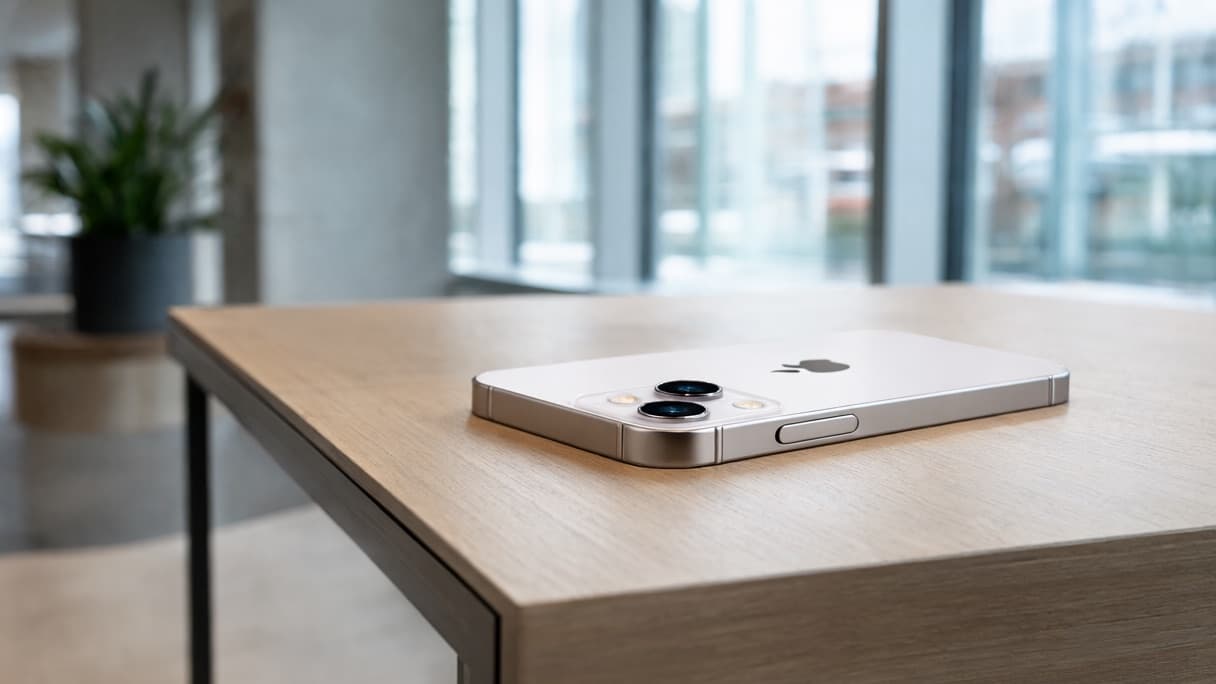
As TechCrunch first reported, Helix is betting that voice technology can verify human identity and estimate age without requiring users to surrender personal data. But the real story here isn't just the 'what'—it's the 'where.' Helix asserts that its models are capable of running locally, even on hardware as old as an iPhone 13. For those of us tracking the silicon, that is a specific and provocative claim. The iPhone 13 is powered by the A15 Bionic chip. If Helix can actually push high-fidelity voice ID to that architecture without draining the battery or throttling the CPU, we are looking at a massive shift toward edge-processed biometric security that bypasses the cloud entirely.
In my opinion, this is the only viable path forward for the internet. For too long, we have relied on what Helix CEO Alex Oberg calls 'proxies for identity'—IP addresses, device fingerprints, and email addresses. Oberg, who previously worked at Ticketmaster and helped create the Verified Fan system to block bots, notes that the rise of AI agents like Muse and Instinct is making these proxies obsolete. When the bots can mimic the device fingerprint and the IP, the only thing left is the biological signal.
Traditionally, the 'biological signal' meant uploading a photo of your passport or a video of your face to a third-party server—a process Oberg describes as a 'strawman argument' where users are told they must trade privacy for security and child safety. By moving the computation to the edge, Helix is arguing that you can have both. A four-second voice challenge processed locally on an A15 Bionic means the biometric data never has to leave the device. It transforms the phone from a gateway to a secure vault.
This isn't just theoretical. TechCrunch reports that Helix is already running pilots to see if voice can act as a biomarker for distress or drunkenness, and is currently working with Zeel, an in-home healthcare provider, to verify the identities of visiting providers. Oberg is also exploring the verification of workers like cab drivers.
From a technical standpoint, the most compelling part of the Helix pitch is the compression. Dag Kittlaus, a Siri co-founder and advisor to Helix, told TechCrunch that the startup's work to compress its models provides a significant cost advantage. In the semiconductor world, compression is everything. If you can shrink a model enough to run efficiently on a consumer-grade NPU (Neural Processing Unit) without sacrificing accuracy, you eliminate the recurring cost of cloud inference. You move the cost of security from the company's server bill to the user's existing hardware.
However, we must be clear about the current boundaries of this tech. Oberg has been candid about the limitations: the technology cannot reliably detect if someone is lying, nor can it currently detect AI agents during live phone calls. Furthermore, while the tech can verify humanity and age, it is not designed to identify individual speakers. Even if a voiceprint is stored, the company claims it cannot be used to reconstruct a person's voice.
If this scales, the implications for the 'CAPTCHA era' are terminal. We've spent a decade clicking on squares containing traffic lights to prove we aren't robots. It is a tedious, inefficient system. Replacing that with a local, voice-based biometric check—one that doesn't identify the individual but simply confirms 'this is a human of X age'—would be a paradigm shift in user experience.
Helix has the pedigree to attempt this. Founded in 2025 by Oberg, Anna Dorofiyenko (formerly of Zillow and Live Nation), and Mike Hall (formerly of Tinder and Nike), the team understands how to build systems at scale. The company has raised $6 million in funding, led by Chicago Ventures and supported by a group including BAM Ventures, Aglaé Ventures, Corazon Capital, Tusk Ventures, Yonder Ventures, Rule30, and Brown Alumni Group.
If the A15 Bionic can handle this workload without killing the battery, the cloud-based identity model is dead. We are moving toward a world where your hardware is the only witness to your identity, and that is a future I can get behind.