
The Smoke Signal: Why Firefighting Budgets Won't Clear Toronto's Skies

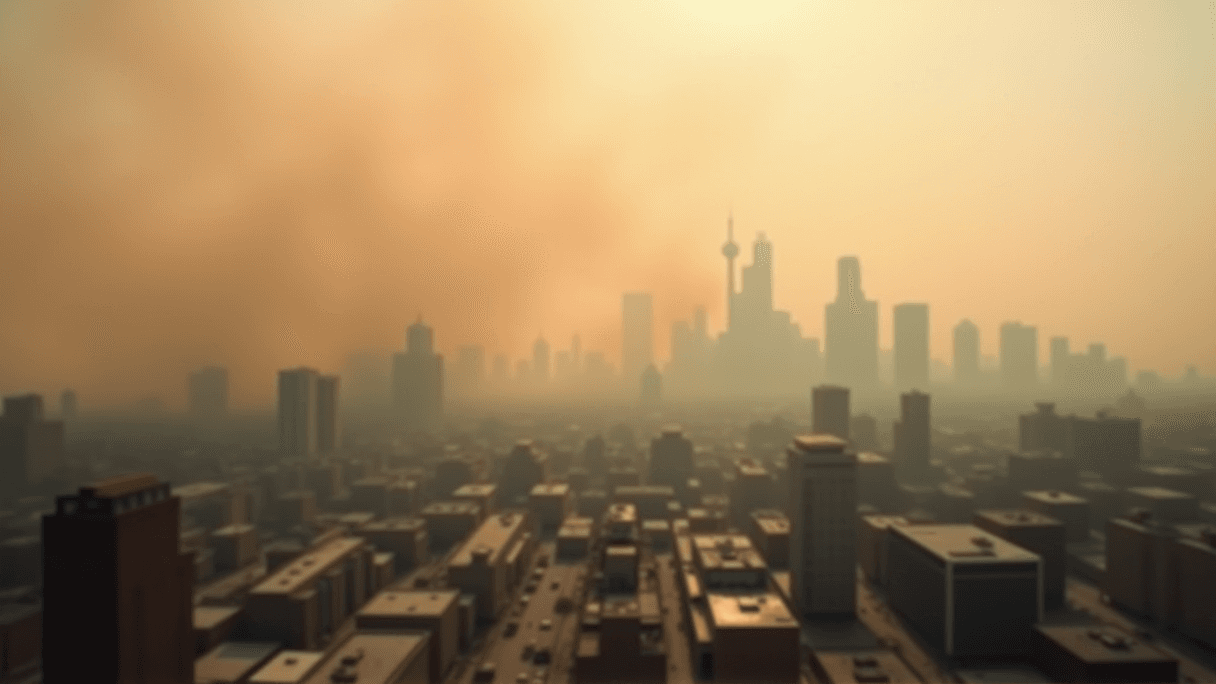
AI-generated image · Bay Street Wire
As the GTA faces another air quality crisis, experts warn that treating wildfire smoke as a manageable emergency ignores the systemic climate drivers fueling the flames.
For residents of the Greater Toronto Area, the orange haze has become a recurring summer nightmare. As smoke settles over the city, the political discourse has shifted toward budgets and borders. Ontario Premier Doug Ford has defended the province's wildfire spending while requesting additional assistance from Ottawa, and some Republican lawmakers in the U.S. have demanded that Canada take more aggressive action to stop smoke from drifting across the border.
However, these debates over resource allocation obscure a more fundamental reality. As CBC Toronto first reported, scientists argue that the only realistic way to address the smoke is to fight climate change itself by stopping the burning of fossil fuels.
While firefighting resources are critical for protecting local communities—some of which have already been destroyed by Ontario fires this year—experts suggest that extinguishing every fire is an impossible goal. Zeke Hausfather, an acclaimed U.S. climate scientist, noted that fires in Canada's boreal forests often manifest as intense crown fires in remote areas far from human management. He said the terrain sits in waiting until extreme weather triggers catastrophic burns.
The scale of the crisis is amplified by a warming planet. Patrick James, an associate professor at the University of Toronto's forestry department, explains that even modest temperature increases can create multiplicative effects on the intensity and number of fires. This is compounded by the fact that Canada is warming at twice the global rate, with the Canadian Arctic warming at nearly four times that rate.
Jonathan Overpeck, a climate scientist and dean at the University of Michigan, points out that global climate change is drying out vegetation more than in the past, making forests far more susceptible to fire. Overpeck also warns of a dangerous feedback loop: thawing permafrost in northern regions could release methane and carbon dioxide—greenhouse gases that further accelerate planetary warming.
Weather patterns further complicate the local impact. CBC Toronto reports that an unusually strong El Niño pattern likely pushed smoke toward southern cities this season, while a July heat dome may have trapped the smoke, causing it to linger longer.
From a logistical standpoint, the geography of the crisis is stretching resources thin. Ze'ev Gedalof, a climate scientist and associate professor at the University of Guelph, notes that with active fires in Nova Scotia, coastal British Columbia, and the far north, the traditional method of moving planes and helicopters across the country as the season shifts is no longer viable.
While the call for a permanent national firefighting force grows, the scientific consensus remains clear: firefighting can protect a town, but it cannot fix a climate system that is behaving in increasingly unpredictable ways. Until the reliance on fossil fuels is addressed, Toronto's air quality will remain at the mercy of a warming world.