
The Section 338 Showdown: A Legal Battle Over Trump's Canadian Tariffs

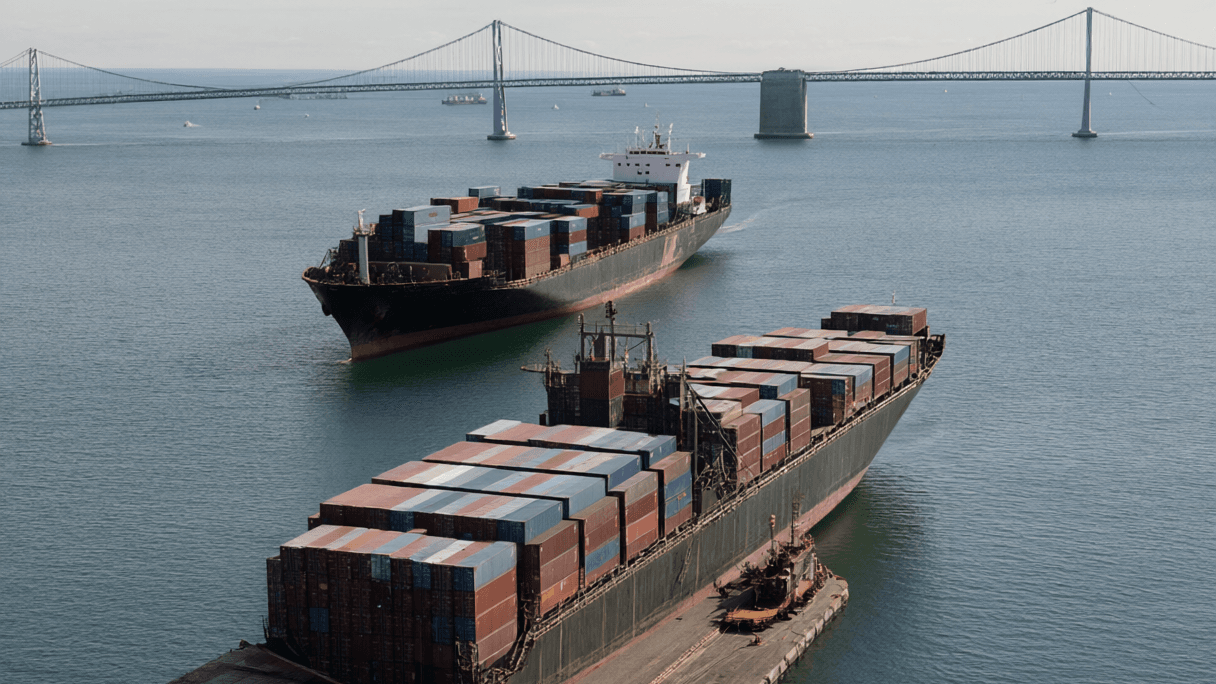
AI-generated image · Bay Street Wire
A new lawsuit filed by a U.S. food importer argues that President Donald Trump's use of a Depression-era statute to weaponize tariffs against Canada exceeds executive authority.
### What Happened
A legal battle has emerged in the United States Court of International Trade over the Trump administration's decision to impose sweeping tariffs on Canadian goods, as CityNews Toronto first reported. The non-profit Liberty Justice Center filed a lawsuit on Tuesday, Oct. 20, 2026, on behalf of the U.S. food importer Gellert Global Group.
The core of the dispute centers on President Donald Trump's invocation of Section 338 of the Tariff Act of 1930. Following the collapse of trade negotiations in August, the president utilized this statute to apply a 50 per cent levy on a variety of Canadian products. By September, the administration expanded the use of the same law to implement total import bans on specific Canadian goods, including dairy products, certain alcohol, and motorcycles.
### The Executive Justification
As reported by CityNews Toronto, the White House maintains that Section 338 provides the president with the authority to impose tariffs in instances where a foreign nation places U.S. exporters at a disadvantage compared to exporters from other countries.
U.S. officials have specifically cited three Canadian policies as the catalyst for these duties: * The supply-managed dairy system in Canada. * Provincial bans on U.S. liquor. * Quotas placed on certain U.S. vehicles.
### The Legal Challenge
The lawsuit argues that the Trump administration's interpretation of the 1930 statute is an overreach of presidential power. Sara Albrecht, the CEO of the Liberty Justice Center, stated in a news release that no president should be permitted to use a dormant statute to enact import bans or sweeping tariffs without the constraints mandated by Congress.
According to the filing detailed by CityNews Toronto, the lawsuit challenges the administration's logic on several fronts:
**Retaliatory Cycles:** The lawsuit claims that two of the triggers for the tariffs—the liquor bans and auto quotas—were actually responses to tariff measures previously implemented by President Trump.
**Existing Trade Agreements:** The filing asserts that Canada's dairy supply management is governed by policies already agreed upon under the Canada-U.S.-Mexico Agreement (CUSMA), a trade deal negotiated during the first Trump administration.
**Statutory Precedent:** The lawsuit highlights that Section 338 has never previously been used for the purpose the White House is currently citing.
### What It Means: A Test of Executive Power
Beyond the immediate economic impact on the food supply chain, this case represents a significant test of whether the judicial system can check the executive branch's ability to weaponize trade laws. The Liberty Justice Center argues that if these duties are allowed to stand, any future president could utilize Section 338 to impose trade restrictions without meaningful oversight from Congress.
This is not the first time the Trump administration's use of emergency trade powers has been scrutinized. CityNews Toronto reports that the Liberty Justice Center was previously involved in a challenge regarding the International Economic Emergency Powers Act of 1977 (IEEPA), which the president used for fentanyl-related tariffs and the "Liberation Day" tariffs targeting China, Mexico, and Canada. In February, the highest court in the U.S. ruled that the use of IEEPA was illegal, citing the U.S. Constitution's clear delegation of tax and tariff power to Congress.
### The Supply Chain Impact
For businesses on the ground, the dispute is about more than legal theory. Thomas Gellert, the co-chief executive officer of Gellert Global Group, noted that his company has spent generations cultivating relationships with partners, customers, and suppliers within the food industry. In a news release, Gellert stated that the tariffs have disrupted these relationships overnight, creating costs and uncertainty that ripple across the entire supply chain.
As of Tuesday, the White House had not responded to requests for comment regarding the lawsuit.