
The 'Safety' Shield: Why Real-Time Police Documentation is a Right, Not a Crime

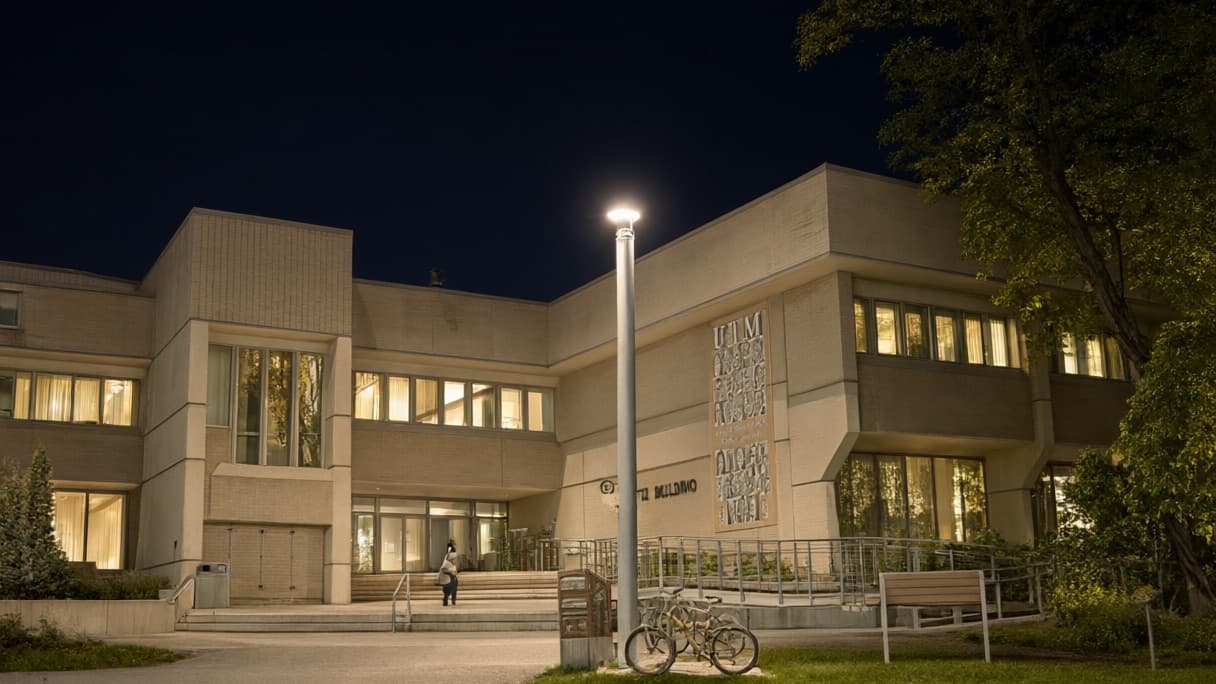
AI-generated image · Bay Street Wire
After a standoff at the University of Toronto Mississauga, Peel Regional Police warned that social media posts of officer positions are a 'blatant safety concern.' But is the law actually on their side?
### The Standoff at McLuhan Court
As first reported by CBC News, the University of Toronto's Mississauga campus was the site of a high-stakes tactical operation Monday night. Police issued a shelter-in-place order for students after a 19-year-old man allegedly used a weapon to barricade himself inside a unit at the McLuhan Court residence. The incident concluded when police reported the man died of a self-inflicted gunshot wound, a matter now being investigated by the Special Investigations Unit (SIU).
While the tactical situation unfolded, members of the public began uploading real-time images and videos of officer positions to social media, prompting a stern reaction from law enforcement.
### The Police Argument: Tactical Liability
Peel Regional Police have characterized the act of posting real-time officer locations as a dangerous gamble. During a Tuesday news conference, Const. Tyler Bell described the practice as a "blatant safety concern," arguing that such posts put officers, potential victims, and hostages in harm's way.
In an interview with CBC News, Bell clarified that the primary issue is the immediate dissemination of footage. He warned that sharing tactical positions allows "bad actors" to see exactly where officers are located, compromising the operation. Bell urged the public to film encounters but wait until the situation is safe before posting.
### The Legal Grey Area
Legal experts suggest the line between a safety concern and a criminal act is murky. Howard Sapers, executive director of the Canadian Civil Liberties Association (CCLA), notes that Canadians have a constitutionally protected right to film on-duty police in public.
Sapers explains this right ends if the filming physically interferes with an operation or compromises safety. He notes a distinction between a police request and a lawful order; refusing a lawful demand to stop filming could potentially become an offense.
Criminal defense lawyer and former SIU director Howard Morton adds that real-time posting could fall under Section 129 of the Criminal Code regarding the obstruction of a police officer. However, Morton emphasizes that conviction requires proof of "wilful intention"—specifically the intent to interfere with an investigation by jeopardizing an officer or alerting a suspect.
### The Public's Perspective
For students during the lockdown, social media acted as a vital information lifeline. Second-year student Efe Otomewo told CBC News that while officials provided safety instructions, platforms like Reddit and Instagram were how students learned why the lockdown was occurring amid conflicting reports of fireworks or shootings.
### Opinion: Transparency is Not a Crime
*The attempt by Peel Regional Police to frame the documentation of their conduct as a "blatant safety concern" is a dangerous overreach. In a democratic society, the police operate under the gaze of the public; the availability of smartphones does not render police work impossible.
When law enforcement invokes "officer safety" to discourage real-time reporting, they are often attempting to control the narrative rather than managing a genuine tactical risk. As Howard Morton noted, the law requires "wilful intention" to obstruct. The act of a citizen recording a public scene is not sabotage; it is transparency.
If police wish for public trust in official updates, they must be as timely as the feeds coming from the street. Using the threat of the Criminal Code to stifle documentation is not a safety strategy—it is an accountability dodge.*