
The Ritual of the Night: Does Nuit Blanche Still Dare to Disrupt?

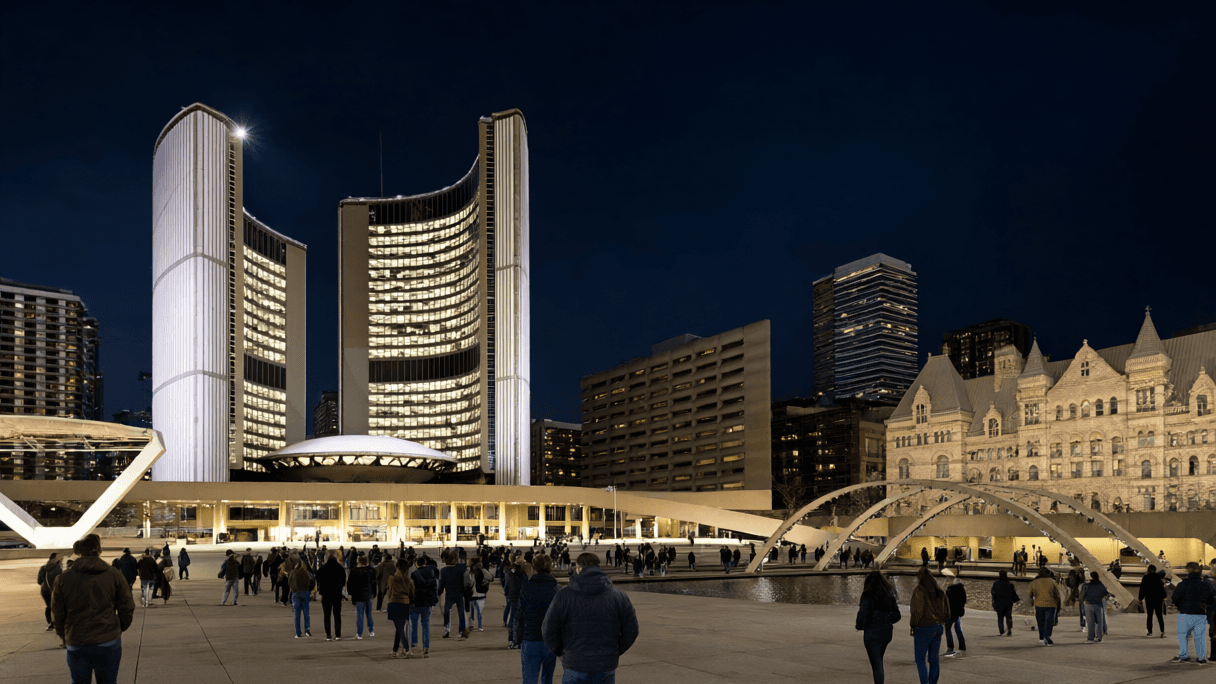
AI-generated image · Bay Street Wire
As Toronto celebrates the 20th anniversary of its all-night contemporary art event, we must ask if the spectacle has evolved into a predictable city ritual or if it still pushes the boundaries of our urban identity. (Opinion)
For two decades, Toronto has evolved from a perceived sleepy colonial outpost into a global leader in culture and innovation. Central to this has been Nuit Blanche, an all-night contemporary art event that has become a fixture of the city's identity. As we approach the 20th anniversary edition on Saturday, October 3—an event as first reported on by the City of Toronto—it is time to examine whether this annual pilgrimage still challenges us or has become a predictable ritual.
According to the City of Toronto, this milestone year will feature more than 70 projects by community partners, institutions, and artists. Under the theme "Tomorrow’s Memories," the event explores how art can reimagine and preserve memory. The scale is immense, with large-scale artworks activated across sites like Nathan Phillips Square and Old City Hall, underscoring Toronto's status as the fourth largest city in North America.
However, there is a tension in this "milestone." When an avant-garde experiment becomes a twenty-year institution, does it lose its edge? The City's invitation for media to capture the "making of" the event on October 2 suggests a choreographed experience. We see the machinery of the city installing pieces such as Brandon Vickerd’s *UFO*, Alexandra Gelis’s *in Water, Together*, and the *Museum of Lost Things* by Trevor Mahovsky and Rhonda Weppler. We see the curation of memory through works like Francesca Nocera aka SUN SUN’s *I Miss You: T.Dot Memories* (curated by Witch Prophet), Maggy Hamel-Metsos’s *Simile Aria*, Shelley Niro’s *Blankets (Under) Cover*, and Couzyn van Heuvelen’s *Avataq* and *Avataq Gathering*.
The risk for Nuit Blanche is that it becomes a curated checklist of "activations" rather than a disruption. When the City promotes the event alongside its status as an Official Host City for the FIFA World Cup 2026, it frames the arts through international ranking and economic engine status. While Toronto’s population of over three million provides fertile ground for creativity, we must ensure the event remains a space for provocation rather than a polished marketing tool for "livability."
To remain relevant, Nuit Blanche must resist the gravity of its own success. The shift toward institutionalization—evidenced by scheduled media events with RSVP requirements—risks turning the event into a static monument. If the 20th anniversary is to be meaningful, it must embrace the friction and the unknown, providing art that forces us to question the very memories the city asks us to preserve.