
The Quantum Divergence: Why Hardware Constraints Prevent an AI-Style Hype Cycle

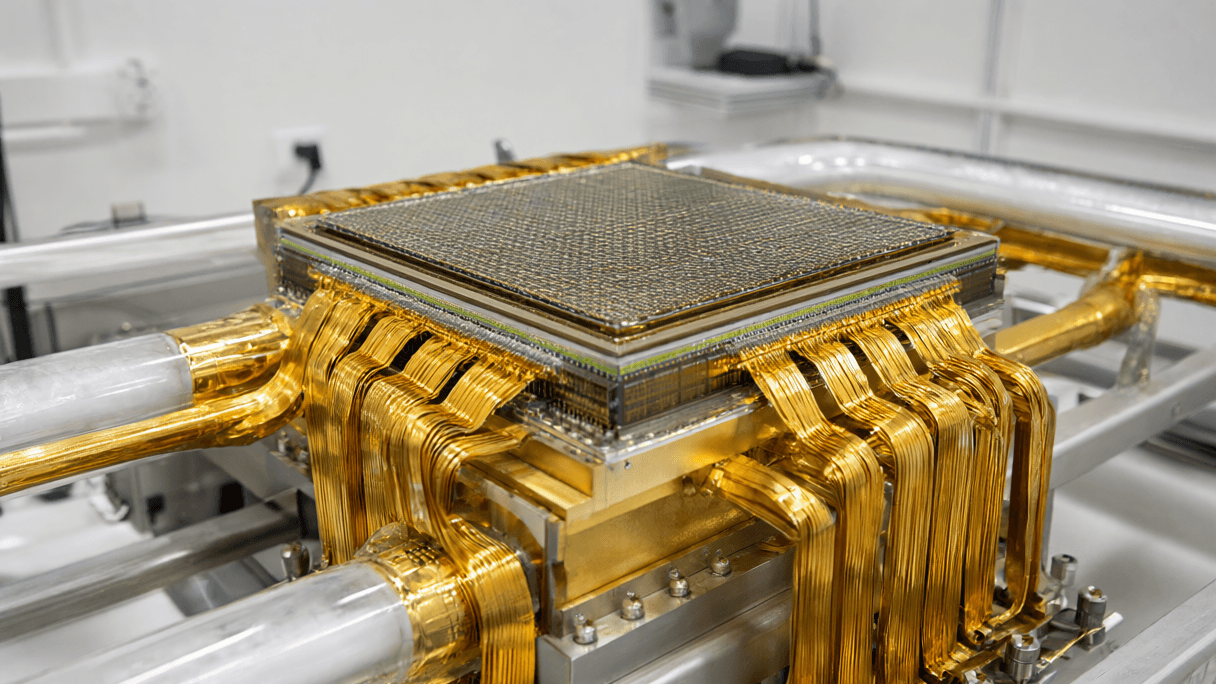
AI-generated image · Bay Street Wire
As quantum computing intersects with the AI boom, industry leaders suggest the path to commercialization will rely on solving specific problems rather than the 'ChatGPT moment' of mass software adoption.
### The Intersection of Ambition
Artificial intelligence and quantum computing are often grouped together as twin engines of transformation, both pursuing goals of immense scale—artificial general intelligence (AGI) and fault-tolerant quantum computing—that require massive capital investment and R&D.
However, as BetaKit first reported following a panel at Canada's largest AI conference, ALL IN, the trajectories of these two technologies are fundamentally different. While AI has experienced a sudden, explosive leap into the mainstream, quantum computing operates under different constraints.
### Beyond the 'ChatGPT Moment'
A striking distinction is the nature of adoption. AI scaled almost instantly via tools like ChatGPT, but quantum technology is unlikely to see a similar singular event of mass consumer adoption.
According to Lisa Lambert of IonQ, technology becomes transformative when it is adopted. For quantum computing, the path to commercialization is not about creating a viral software application, but about identifying and solving specific, high-value problems—a process that AI may actually support.
### A Different Approach to Hype
Despite similar capital requirements, the quantum industry has avoided the aggressive marketing seen in the AI sector. BetaKit notes that quantum leaders have not utilized "FOMO" (fear of missing out) or "FUD" (fear, uncertainty, and doubt) hype chambers to drive fundraising.
As the industry looks forward, leaders including Nikki Bhatia of Xanadu, Marc-Antoine Lemonde of Nord Quantique, Lisa Lambert of IonQ, and Chris Juryn, the head of AI at CGI, are focusing on the functional application of hardware to accelerate the arrival of fault-tolerant systems.