
The Price of Creativity: Why OCAD U's Anniversary Scholarships Are a Vital Lifeline

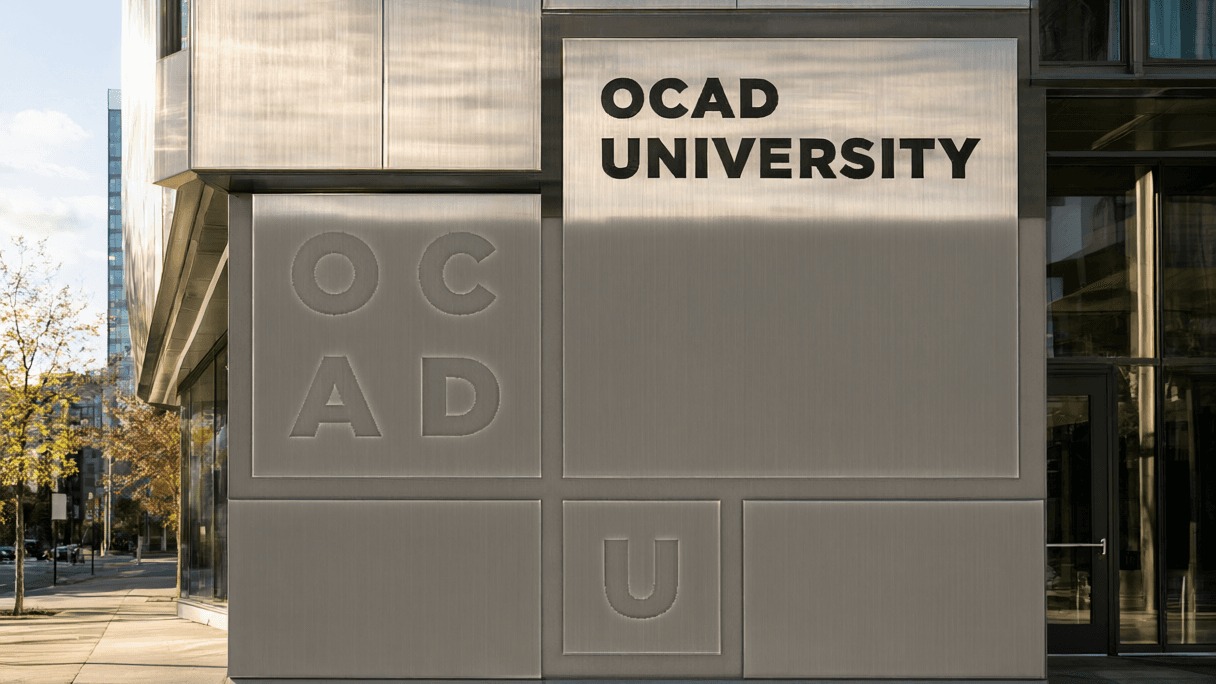
AI-generated image · Bay Street Wire
As Toronto becomes increasingly unaffordable, the university's new $6-million initiative to support 150 students is more than a celebratory gesture—it is a necessary investment in the city's cultural survival.
In a city where the cost of living often threatens to eclipse the dreams of its most daring creators, OCAD University is launching a major financial commitment to the arts. As first reported by CBC Toronto, the university is marking its 150th anniversary with '150 FUTURES,' a scholarship program designed to ensure the next generation of Canadian artists, designers, and cultural thinkers can afford to create within the urban fabric. The university will offer 150 undergraduate scholarships, each valued at $40,000, provided as $10,000 annually over four years.
Ana Serrano, president and vice-chancellor of OCAD University, described the program as the most ambitious scholarship initiative since the institution's founding in 1876. In a news release cited by CBC Toronto, Serrano emphasized that the goal is to ensure more students have the opportunity to study and build their futures at the university.
***
**Opinion: The Necessity of the Lifeline**
While the university frames this as an investment in 'Canadian art, design and culture,' we must be honest about the context: Toronto is becoming a city where only the wealthy or the extraordinarily lucky can afford to be 'creative.' When the barrier to entry for an arts education is coupled with the skyrocketing cost of living, we risk a cultural homogenization where only those with existing financial safety nets can afford to take risks.
By targeting students who demonstrate 'financial need' alongside creative talent and academic achievement, OCAD U is acknowledging a hard truth: talent is universal, but opportunity is not.
***
The funding for this $6-million goal is a testament to the intersection of institutional power and artistic ambition. CBC Toronto reports that the university has already raised more than half of the required funds, including two $1 million gifts from former federal finance minister Bill Morneau and Nancy McCain, as well as contributions from John and Jan MacIntyre. John MacIntyre serves as the chair of the TD Bank Group.
Serrano noted that such leadership signals a broader societal recognition of the value of creativity. As Serrano noted in a video shown to students, the institution has evolved from 'paint brushes to pixels' and from 'canvases to complex systems and video games.'
The weight of this legacy is felt by students like William Snyder, a fourth-year drawing and painting student and an Indigenous student from Sandy Lake First Nation. Snyder told CBC Toronto that art institutions are critical because they allow artists to provide society with new perspectives through imagery. He described the 150-year history of the school as a 'whole work of art' in itself—a collective of humanity brought together over a century and a half.
Tracing the institution's history reveals a trajectory of growth mirroring the city's creative identity. Founded by the Ontario Society of Artists as the Ontario School of Art with 14 students, it became the Ontario College of Art in 1912. Among its past presidents was J.E.H. MacDonald, who was part of the Group of Seven. The school became the Ontario College of Art & Design in 1996, gained university status in 2002, and introduced graduate students in 2008. The institution finally adopted the name OCAD University in 2010.
As the school enters its next chapter, the '150 FUTURES' program serves as a critical intervention. By removing financial barriers for 150 exceptional applicants from across Canada, OCAD U is attempting to prevent the displacement of the creators who make Toronto a global cultural hub.