
The Pacific Link Mirage: Carney’s High-Stakes Gamble on a Fading Asset

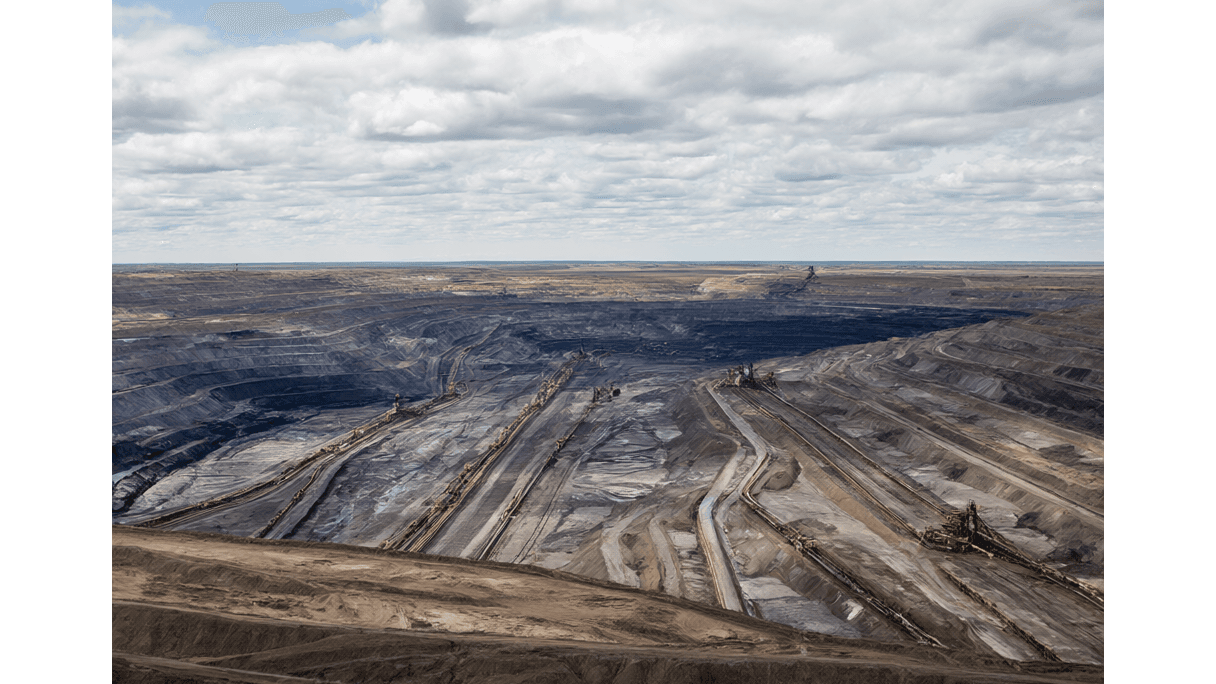
AI-generated image · Bay Street Wire
Prime Minister Mark Carney is betting billions on a new West Coast pipeline, but the government's confidence may be a convenient fiction designed to lure producers into a project that ignores the terminal decline of global oil demand.
### The National Interest Narrative
Prime Minister Mark Carney has officially designated the Pacific Link pipeline as Canada’s first project of national interest. Speaking in Fort McMurray, Alberta, on October 1, 2026, Carney framed the million-barrel-per-day project as a transformative opportunity for the oilsands. According to reporting from CityNews Toronto, Carney argues that the pipeline will provide producers with essential access to Asian markets, which are willing to pay higher prices for Canadian crude.
The government's pitch is centered on a massive financial windfall. Carney claims the project will narrow the price gap between Alberta's heavy crude and globally traded light crude, resulting in a $6-billion annual boost to the industry. Further projections cited by CBC News from a senior government official suggest the pipeline could increase Canada's GDP by up to $30 billion annually, with $20 billion stemming directly from the pipeline and another $10 billion coming from increased revenues by diversifying exports away from the United States.
### A Government-Backed Lifeline
Because the private sector has been hesitant to commit to massive infrastructure, the federal and Alberta governments are stepping in as the primary financiers. CBC News reports that the project's estimated cost ranges from $35.2 billion to $43.7 billion. Under the current ownership structure, the Alberta government and the federally owned Trans Mountain Corporation will each hold a 45 percent stake. Pembina Pipeline Corp., headquartered in Calgary, holds a 10 percent stake through the construction phase, with an option to purchase an additional 10 percent once the line is operational. Moreover, Carney noted that a minimum 10 percent ownership stake will be offered to Indigenous communities.
To grease the wheels of investment, Carney is deploying a suite of incentives. CityNews Toronto reports that Ottawa has streamlined the regulatory review process to avoid the years of "limbo" that plagued previous projects. Carney has also touted a major expansion of business tax incentives and noted that Canada's effective tax rate for investments has been slashed to less than a third of the G7 average.
### The Producer's Dilemma
Despite the Prime Minister's confidence, the actual appetite among producers remains a point of contention. Carney insists that oilsands producers will be "keen" to spend on expansion projects to fill the pipeline, though he admits these are commercial decisions for the companies to make.
Lance Mortlock, managing partner at EY Canada, describes this as a "chicken and egg" scenario. According to CityNews Toronto, Mortlock notes that producers have avoided big-ticket investments recently due to a lack of pipeline infrastructure. While Mortlock believes companies may return to developing assets—specifically smaller-scale, 150,000 to 200,000-barrel-a-day in situ expansions—he suggests the era of the "mega mines" seen a decade ago is likely over.
### The Fiction of Resilient Demand
The government's business case relies heavily on the assumption that demand in the Asia-Pacific region will remain "resilient." An explanatory note accompanying the cabinet order, as reported by CityNews Toronto, claims that Japan, South Korea, India, and China continue to seek reliable heavy crude supplies.
However, this narrative is being fiercely challenged by energy analysts and environmental advocates who see the project as a stranded asset in the making. Janetta McKenzie, who directs the oil and gas program at the Pembina Institute (which is not affiliated with Pembina Pipeline Corp.), contends that the business case is impossible to sell to shareholders because of the dwindling outlook for global oil demand.
Emilia Belliveau, the energy transition program manager at Environmental Defence, told CityNews Toronto that the pipeline is a "reckless waste of Canadians’ money." Belliveau argues that even with a fast-tracked review, the project would not be in service until after the peak of global oil demand, asserting that "no new buyers will emerge for more Canadian oil."
### A High-Risk Gamble
The Pacific Link is not just a financial risk; it is a political one. The project is tied to the Pathways carbon storage project, which the five largest oilsands producers are planning to build. According to CityNews Toronto, the construction of the pipeline is conditional upon the progress of the carbon storage project, and vice versa.
While Alberta Premier Danielle Smith told CBC News that government involvement is necessary to give the industry the confidence to build, the project's critics see it as a "money pit," according to Stand.earth. The government's plan is to have the project operational by 2032-33, with Minister Dominic LeBlanc tasked by Carney to finalize the conditions document by September 1, 2027.
In the end, Carney is betting that the promise of Asian markets and tax breaks will override the global shift toward renewables. But as the private sector remains cautious, the Pacific Link looks less like a national priority and more like a desperate attempt to sustain an industry on the brink of a terminal decline.