
The Optimus Diversion: Tesla’s Robotic Fantasy Masks a Stagnant Core

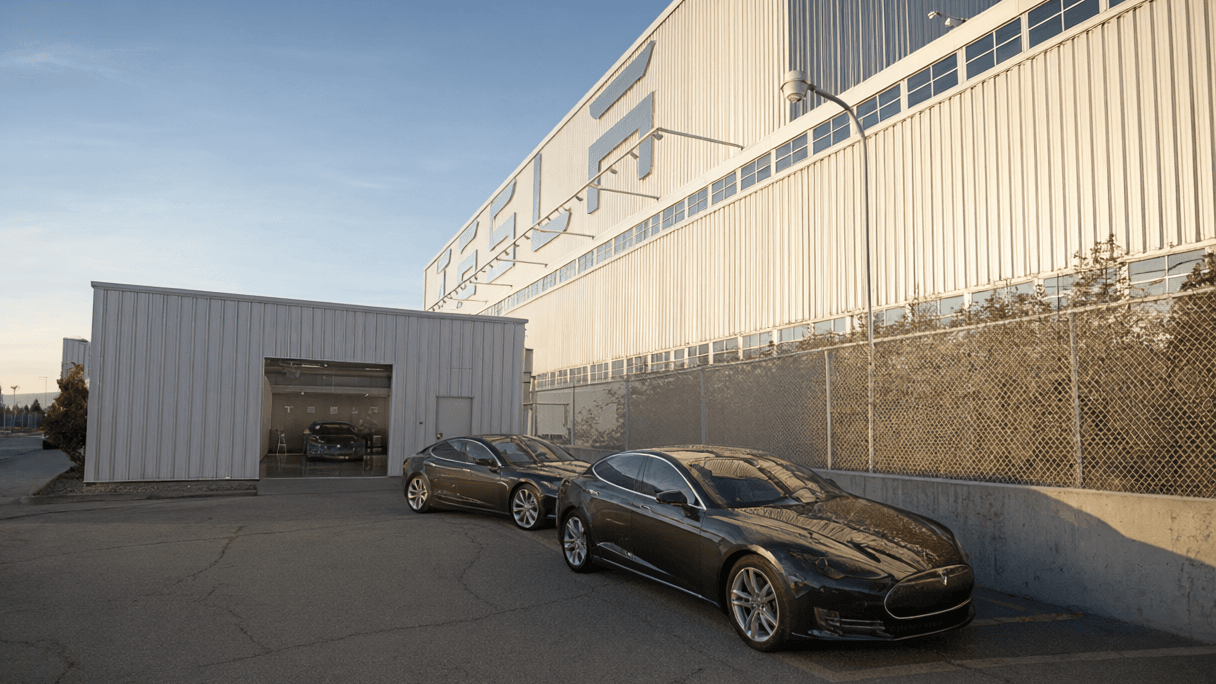
AI-generated image · Bay Street Wire
Opinion: As profits plummet 43%, Tesla is pivoting to humanoid robots to distract shareholders from a flat-lining automotive business.
Let’s be clear: this is an opinion piece. I am not a financial advisor, and I have no undisclosed conflicts of interest regarding the company in question. I am simply a skeptic looking at the math.
Tesla has a pattern. When the road gets bumpy, it doesn't just steer into the skid; it attempts to convince the world that the car is actually a spaceship. The latest iteration of this playbook is the Optimus humanoid robot.
As TechCrunch first reported, Tesla recently announced it has begun production of these robots at its Fremont, California, facility—a space that was once dedicated to the company's primary engine of growth: electric vehicles. In its third-quarter letter to shareholders, Tesla claimed it has produced the first "production-quality bots" and asserted that its current manufacturing process is "suitable for a commercial product."
On the surface, it sounds like a bold leap into the future. In reality, it looks like a desperate pivot.
If you look at the actual numbers provided in the TechCrunch report, the narrative of a high-growth tech darling is crumbling. Tesla’s third-quarter revenue was $28.04 billion, a figure that is essentially flat compared to the $28.09 billion reported for the same period in 2025. Even more concerning, this represents a decline from the $28.23 billion haul recorded in the previous quarter.
But the most damning evidence is found in the core business. Tesla’s EV sales—the very reason the company exists—were flat year-over-year at $20 billion. While the company delivered 486,532 vehicles in the third quarter (a slight increase of about 6,000 units over the previous quarter), it failed to match the delivery numbers from the same period last year.
When the core product hits a wall, management usually does one of two things: they innovate the product, or they change the subject. Tesla is doing the latter.
While the company celebrates the birth of its "production-quality bots," its financial health is deteriorating. TechCrunch reports that Tesla’s net income plummeted to $787 million in the third quarter—a staggering 43% drop from the $1.37 billion earned during the same period in 2025.
Why the collapse? Because Tesla is burning cash on a robotic vanity project. The company’s expenses have "skyrocketed" as it pours resources into Optimus, artificial intelligence, and autonomous driving. These forward-looking bets are eating the company alive.
Tesla isn't the only part of the business struggling. Its solar and energy storage segment saw a 16% year-over-year decline, dropping to $2.8 billion—a slump the company attributed to customer refunds related to tariffs. Even the company's profitability was squeezed by lower sales of regulatory credits.
To be fair, there is a silver lining, but it isn't the robots. Tesla’s services business, which includes subscriptions for its Full Self-Driving software, grew 33% year-over-year to $4.6 billion. This segment acted as a vital cushion, generating a record $734 million in gross profit during the quarter. Without this "services and other" boost, the company's quarterly results would likely be even more grim.
So, we are left with a stark contrast. On one hand, we have a services business that is actually growing and an automotive business that has stalled. On the other, we have the Optimus robot: a capital-intensive experiment being manufactured in a repurposed EV factory.
Tesla is betting that shareholders will be so enamored by the spectacle of humanoid robots that they will overlook the fact that the company's primary revenue driver is no longer growing. But you cannot pay dividends or sustain a valuation based on "production-quality bots" that have yet to prove their commercial viability.
Tesla is no longer just a car company; it is now a company spending billions to convince us it is an AI company. But as the 43% drop in profits suggests, the cost of that illusion is becoming unsustainable.