
The Nvidia Vacuum: Why Enterprise AI Infrastructure Now Faces a Systemic Risk

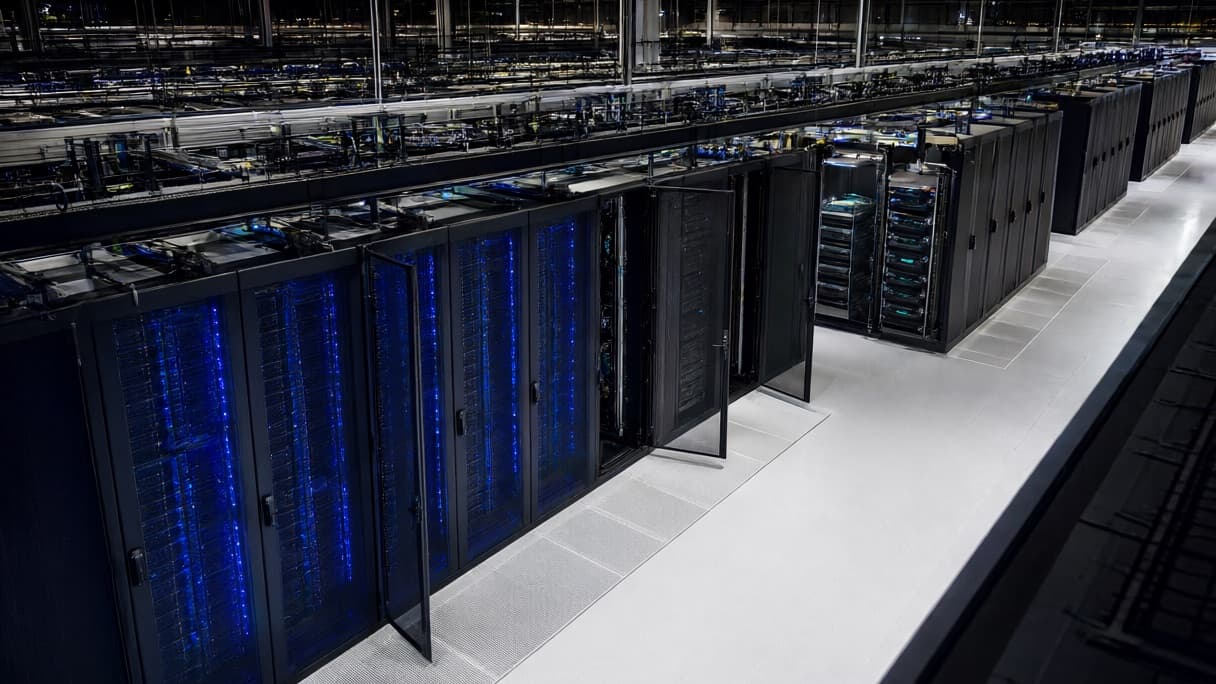
AI-generated image · Bay Street Wire
The departure of Jensen Huang is more than a leadership crisis; it is a structural failure that exposes the danger of hardware mono-dependency in the global AI pipeline.
For years, the enterprise AI strategy has been predicated on a single, unwavering truth: Nvidia is the sole provider of the necessary compute. But with the abrupt resignation of CEO Jensen Huang, that dependency has shifted from a strategic advantage to a systemic risk.
As an analyst focused on ROI and B2B operations, the takeaway is clear. The vacuum left by Huang isn't just a corporate governance issue; it is a signal that enterprise buyers must diversify their hardware dependencies immediately to avoid catastrophic pipeline disruptions.
### The Single-Point-of-Failure Leadership Model
Nvidia was not built as a traditional corporate hierarchy; it was built as an extension of Jensen Huang. According to IDC analyst Tom Mainelli, Huang constructed the company such that everything flowed through him, with approximately 60 employees reporting directly to the CEO. Computer industry analyst Jon Peddie summarized the relationship simply: "Jensen is Nvidia, and Nvidia is Jensen."
From an operational standpoint, this lack of a succession plan is a red flag. Moor Insights & Strategy chief analyst Pat Moorhead described Huang as both the tactical and visionary leader, comparing him to Steve Jobs. Because Huang functioned as the sole visionary and tactical lead, his exit leaves a void that cannot be filled by a standard executive hire. The risk is not just who leads the company, but whether the company can maintain its trajectory without the man who personally steered its most pivotal bets—including a $5 million investment from Sega after a failed Dreamcast chip project, as reported by The Wall Street Journal in 2024.
### Global Infrastructure in Jeopardy
The instability at the top of Nvidia is radiating through the global AI supply chain, creating immediate volatility for international projects. The impact is most acute in Asia, where Nvidia's influence is deeply embedded in national AI strategies.
* **China:** According to a review by Reuters of corporate disclosures, investment plans, and procurement notices, more than $3 billion in Chinese AI computing projects are currently in limbo. These projects rely on Nvidia’s restricted processors, which are already difficult to obtain due to U.S. export controls. * **South Korea:** The volatility was significant enough to trigger an emergency meeting of South Korea’s government AI strategy council. While the Science Ministry reports that Nvidia has reaffirmed plans to supply 260,000 advanced GPUs and continue joint AI projects, the necessity of such a meeting underscores the fragility of the current supply commitment. * **Japan:** The Industry Ministry has stated it will closely monitor the company, which Reuters reports is viewed as an important player in Japan’s AI semiconductor industry. Deputy chief cabinet secretary Masanao Ozaki emphasized Japan's commitment to ensuring a stable semiconductor supply, admitting it is too early to fully assess the global impact.
### The Scandal Factor and Regulatory Friction
Beyond the leadership void, the circumstances of Huang's exit introduce regulatory and geopolitical risks that could further choke the hardware pipeline. Following reports that Huang was the target of a Chinese spy operation, Nvidia’s board initiated an independent investigation on November 8. Furthermore, Huang has acknowledged having an affair with Alice Huang, who previously served as an executive at the Singapore-based chip firm Megaspeed.
This personal scandal has intersected with international law enforcement. TechCrunch reports that Singapore's Ministry of Home Affairs seized Alice Huang's passport in June 2025 during an investigation into possible false declarations regarding server purchases shipped from Singapore to Malaysia. While police found insufficient evidence of offenses related to those declarations by February 2026, Alice Huang was barred from re-entering Singapore after providing inaccurate information about her role at Megaspeed.
For the enterprise buyer, these developments are not mere tabloid fodder. They represent a breakdown in the stability of the primary AI vendor. When the leadership of a company representing roughly 6 percent of the S&P 500 is embroiled in investigations involving espionage and smuggling allegations, the reliability of the long-term hardware roadmap is compromised.
### The ROI of Diversification
For too long, the industry has accepted the "Nvidia tax" as the cost of doing business in AI. However, the current crisis proves that relying on a single vendor—especially one whose operational model was centered entirely on one individual—is a failure of risk management.
While Taiwan’s Economy Minister Kung Ming-shin suggested that Huang’s departure is unlikely to significantly alter the growth of the global AI industry, and Taipei officials confirmed that Nvidia's planned overseas headquarters remain on track, these are macroeconomic observations. At the enterprise level, the risk is micro: the failure of a single shipment or the sudden shift in a restricted processor's availability can derail a multi-million dollar AI deployment.
**Opinion:** The era of the "visionary showman" CEO is over, and with it, the era of blind trust in a single hardware provider. To protect their ROI and ensure operational continuity, enterprise leaders must stop viewing Nvidia as an inevitable utility and start treating it as a high-risk dependency. The only hedge against a systemic collapse of the AI infrastructure pipeline is a diversified hardware strategy. If your AI roadmap depends entirely on the stability of a company currently reeling from a leadership vacuum and international investigations, your roadmap is not a plan—it is a gamble.