
The Modular Mirage: Why Framework's Support Failure Undermines the Repairability Revolution

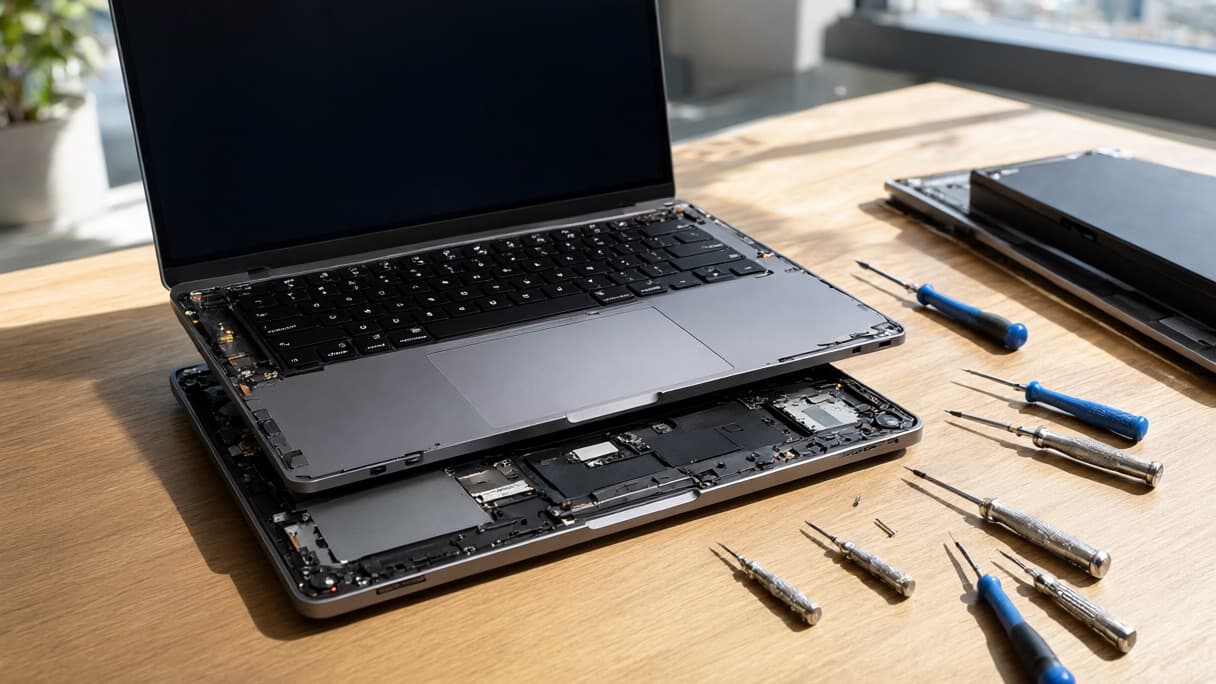
AI-generated image · Bay Street Wire
Opinion: Framework promises a future of user-empowered hardware, but as Gilles Chehade's nightmare with a 3,000 EUR laptop shows, modularity is a gimmick if the company's support system is broken.
For years, Framework has positioned itself as the antidote to the disposable tech era. The pitch is seductive: a laptop you can actually fix, upgrade, and maintain without begging a manufacturer for permission. It is a vision of hardware liberation that I, like many in the tech community, wanted to believe in. But as first reported by poolp.org regarding the recent experience of Gilles Chehade, it becomes clear that modularity is only as good as the support system backing it. If the user experience is a disaster, the 'modular' dream is just a marketing gimmick.
In an account detailed on poolp.org, Chehade describes a descent into corporate incompetence that should serve as a warning to anyone considering the Framework ecosystem. Chehade’s company purchased a Framework Laptop 16 for a developer, configured at a cost of approximately 3,000 EUR. On day one, the machine was broken out of the box. Before a BIOS was even reached or an operating system installed, the laptop displayed a "missing input module" screen. The keyboard was not detected when centered, and when moved to the left, it was misidentified as a numpad.
Now, hardware failures happen. Even the best companies ship duds. The failure here isn't the faulty keyboard; it's the systemic collapse of Framework's professional standards. According to Chehade, what followed was a three-month ordeal involving roughly thirty support emails and a total lack of institutional memory.
Chehade describes a "script loop hell" where support agents appeared to read from a rigid manual without reading the actual email threads. For two weeks, the company asked for the same photos of the midplate and keyboard, requested BIOS resets, and even suggested installing a Windows drivers bundle to fix a problem that occurred before the OS even booted—on a machine that wasn't even running Windows.
This is where the 'repairability' brand becomes a liability. Framework markets itself to the technically proficient—the tinkerers, the Linux enthusiasts, the people who actually know how to diagnose a problem. Yet, when Chehade’s developer, referred to as Q, used the company's own `framework_tool` to run a proper isolation, the results were unambiguous. The keyboard module was reporting the ID of a numpad (KeyboardB), leading the firmware to see two numpads and no keyboard. Q provided a full report and a one-line reproduction command, essentially doing Framework's diagnostic work for them.
Instead of rewarding this technical clarity, Framework's support spent ten days asking the developer to verify a shipping address.
When you sell a machine for 3,000 EUR on the promise of transparency and user empowerment, you cannot treat your customers like tickets in a queue to be managed by a script. The irony is palpable: Framework sells the *idea* of a partnership between the user and the hardware, but their support apparatus treats the user as an obstacle to be processed.
Even after replacement parts were sent, the nightmare continued. In September, the wrong part was replaced. In October, a new keyboard brought a new bug. By November, after a trip to the repair center, Framework concluded there was "No Fault Found." Their final diagnosis? They blamed the keyboard layout of an operating system that wasn't even installed when the problem first manifested.
This is the gap between marketing and reality. Modularity is meant to reduce friction. It is meant to make the relationship between the owner and the device sustainable. But if a company cannot manage a basic hardware replacement without ignoring the technical evidence provided by the customer, the modularity is superficial. It doesn't matter if you can swap a module in thirty seconds if you have to spend three months arguing with a support agent who doesn't know what a BIOS is.
Chehade has now banned future Framework purchases at his company. He should. A company that ignores its most technically capable users is a company that doesn't actually value the 'repair' in repairability. Until Framework fixes its human interface—the support staff and the scripts they follow—their hardware is just a fancy puzzle that leaves the customer holding the bag.