
The Math Wall: Why OpenAI is Recruiting the Fields Medalists

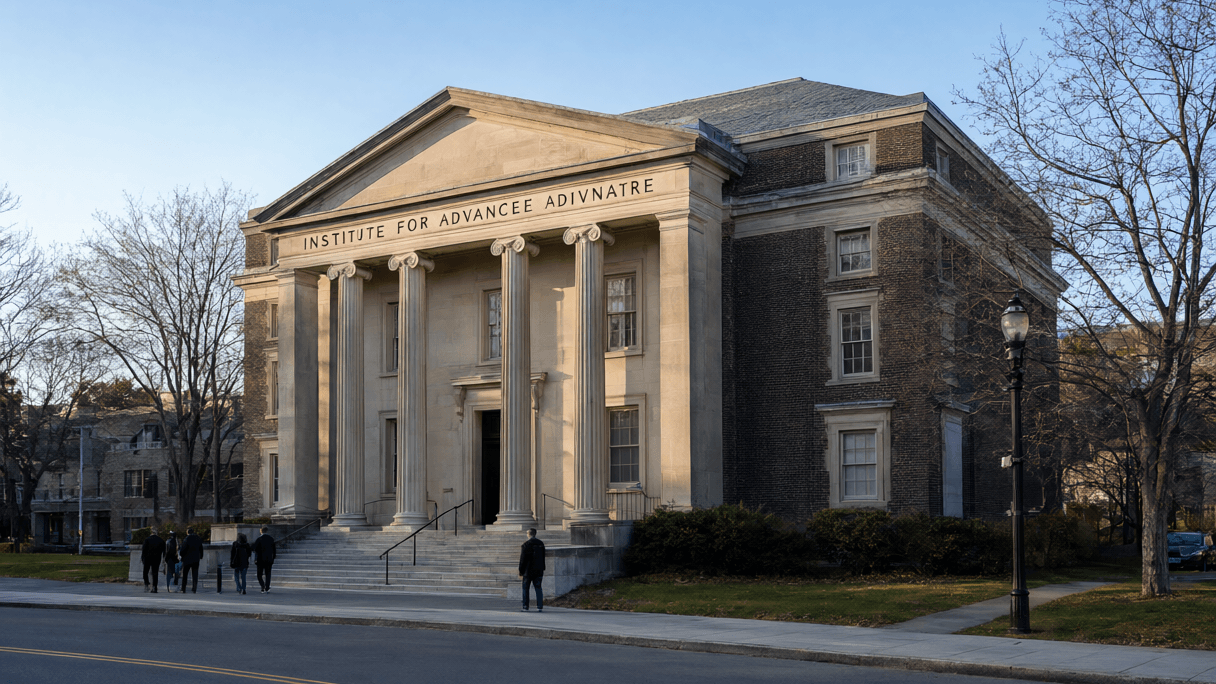
AI-generated image · Bay Street Wire
The formation of the Advisory Group on Mathematics and Artificial Intelligence suggests that raw compute is no longer enough to navigate the complexities of mathematical proof.
For years, the prevailing narrative in frontier AI has been one of scaling: more data, more compute, and the emergent properties will follow. But OpenAI's latest move suggests a pivot. By establishing a panel of elite human mathematicians, the company is tacitly admitting that the 'black box' approach to reasoning is hitting a wall that cannot be scaled over.
As The Verge first reported, OpenAI has announced the creation of the Advisory Group on Mathematics and Artificial Intelligence (AGMAI). This nine-member independent panel is composed of what researchers described to The Verge as "celebrities" in the field, including scholars from Harvard, Stanford, Oxford, and Cambridge, boasting multiple MacArthur "genius grants" and Fields Medals.
From a practitioner's perspective, the composition and purpose of AGMAI are telling. The group will be hosted by the Institute for Advanced Study (IAS) in Princeton, New Jersey. OpenAI has stated that the group's role is to advise on the review and communication of emerging results, helping the company assess the significance of these results and coordinate their dissemination according to academic and professional standards.
***
**Opinion:** *The sudden urgency here is a signal. When you move from internal validation to seeking the counsel of the world's most decorated mathematicians to avoid "fumbling" again, you are admitting that the internal logic of the model is insufficient for verification. Scaling laws can optimize for probability, but mathematics requires absolute proof. OpenAI is essentially outsourcing its 'reasoning' audit to the human elite because the models cannot yet self-correct with mathematical certainty.*
***
OpenAI claims the group will operate independently, with the ability to offer unrequested advice and publicly comment on the company's impact on mathematics. To facilitate this, members will reportedly be granted early access to OpenAI's research.
However, the rollout has been fraught with the same opacity that characterizes much of the frontier AI space. Simon Machado, a researcher at ETH Zurich, told The Verge the initiative seemed "shrouded in mystery," specifically questioning the selection process for the nine members. While a bare-bones website indicates the group formed after OpenAI approached some members, the exact details of those initial conversations remain unclear.
Martin Hairer, a professor at the Swiss Federal Institute of Technology in Lausanne (EPFL) and Imperial College London, attempted to clarify the group's origins in a blog post. Hairer noted that AI has already profoundly impacted mathematical research, raising questions regarding priority and the attribution of ideas. He argued against an "ostrich" approach of ignoring AI labs, asserting that AGMAI is genuinely independent and that members receive no financial compensation from OpenAI, relying instead on the IAS for technical support.
Ultimately, the creation of AGMAI is a confession of the gap between statistical mimicry and true mathematical reasoning. OpenAI isn't just looking for a PR shield; it is looking for a map through a mathematical landscape that its current architecture cannot navigate alone.