
The AI Graveyard: Why 'AI-Powered' Is No Longer a Business Model

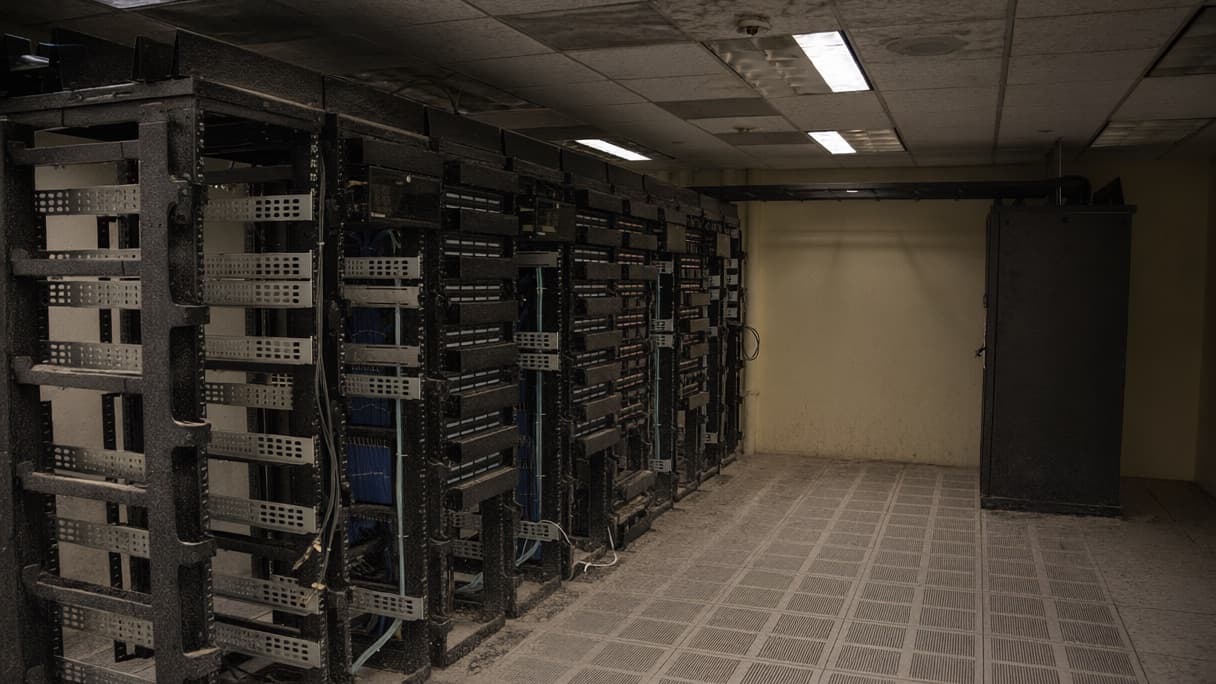
AI-generated image · Bay Street Wire
From bankruptcy filings to abandoned corporate initiatives, the industry is discovering that technical capability does not equal a sustainable company.
For the past few years, the venture capital and corporate playbook has been simple: attach 'AI-powered' to a product and scale. But as the dust settles, we are seeing the emergence of what TechCrunch describes as an "AI graveyard," as first reported by the outlet, where high-burn moonshots are cratering under the weight of unsustainable operational costs and a lack of distinct value propositions.
***
**Opinion:** *The industry is hitting a wall. We have moved past the era where the mere presence of a large language model constitutes a moat. When the core utility of a startup can be absorbed into a single update by a platform giant, the 'AI-powered' startup is not a business—it is a feature waiting to be acquired or erased.*
***
The casualties are not limited to small players. Even OpenAI, one of the world's most valuable private companies, has struggled to maintain standalone products. TechCrunch reports that OpenAI discontinued its AI-powered web browser, ChatGPT Atlas, on August 9 after less than a year, absorbing its features into the main chat interface. The company took a similar path with Operator, an AI agent for web tasks, and has diminished the role of DALL-E as a separate destination by integrating image generation directly into ChatGPT. Most tellingly, OpenAI's video-sharing platform, Sora, shut down in March 2026, plagued by user-retention issues and high operating costs.
This pattern of consolidation is a death sentence for niche AI startups. Relay, a workflow automation tool that positioned itself as an alternative to Zapier, shut down in August 2026. According to TechCrunch, Relay could not maintain a reason to exist as a standalone product once giants like Google and OpenAI integrated similar automation tools directly into their ecosystems.
Then there is the issue of viability and scale. Character.ai, founded by Noam Shazeer and Daniel De Freitas, reached a $1 billion valuation in 2023 after raising $150 million. Despite a reported $2.7 billion licensing deal with Google to bring the founders back into the Google fold, the company filed for bankruptcy in early October. TechCrunch notes that Character.ai faced a storm of operational, regulatory, and legal headwinds, including lawsuits alleging the bots contributed to teen self-harm and a cease-and-desist from Disney. In a stark illustration of the company's collapse, Disney has emerged as the opening bidder for some of its intellectual property, offering $20 million.
Smaller, privacy-focused attempts are also failing to gain traction. Ollie, a family-focused AI agent that achieved SOC 2 compliance, shut down on November 6. Co-founder and CEO Bill Lennon stated on X that the company simply could not keep up with competitors like Instinct and Muse, citing a failure to grow and insufficient capital.
This isn't just a startup problem; it is a corporate one. S&P Global Market Intelligence reports that approximately 42% of AI initiatives are abandoned by their corporate parents due to technical hurdles, weak demand, or scaling difficulties. Even Apple's attempt to revamp Siri with "Apple Intelligence" resulted in engineering bugs and delays that TechCrunch reports contributed to a $250 million settlement regarding the marketing of the iPhone 16.
When nearly half of corporate AI bets are failing and once-billion-dollar startups are filing for bankruptcy, it is clear that the 'AI-powered' label is no longer a viable business model. The industry is learning the hard way that scaling a model is not the same as scaling a business.