
The Luxury 'Slump' is a Mirage for the Middle-Tier
AI-generated image · Bay Street Wire
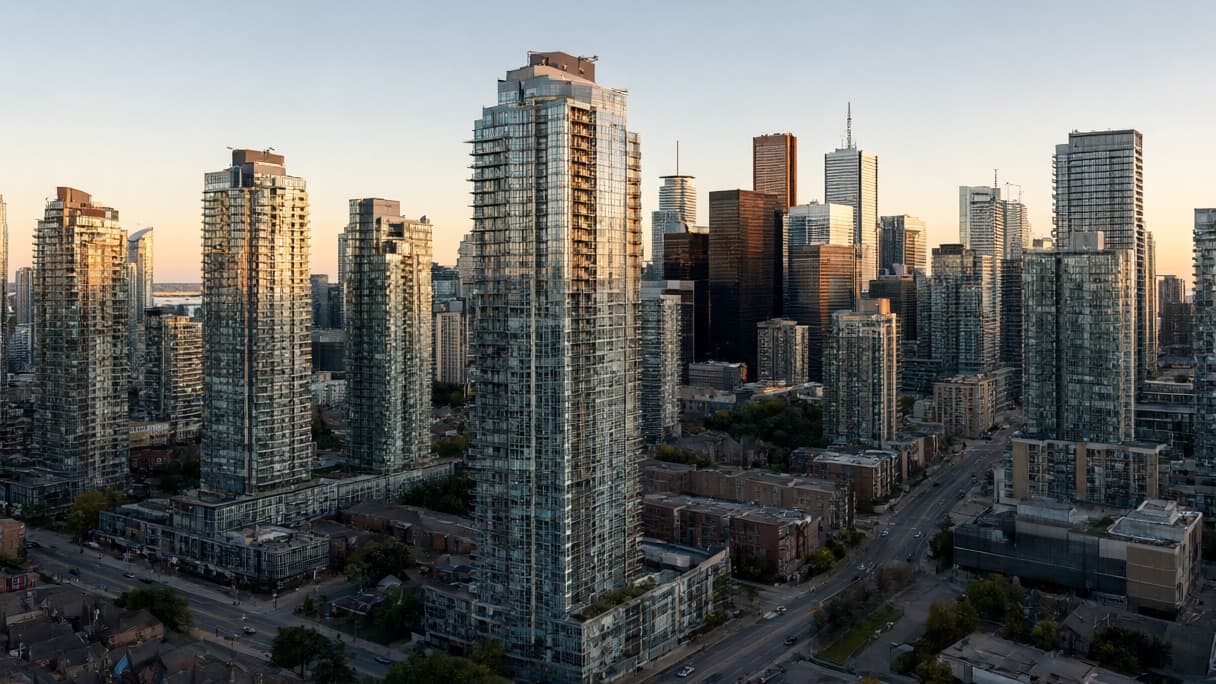
While agents preach a market slowdown to shake sellers, the uber-wealthy are quietly snapping up Toronto's most expensive assets in a decade-long peak.
OPINION: Let's be clear about the narrative currently circulating in the luxury real estate corridors of Toronto and Vancouver. As CityNews Toronto first reported, brokers and reports point to a "challenging year" defined by a "slump" in high-end sales, citing inflation, trade war anxieties, and borrowing cost uncertainties. But if you look closer at the actual movement of capital, you'll find that this 'slump' is a convenient fiction—one that applies almost exclusively to those who aren't wealthy enough to ignore the economy.
The data suggests a stark divide between the 'luxury' tier and the 'uber-luxury' tier. While Re/Max Canada reports that transactions for properties over $3 million in the Greater Toronto Area dropped 9.4 per cent year-over-year during the first nine months of 2026, the very top of the market is bucking the trend. In a stunning contradiction, 15 properties priced over $10 million were sold in Toronto during that same period. According to Re/Max luxury broker Barry Cohen, this represents the highest level of activity at that specific price point in ten years.
This isn't a market in collapse; it's a market in filtration. While the 'lower' end of the luxury ladder—those eyeing $3 million homes—are feeling the squeeze of municipal land transfer tax hikes that kicked in April 1, the elite are moving in. Cohen notes that these buyers are "a little more immune" to global factors. When the tax hike hit, Cohen says buyers experienced a brief "revolt" before realizing the situation wasn't changing and deciding to "get on with my life."
Meanwhile, the rhetoric from brokerages suggests a "stubborn" market. Andrew Carros, managing broker and COO for Engel & Volkers Vancouver, describes a scenario where sales volumes have decreased since 2022, yet inventory that sells does so within 10 per cent of the asking price. In Vancouver, the slowdown is most pronounced in the $4 million-plus bracket, where only 17 sales occurred for every 100 new listings from January to October, compared to 29 sales in the $2 million to $4 million range.
The "slump" is also exacerbated by government policy. A Re/Max report highlights how a proposed extension of the ban on non-citizens and permanent residents purchasing residential properties until 2029, combined with British Columbia's 20 per cent foreign national tax, has sidelined international athletes, corporate executives, and high-net-worth professionals.
The conclusion is obvious: the "slump" is a tool for negotiation. While traditional hubs struggle with volume, resource-driven markets are surging; CityNews Toronto reports Burlington, Ont., saw a 26.3 per cent increase in sales for homes above $2.4 million, and Calgary saw a 20.6 per cent jump for properties $1.5 million and up. The truly wealthy are not sitting on the fence; they are simply waiting for the right asset.