
The 'Already Here' Fallacy: Why Ottawa's Residency Math Doesn't Solve the Infrastructure Crisis

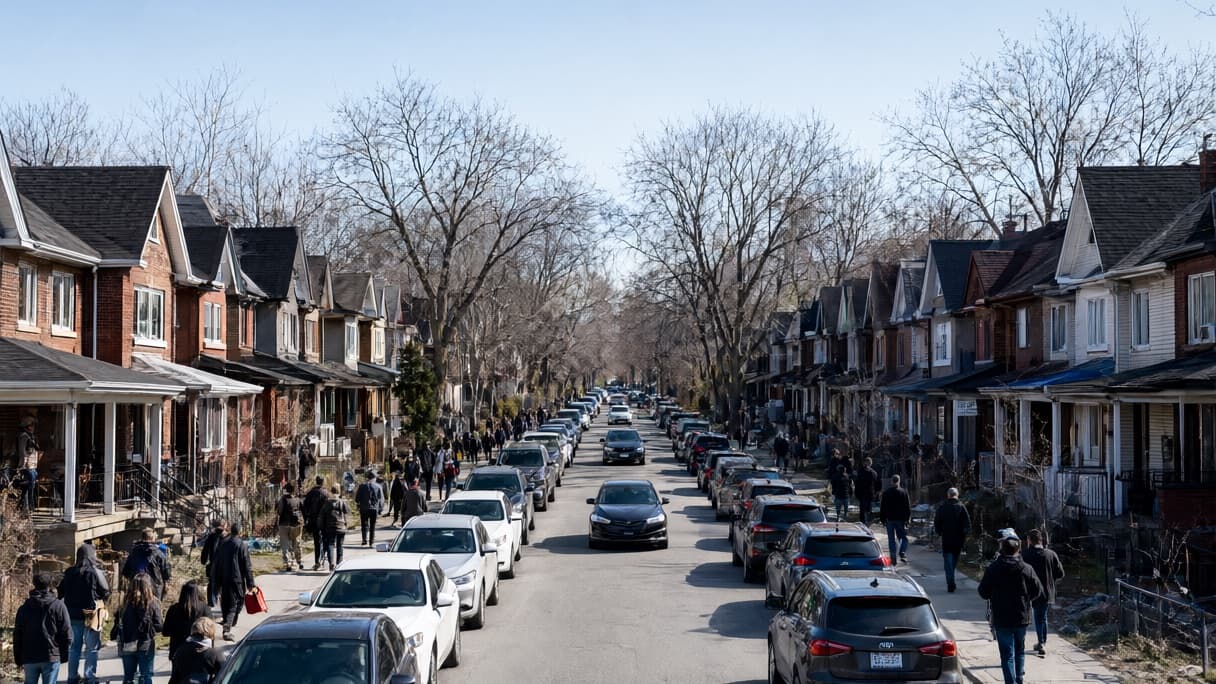
AI-generated image · Bay Street Wire
Immigration Minister Lena Diab claims the government is managing newcomers responsibly, but the push to grant permanent residency to hundreds of thousands ignores the reality of a system already under strain.
OPINION: The federal government is currently attempting to sell a narrative of 'responsible management' regarding its immigration pipeline, but a closer look at the numbers reveals a strategy based on a convenient semantic trick.
As first reported by CBC News, Immigration Minister Lena Diab is backing a proposal that would allow up to 662,000 individuals to obtain permanent residency in the coming year. To the casual observer, this figure is staggering, especially when compared to Ottawa's stated annual target of 380,000 permanent resident admissions for the next three years. The gap is bridged by what Diab describes as 'one-time measures' that would add up to 282,000 additional permanent admissions in 2027.
Here is where the government's logic falters. Diab's office has attempted to soften the blow of these numbers by stating that the 'vast majority' of these admissions will be transitioning people who are already residing within Canada to permanent resident status.
From the government's perspective, this is a bureaucratic adjustment—a change in status rather than a change in population. But from a contrarian viewpoint, this is a fantasy. The strain on a nation's infrastructure is not determined by the legal status of its residents; it is determined by the physical presence of people. Whether an individual is a temporary resident, a worker, or a permanent resident, they require the same things: a roof over their head, a job to sustain them, and access to social services.
Conservative immigration critic Michelle Rempel Garner has highlighted this exact blind spot. As reported by CBC News, Rempel Garner argues that Canada simply cannot absorb this volume of people without placing additional strains on social infrastructure, the job market, and the housing market. The government's insistence that these people are 'already in Canada' does not magically create more housing units or expand the capacity of healthcare systems. If the infrastructure is buckling under the current weight of the residency pipeline, granting permanent status to hundreds of thousands more only codifies a level of demand that the system is already struggling to meet.
Furthermore, the government's plan includes 100,000 slots specifically for workers nominated by provinces and territories. Minister Diab notes that these slots will remain unfilled if provincial and territorial governments decide they are not needed. While this is framed as a safeguard, it acknowledges a fundamental tension: the federal government is setting targets that may exceed the actual capacity or desire of the regions to integrate more people.
The political fallout is already evident. CBC News reports that the Conservative Opposition is seeking to block the government's plan through a motion being debated on Parliament Hill. The Bloc Québécois has indicated it will support this motion. While the motion requires the support of some members of the Liberal majority government to pass, the friction underscores a growing consensus among opposition parties that the current trajectory is unsustainable.
Ottawa's attempt to frame the 2027 plan as a mere 'transition' of existing residents is a distraction from the core issue. The 'responsible management' Diab speaks of is an accounting exercise, not an infrastructure strategy. By focusing on the legal transition of status, the government avoids addressing the tangible reality that the sheer volume of people—regardless of their paperwork—is pushing the country's resources to a breaking point.