
The King Street Slog: A Recipe for Downtown Paralysis

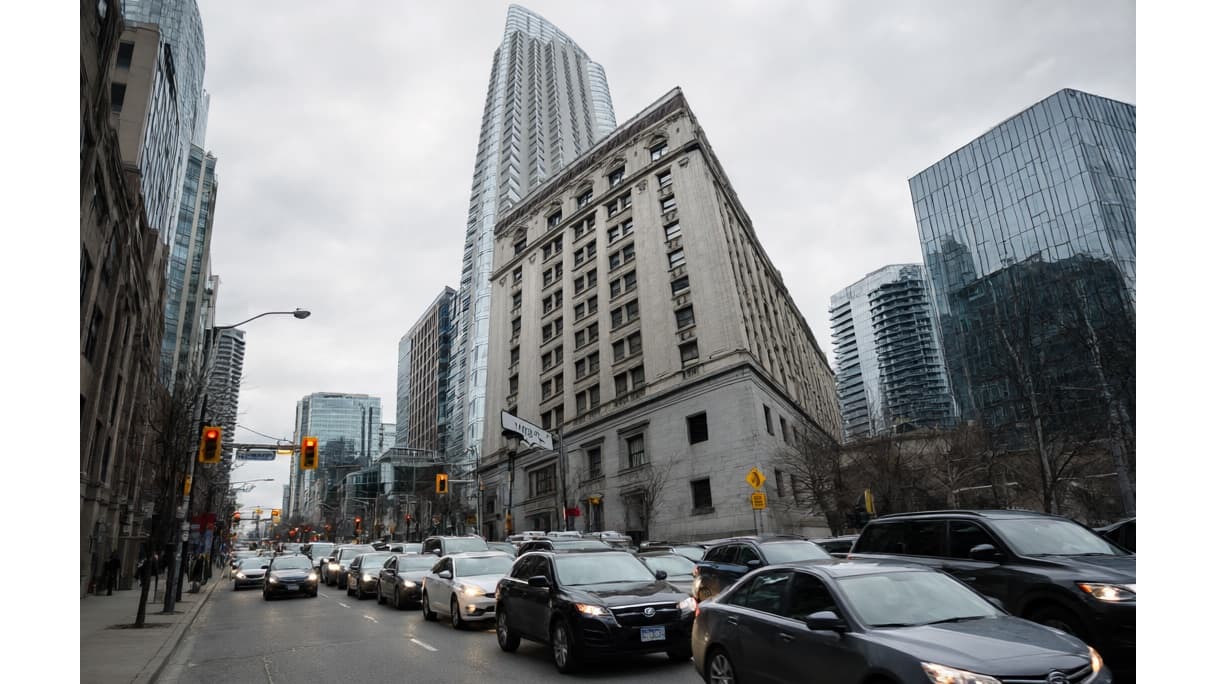
AI-generated image · Bay Street Wire
As the City and TTC launch a massive infrastructure overhaul on King Street West, the promise of 'minimized disruptions' clashes with the reality of one-lane bottlenecks and sweeping transit diversions lasting until 2027.
### The Infrastructure Gamble
For anyone who relies on the downtown core for their daily commute, the news released on November 20, 2026, is a sobering warning. The City of Toronto and the Toronto Transit Commission (TTC) are embarking on a massive infrastructure renewal program along King Street West that will effectively turn one of the city's most critical arteries into a construction zone for the next year and a half.
According to a City of Toronto news release, the project is part of a multi-year effort that began in 2020. Work will focus on renewing streetcar tracks and replacing outdated watermain infrastructure. While the City frames this as a coordinated effort to support long-term infrastructure needs and reduce future disruptions, the immediate cost is a logistical nightmare for drivers and transit riders alike.
### A Timeline of Gridlock
This is not a quick fix. The construction is scheduled to roll out in phases, stretching from the west end all the way to University Avenue, with some work continuing into the winter of 2027.
As detailed by CityNews Toronto and the City of Toronto, the schedule is as follows:
* **Dufferin Street to Close Avenue:** Work begins Monday, November 23, and runs through fall 2027. * **Spadina Avenue to Portland Street:** Work begins as early as December and lasts until summer 2027. * **Bathurst Street to Shaw Street:** Work occurs from spring 2027 to late 2027. * **King Street West and York Street intersection:** Work is slated for summer 2027. * **Charlotte Street to University Avenue:** Work runs from fall to winter 2027.
### Opinion: The One-Lane Fallacy
*Opinion: The City claims these phases will "minimize disruptions," but let's be clear: King Street is already a bottleneck. Reducing a primary downtown corridor to a single lane of traffic is not a "restriction"—it is a recipe for total paralysis. When the City admits that during streetcar track renewal, only one lane of traffic will remain open in one direction through the work zone, they are describing a scenario where a single stalled vehicle or a delivery truck could freeze an entire section of the downtown core. The TTC and the City are betting that traffic signal adjustments and "control personnel" can mitigate the loss of capacity, but for those of us in the daily commute, this feels like an exercise in optimism over operational reality.*
### Transit in Turmoil
While drivers face the slog, TTC riders are dealing with a fragmented service map. The City of Toronto news release notes that as of November 1, 504 King streetcars were already consolidated into a single branch operating between Broadview Station and Dundas West Station. To fill the gaps, 504C/304C King replacement buses have been deployed between Distillery (Front Street East and Cherry Street) and Roncesvalles Avenue, while 503 Kingston Rd replacement buses were extended west to the Dufferin Gate Loop. At the same time, service on the 508 Lake Shore streetcars was paused.
Starting Monday, November 23, the disruptions escalate. CityNews Toronto notes that the 504/304 King streetcars will be diverted to Queen Street West for the stretch between Shaw Street and Roncesvalles Avenue. By December, as construction moves between Portland and Spadina, these streetcars will divert even further east, staying on Queen until they reach Spadina.
### The Ground-Level Reality
For the first two phases—Dufferin to Close and Spadina to Portland—the City promises that one lane of traffic in each direction will generally be maintained during watermain replacement. However, the track renewal work is where the real danger lies, as traffic will be restricted to a single lane in one direction.
Furthermore, the City of Toronto warns that intermittent intersection closures may be required between Close Avenue and Dufferin Street. In some cases, intersecting streets may be converted to two-way traffic to compensate for the closures.
To manage the chaos, the City and TTC claim they are implementing several measures: * Traffic signal adjustments * Deployment of traffic control personnel * Installation of construction signage * Ongoing traffic monitoring * TTC route diversions and service adjustments
While the City maintains that access to businesses, properties, and accessible pedestrian routes will be preserved, the sheer scale of the project suggests a winter of frustration. With schedules subject to change based on weather and site conditions, the "winter 2027" end date may feel like a distant mirage for those currently trapped in the King Street slog.