
The Human Cost of the Trade War: Why Border Stability Matters More Than Political Posturing

AI-generated image · Bay Street Wire
As Michigan candidates clash over tariffs and trade deals, the escalating conflict between the U.S. and Canada threatens the economic security of the laborers and newcomers who keep the border economy moving.
OPINION
In the high-stakes theater of the upcoming U.S. midterm elections, trade policy is often framed as a game of leverage—a series of tariffs, retaliatory duties, and hard-nosed negotiations designed to secure a "better deal." But as we watch the political friction ignite in Michigan, we must look beyond the campaign rhetoric to the people caught in the crossfire. For the thousands of newcomers and cross-border laborers whose livelihoods depend on the seamless movement of goods and people, this trade war is not a strategic gambit; it is a threat to their fundamental economic security.
As CBC first reported, the current climate is one of escalating volatility. U.S. President Donald Trump has rapidly intensified a trade war with Canada following the collapse of negotiations in August. The measures have been severe: the U.S. has imposed 50 per cent tariffs on a variety of Canadian goods, and more recently, an import ban on motorcycles, whey products, and some Canadian liquor has officially taken effect. Ottawa has not remained passive, responding with its own retaliatory duties.
While these figures are discussed in the abstract by policymakers, the real-world implications are visceral. Michigan's economy is deeply integrated with that of Canada, particularly within the auto industry. When the flow of trade is choked by 50 per cent tariffs and import bans, it is the workforce—including the newcomers who have migrated for these specific industrial opportunities—who feel the instability first. For those who have built lives around the promise of North American labor mobility, the sudden imposition of trade barriers creates a precarious existence where employment can vanish based on a presidential order.
This fragility is evident in the current political discourse in Michigan. During a recent televised debate, Republican Senate candidate Mike Rogers and Democratic nominee Abdul El-Sayed sparred over the utility of tariffs. Rogers, who has recently stated that "Canada is not our enemy," has expressed a desire to see the trade war end, noting that U.S. tariffs on Canada have become too high. However, CBC reports that neither candidate has explicitly ruled out the future use of duties.
On the other side, Abdul El-Sayed has criticized President Trump's approach as "ham-fisted, chaotic, [and] self-serving," arguing that these tariffs are costing residents of Michigan thousands of dollars. Yet, El-Sayed has not offered a total reprieve; he maintains support for tariffs when they are part of a targeted "industrial policy that makes sense" to protect the domestic market.
When both sides of the political aisle view tariffs as a viable tool—whether for "industrial policy" or as a means to force a "better deal"—the human element is erased. The newcomers who navigate the complexities of cross-border employment are not merely line items in a trade balance; they are families whose stability depends on the predictability of the border. When the U.S. government takes symbolic actions, such as President Trump's order to rename Lake Ontario as Lake America, it signals a shift toward nationalism that transcends economics and enters the realm of identity and instability.
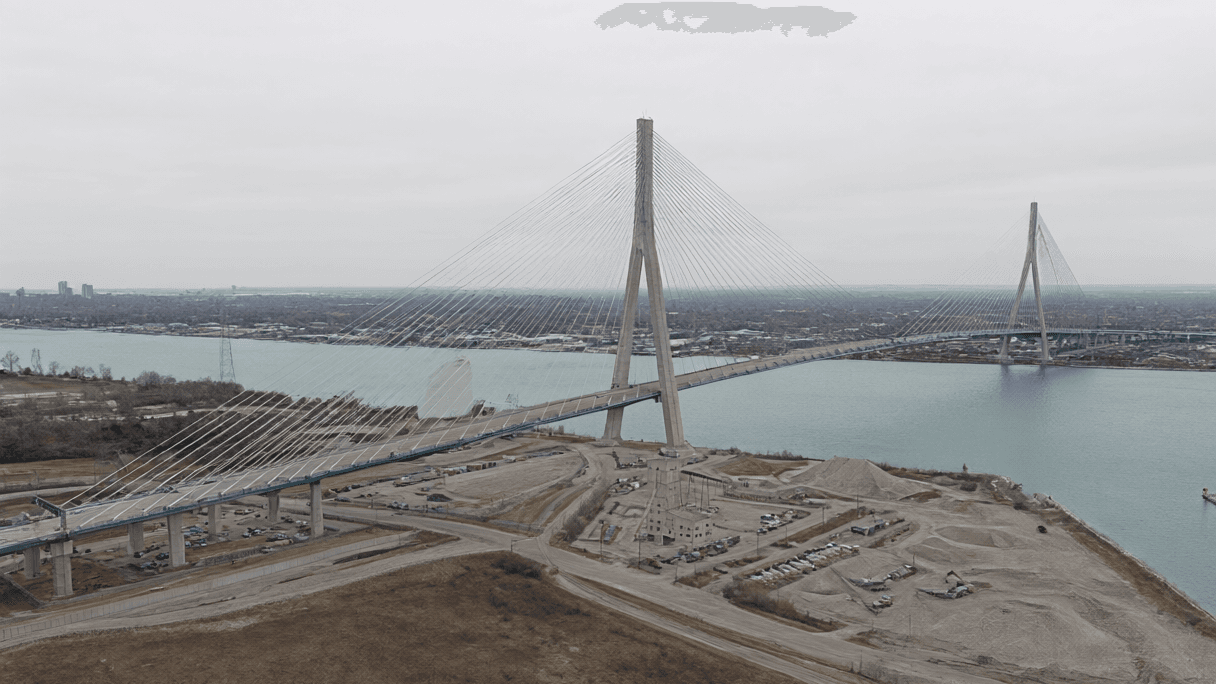
Furthermore, the dispute extends to critical infrastructure. Mike Rogers has inserted himself into the controversy regarding the delay of the Gordie Howe International Bridge, which connects Detroit and Windsor. While Rogers claims the U.S. will secure a better financial deal and expresses concern over "Chinese cars pouring over that bridge," such delays only further complicate the mobility of the workforce. For the newcomer, a bridge is not just a piece of infrastructure; it is a lifeline to employment and economic integration.
Polling indicates that a majority of Michigan voters disapprove of the targeting of Canada and the imposition of these tariffs. This suggests a growing recognition that the "America First" approach may actually be harming the local economy. But for the immigrant and the cross-border worker, the stakes are higher than a ballot box. They are operating in an environment where the rules of engagement change overnight.
We must stop treating trade wars as bloodless exercises in diplomacy. Whether it is the 50 per cent tariffs on goods or the bans on liquor and motorcycles, every restriction on trade is a restriction on the movement of labor and the security of those who provide it. If the goal is truly to protect the market, we must recognize that the most valuable asset in the Michigan-Ontario corridor is not a specific commodity, but the integrated, hardworking population that sustains both economies.
As the November midterms approach, the debate between Rogers and El-Sayed should move away from whether tariffs are a useful tool and toward how to restore the stability that newcomers rely on. The economic security of the border region cannot be sacrificed on the altar of political leverage. It is time to recognize that in a deeply integrated economy, a trade war is not a victory for one side—it is a loss for every worker who dares to cross the border in search of a better life.