
The Organic Hub: Why Ridgeway Plaza is More Than a 'Nuisance'

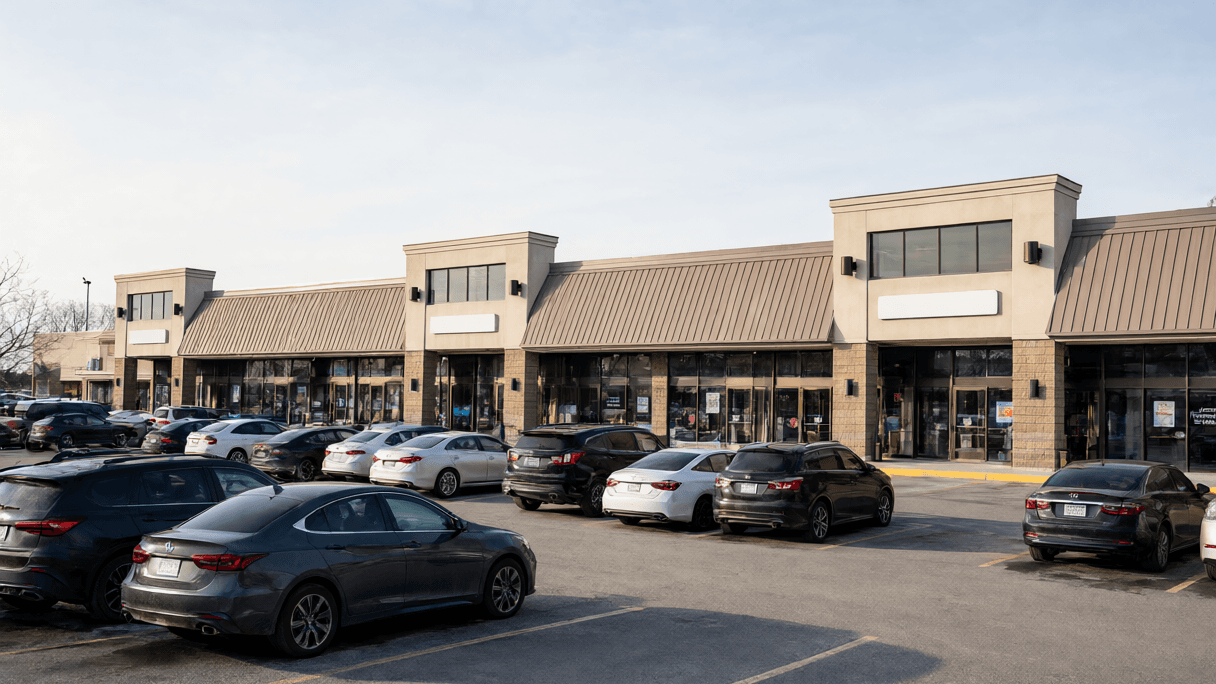
AI-generated image · Bay Street Wire
While city officials and critics focus on noise and congestion, a new documentary reveals how this controversial Mississauga strip-mall serves as a vital cultural anchor for immigrant entrepreneurs and youth.
In the eyes of the City of Mississauga and the Ontario Superior Court, Ridgeway Plaza is often viewed through a lens of restriction. As first reported by CBC Toronto, the court recently granted the city a temporary injunction to curb "nuisance behaviour" and large, unsanctioned gatherings at the outdoor strip-mall located at Ninth Line and Eglinton Avenue W. The plaza has been a flashpoint of controversy since its 2022 opening, plagued by complaints regarding street racing, loud noise, and congestion.
However, for the immigrant communities and young residents who frequent the space, Ridgeway is not a nuisance—it is a necessity. In the new short documentary *Meet Me At Ridgeway*, filmmakers Laila Vahed, Zoha Ahsan, and Nicole Danesi challenge the prevailing narrative. Vahed, a director and lead researcher for the film, argues that the language used by city council focuses heavily on limiting and constraining the space, a perspective that clashes with the lived experience of those who see the plaza as a vibrant, intergenerational gathering spot where the city feels alive.
This tension highlights a broader struggle over how urban spaces are perceived and regulated. Zohan Ahsan, a panelist with a master's degree in planning and urban development from Toronto Metropolitan University, notes that Ridgeway functions as a "third place"—a social environment separate from home, school, or work—specifically shaped by Middle Eastern and South Asian immigrant communities. Ahsan suggests that online rhetoric often targets the demographics of the plaza rather than the physical space itself, using the location as a proxy to employ derogatory terms against specific groups.
For the entrepreneurs operating within the plaza, the community is one of mutual support. Hamzah Al-Ameri, co-owner of Sumaq Iraqi Charcoal Grill, told CBC Toronto that while some incidents occur that "shouldn't happen," they do not represent the entire picture. Al-Ameri noted that business owners collaborate to maintain safety and monitor for suspicious activity.
From an urban planning perspective, Ridgeway represents a failure of the city to provide alternative spaces for its diverse, multi-generational population. Ahsan argues that the urban planning field is often too rigid and must adapt to the kind of spontaneous, organic growth seen at Ridgeway. The plaza's popularity is, in effect, a signal to the city about what its residents actually need: spaces where young people can gather late into the evening and where cultural richness is celebrated rather than policed.
As producer Nicole Danesi explains, the documentary also serves as a call for voter engagement. By illustrating how municipal decisions directly impact popular community hubs, the filmmakers hope to show young residents that their votes can influence whether these organic landing pads are supported or dismantled by city hall.