
The High Cost of a 'Discount': Why a Lower Lumber Tax Still Hits Our Pocketbooks

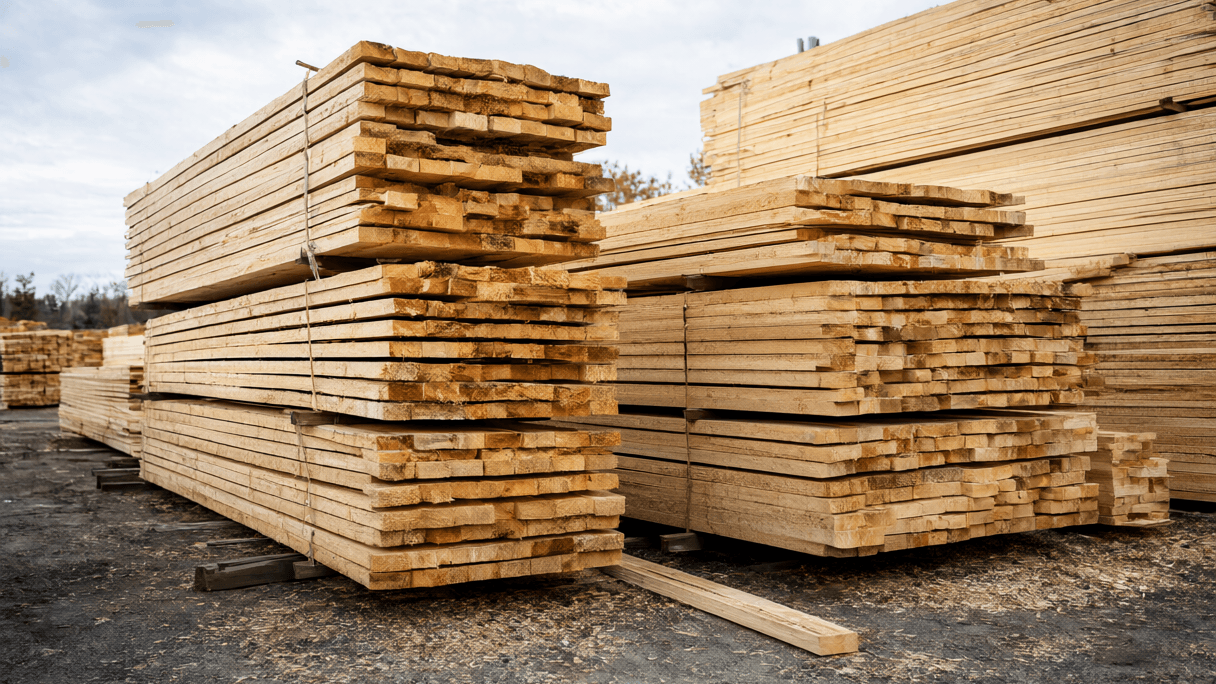
AI-generated image · Bay Street Wire
The U.S. Department of Commerce has lowered import taxes on Canadian softwood lumber to nearly 35%, but industry leaders warn the remaining burden continues to squeeze producers and inflate housing costs.
### A Marginal Win in a Costly War
As first reported by CBC, the U.S. Department of Commerce has set total import taxes on Canadian softwood lumber at almost 35 per cent. While this is a decrease from the combined rate of 45 per cent announced in August of last year, industry leaders warn the reprieve is minimal.
To understand the burden, the total is a composite of three distinct levies: countervailing duties (14.11 per cent), an anti-dumping rate (10.64 per cent), and a 10 per cent national security tariff imposed by U.S. President Donald Trump.
Kim Haakstad, interim president of the B.C. Lumber Trade Council, stated that the industry is not celebrating. Haakstad noted that Canadian producers continue to face "unjustified and punitive" trade measures and warned that these barriers drive up the cost of building homes for families in the United States, while harming companies that provide equipment and services to Canadian mills.
The B.C. Lumber Trade Council notes that this dispute has dragged on for nearly a decade, placing immense pressure on forest-dependent communities.
*Opinion: It is easy for policymakers to point to a reduction from 45 per cent to 35 per cent as a victory. However, a 35 per cent tax is not a 'discount'; it is a massive surcharge on a fundamental building block of our economy. As long as these punitive measures remain in place, the dream of affordable housing remains further out of reach. We are essentially paying a premium for a trade war that has no end in sight.*