
The Hardware Hurdle: Can North Vector Dynamics Scale Its CM-70 Amidst Supply Chain Volatility?

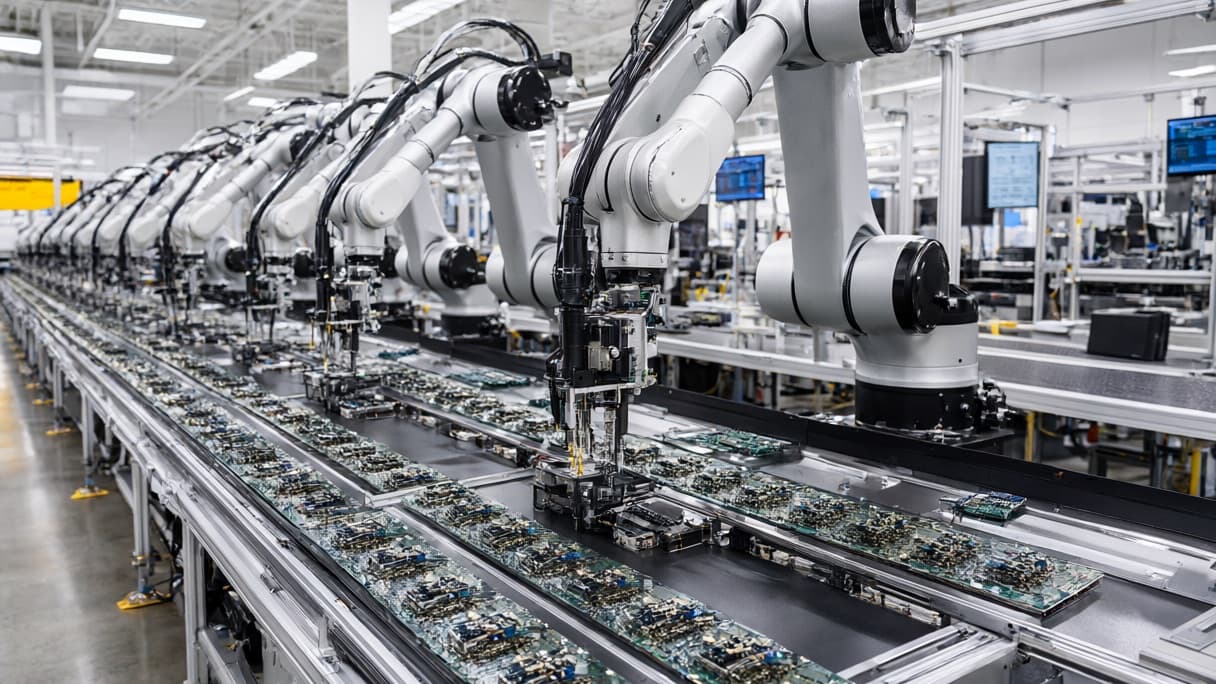
AI-generated image · Bay Street Wire
A $20-million Series A is a strong start, but for Calgary-based North Vector Dynamics, the real test isn't the capital—it's the procurement of specialized components for its counter-drone interceptors.
In the world of deep tech and defense, capital is often the first milestone, but hardware is where the actual battle is won. The recent announcement that North Vector Dynamics (NVD) has closed a $20-million USD ($29-million CAD) Series A round is a significant signal for the Canadian defense sector, but for those of us tracking the semiconductor and RF (radio frequency) supply chains, the funding is secondary to the execution risk.
As BetaKit first reported, NVD is positioning itself to meet a surge in demand for counter-drone capabilities driven by NATO ally mobilization and aggression from Russia in Europe. The company's flagship product, the CM-70, is a precision-guided missile interceptor designed to integrate into existing military air defense systems. While the $20-million raise—which brings the company's valuation to $90 million USD ($126 million CAD)—provides a comfortable runway, the path from a prototype to a deployed weapon system is paved with procurement bottlenecks.
**The Procurement Puzzle**
NVD’s spokesperson told BetaKit that the company intends to use its new funding to secure supply chains and build out manufacturing capabilities. This is the critical juncture. From a hardware perspective, precision-guided interceptors like the CM-70 likely require highly specialized silicon and RF components to handle target acquisition and guidance. In the current global climate, these types of components are often subject to extreme lead times and geopolitical friction.
NVD is attempting a delicate balancing act. A spokesperson for the company told BetaKit that NVD is "making every effort" to build a Canadian supply chain. However, the company also acknowledged that relationships with "allied nations" are essential to accelerating growth. This admission highlights the reality of the modern defense industrial base: total sovereign autonomy is nearly impossible when it comes to the high-end sensors and electronics required for autonomous vehicle interception.
**Scaling the Industrial Base**
The timeline for the CM-70 is aggressive. According to BetaKit, NVD expects to begin initial manufacturing early next year, with the goal of delivering systems to customers by 2027. To support this, the company plans to double its headcount to approximately 50 employees within the next six to eight months and open an office in Ottawa this year. Further expansion into the US and Europe is planned for 2027.
More pressing is the manufacturing facility. While NVD’s spokesperson confirmed plans to open a facility, they declined to provide a tentative date, stating that the company is evaluating various options based on the location and scale of product demand. For a hardware company, the gap between "evaluating options" and a fully operational production line is where many startups stumble, particularly when relying on a global supply chain for critical components.
**The Capital Backdrop**
Despite the hardware risks, NVD has successfully attracted a diverse group of investors. The Series A was led by Tech Horizons, a European firm specializing in defense and security technology. Other participating firms include:
* ONE9 * Garage Capital * CSG * Ripple Ventures * Feld Ventures * Conconi Growth Partners
CEO Paul Ziadé noted in an interview with The Globe and Mail that while domestic contributors were a "sizable minority" in the round, the majority of the financing came from US and European investors. This international backing is a testament to the perceived value of the CM-70, but it also ties NVD closely to the defense industrial strategies of NATO allies.
NVD's financial trajectory is already bolstered by government support. BetaKit reports that the company was awarded a $4.2-million CAD four-year contract from Canada’s Department of National Defence (DND) last August. Additionally, the company received $2.5 million CAD in grant funding via the Innovation for Defence Excellence and Security program managed by the DND. Including the Series A, NVD's total equity funding now stands at nearly $28 million USD.
**Opinion: The Sovereign Capability Paradox**
*Opinion: From my perspective as a hardware analyst, NVD is facing a classic sovereign capability paradox. Paul Ziadé has stated that now is the time to "leverage these investments to deliver sovereign capability." However, the very nature of the CM-70's technical requirements likely necessitates a reliance on the "deeply interconnected industrial base" shared by Canada and the US, as cited by an NVD spokesperson to BetaKit.
If NVD can successfully navigate the procurement of specialized electronics and RF components without becoming overly dependent on a single point of failure in the supply chain, they could become a blueprint for Canadian defense tech. But if the 2027 delivery target is missed due to component shortages—a common occurrence in the current semiconductor climate—the valuation will matter far less than the ability to ship hardware.*
**Looking Ahead**
NVD’s spokesperson told BetaKit that the company is seeing "significant momentum in multiple markets" and anticipates first orders in the coming months, though the company did not disclose the identities of these potential customers. As NVD moves toward initial manufacturing next year, the industry will be watching not the balance sheet, but the bill of materials. The ability to secure the specialized components necessary for the CM-70 will determine whether North Vector Dynamics becomes a cornerstone of NATO's counter-drone strategy or remains a promising prototype.