
The 500-MW Mirage: Why Canada's Sovereign Compute Pledge Needs More Than Just Power

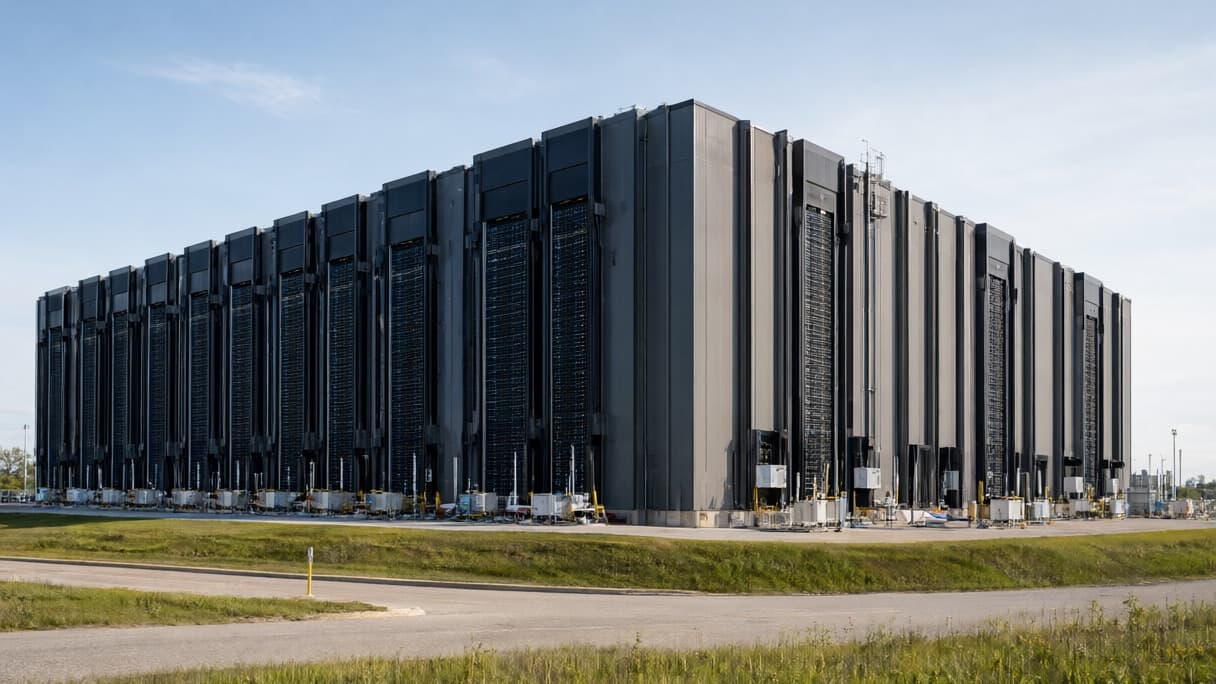
AI-generated image · Bay Street Wire
The federal government's commitment to mobilize private capital for AI capacity addresses a critical market failure, but hardware bottlenecks and 'crowding out' remain systemic risks.
Let's be clear: in the world of deep tech, megawatts are a vanity metric if you can't actually get the silicon into the racks.
***Opinion:*** *The federal government's 500-MW pledge is a start, but without a concrete roadmap for HBM supply and power-dense interconnects, 'sovereign compute' is just a fancy term for a government-funded GPU cluster. Power is the prerequisite, but the hardware supply chain is the actual battleground.*
As BetaKit first reported, the Government of Canada has announced a new sovereign AI computing commitment aimed at enabling Canadian AI companies to access 500 megawatts (MW) of compute. The plan involves utilizing financial tools, including offtake agreements and backstops, to mobilize private capital and expand domestic capacity. Finance Minister François-Philippe Champagne highlighted AI infrastructure as a key project that will power the nation's future in his budget speech.
**Addressing the 'Market Failure'**
Sean Mullin, a senior fellow at the University of Toronto’s Munk School of Global Affairs & Public Policy and former lead economic advisor to the Prime Minister, told BetaKit that the proposal is designed to solve a "chicken-and-egg, Catch-22 problem" for smaller domestic startups.
As BetaKit reports, data center developers require massive commitments to secure financing for new projects. However, because demand is so high, developers often prefer leasing to established foreign firms with strong credit ratings over nascent, cash-strapped Canadian startups. Mullin suggests the government is attempting to solve this market failure by providing guarantees that committed compute will be purchased, thereby de-risking projects for developers.
**The Capacity Gap**
To understand the scale of the 500-MW target, BetaKit points to a Boston Consulting Group report indicating that Canada currently possesses 300 MW of AI data center capacity. While the government's target represents a significant increase, Mullin noted that this may only represent a small share of total demand by 2028 or 2029.
Private sector expansion is already underway. BetaKit notes that Bell, a domestic telecom giant, intends to build the country's largest data center in Saskatchewan, which would have a 1.2-gigawatt (GW) capacity. Jaxson Khan, CEO of Aperture AI and a senior fellow at the Munk School, told BetaKit that if Canada sets the terms of this expansion correctly, it could create a strong competitive advantage.
**The Hardware Bottleneck**
While the government focuses on power and financing, the actual acquisition of hardware remains a nightmare for startups. Ali Asaria, co-founder and CEO of Kitchener-Waterloo AI research startup Transformer Lab, told BetaKit that securing the graphics processing units (GPUs) necessary for training and deploying models is currently "close to impossible," stating that "almost nobody has capacity available at any price."
Asaria described a predatory procurement environment where vendors demand three-year commitments and upfront payments of 25% to 50%. Even after multimillion-dollar deposits, Asaria reports that hardware may not be online for six months, a process he describes as a "non-starter" for companies lacking massive balance sheets.
**Geopolitical Tailwinds**
Canada's push for sovereign compute comes at a time of political volatility in the United States. BetaKit reports that following the US midterm elections, where Democrats took control of the House and Senate and voters approved various data center moratoriums, experts predict a slowdown and cost increase for US-based construction.
This shift has already seen firms like Microsoft, Meta, and Anthropic turn to Canada for processing power. Mullin told BetaKit that if more major US tech firms migrate north due to these political winds, the need for federal intervention to protect domestic access will only intensify.
**Industry Reaction**
Canadian AI leaders have expressed cautious optimism. Ideogram co-founder and CEO Mohammad Norouzi told BetaKit that access to compute is one of the primary challenges for companies in Canada and called the pledge a "significant step" toward a fully Canadian AI stack, noting that Ideogram would like to move a meaningful portion of its compute spending to Canada.