
The Growth Gap: York Region's $450 Million Shortfall Exposes Provincial Funding Failures

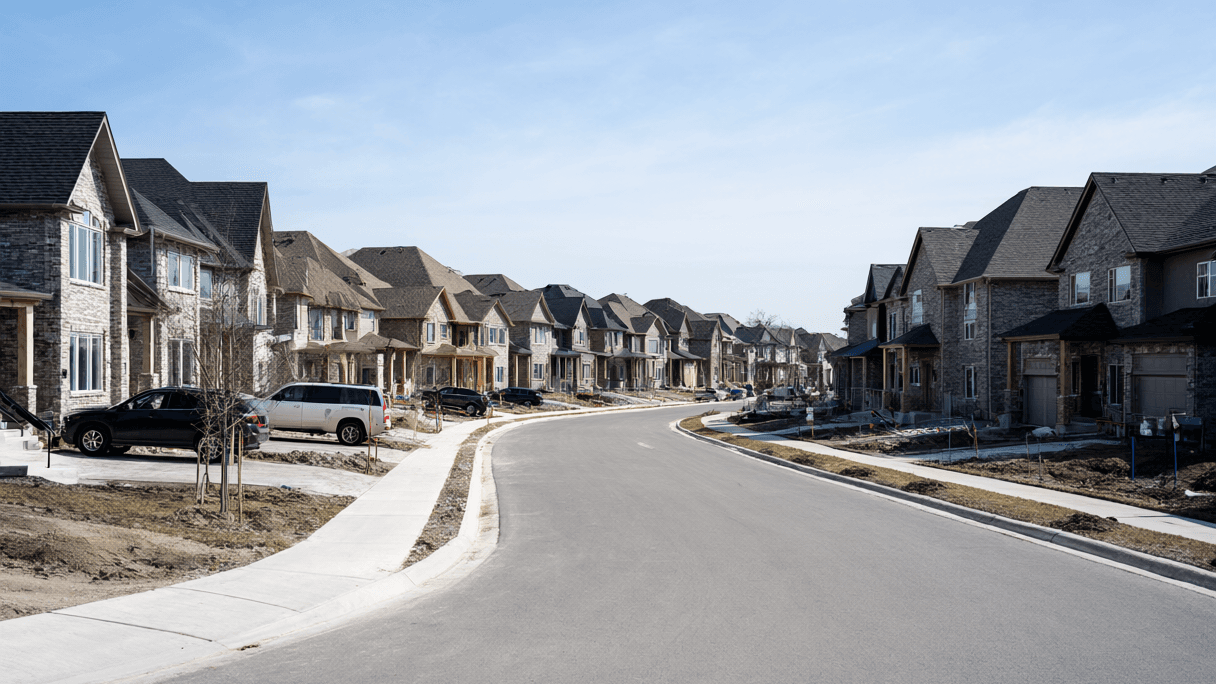
AI-generated image · Bay Street Wire
As one of Canada's fastest-growing areas, York Region is struggling with outdated provincial funding formulas that leave community services critically underfunded.
The Ford government frequently touts its commitment to municipal growth, but a new report commissioned by York Region reveals a stark disconnect between provincial rhetoric and fiscal reality. As first reported by CBC Toronto, York Region is facing an annual funding shortfall of approximately $450 million for essential community services—a gap that amounts to $369 per resident.
***
**Opinion: A Failure to Scale**
From a provincial-politics lens, this is more than a budgetary oversight; it is a failure of the Ontario government to scale its support mechanisms alongside the rapid urbanization of the GTA. For too long, Queen's Park has treated the outer suburbs as static entities rather than the burgeoning urban centers they have become. By relying on antiquated funding models, the province is effectively offloading the cost of growth onto local taxpayers and overstretched non-profits.
***
According to the report produced by research firm Blueprint ADE, this shortfall has persisted over several years, leaving York Region with less funding than other large municipalities. The crisis is compounded by the region's explosive growth; CBC Toronto notes that Statistics Canada identified East Gwillimbury as the fastest-growing municipality in Canada in 2022.
Sean Meagher, coordinator of the non-profit coalition Ontario For All, told CBC Toronto that the province continues to utilize funding formulas built for the 1970s. He argues that while residents are fleeing Toronto for the suburbs due to housing costs, the necessary community services are not being built to accommodate them. Meagher further noted that local residents are paying an additional $125 million in property taxes to help municipalities bridge this service gap.
The human cost of this fiscal lag is evident in the region's most vulnerable sectors. Debbie Schatia, CEO of emergency housing provider Blue Door, told CBC Toronto that shelters are "bursting at the seams" and that underfunding has led to longer wait times for services, increased pressure on hospitals, and growing childcare waitlists. The report highlights acute shortages in childcare, long-term care, and affordable housing.
In response to these findings, the Ontario government maintains it is providing unprecedented support. Michael Minzak, a spokesperson for the Ministry of Housing, told CBC Toronto that provincial support for municipalities has risen by over 60 per cent in the last three years, including $37 million allocated this year for supportive housing and shelters in York Region. Additionally, Lily Barnes, a spokesperson for the Ministry of Health, cited "record" investments, noting that funding for York Region's health department has increased by more than 32 per cent since 2018.
However, Monica Bryce, director of strategies and health services at York Region, told CBC Toronto that while federal and provincial funds have been provided, the models are based on an "old makeup of the community" rather than its current reality. Bryce and regional non-profits are now calling on the province to not only address the immediate $450 million shortfall but to establish a sustainable, long-term funding solution.
This pattern of underfunding is not isolated to York. CBC Toronto reports that a similar analysis conducted in the Peel region also identified "higher than anticipated" underfunding for critical community services.