
The Great Compute Hedge: Why Canada is Plugging Into Europe's Supercomputer Network

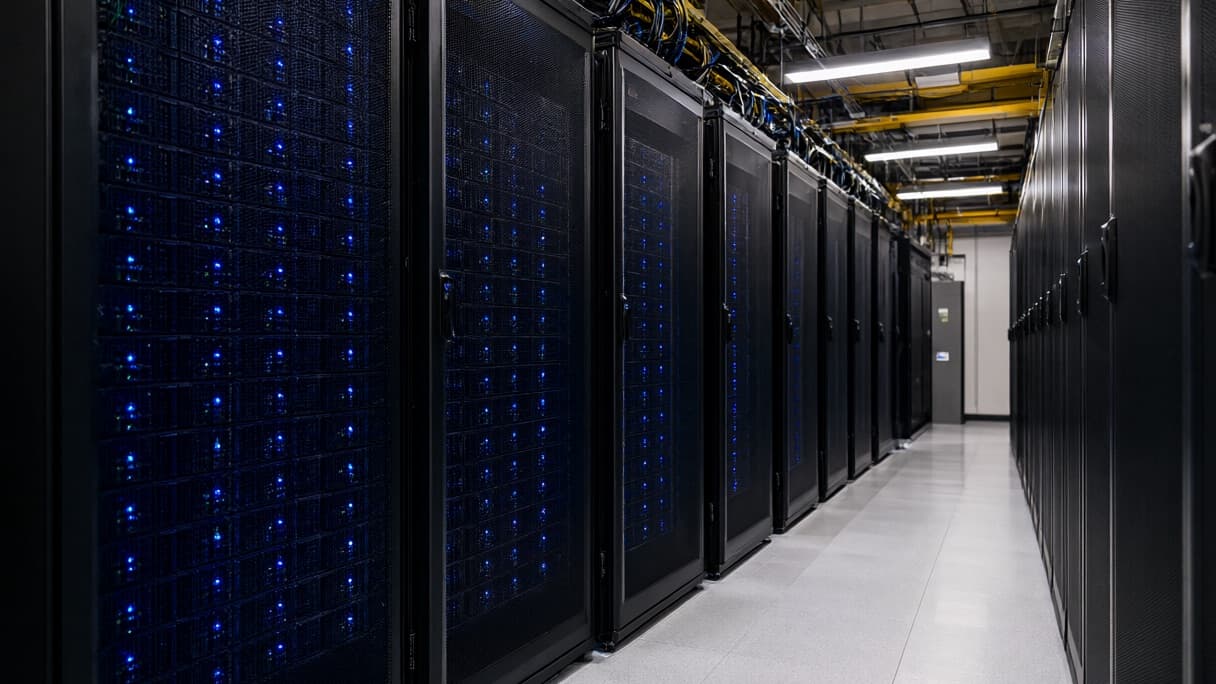
AI-generated image · Bay Street Wire
Canada is diversifying its hardware bets by joining the European High Performance Computing Joint Undertaking, but the real challenge lies in the pipes and the parts.
Q: What exactly is the deal Canada just struck with Europe regarding compute power?
A: As BetaKit first reported, Canada is joining the European High Performance Computing Joint Undertaking through a new "Alliance for the Future." This network comprises 19 "AI factories," 10 quantum computers, and 14 supercomputers. Canadian researchers and businesses can now apply for access to JUPITER, a powerful supercomputer in Germany. AI and digital innovation minister Evan Solomon told BetaKit this provides compute power that is too massive for any single entity to build alone.
Q: Is this a replacement for Canada's own domestic AI ambitions?
A: No. Canada is currently executing an $890-million program to build its own public AI supercomputer, according to BetaKit. While the lead consortium or institution has not yet been named—with an announcement expected early next year—Minister Solomon indicated to BetaKit that Canada is open to integrating this domestic machine into the European network.
Q: Beyond raw flops, what is the strategic goal of this partnership?
A: It focuses on data sovereignty and supply chain diversification. A key component is a new transatlantic data cable to create a direct, secure route for internet traffic and data exchange, as roughly 80 percent of Canada's traffic currently routes through the US (via the Centre for International Governance Innovation). Canada is also joining "Destination Earth," a European Commission climate modeling project. Henna Virkkunen, the European Commission’s executive vice-president for tech sovereignty, security and democracy, called the project one of Europe's most strategic data assets.
Q: How does this extend into the corporate and regulatory AI landscape?
A: The partnership touches both policy and private equity. BetaKit reports the Canadian government is taking a financial stake in Toronto-based Cohere, which is effectively acquiring Germany's Aleph Alpha. Minister Solomon also suggested a "technology stability board"—similar to the Financial Stability Board—to regulate frontier models via the G7 or G20. Virkkunen noted that while Europe is enforcing the AI Act, global AI risks require international rules.
Q: Are there other digital economy components to this alliance?
A: Yes. The European Commission is supporting the connection of instant payment systems for immediate transfers between Canadians and Europeans. This coincides with the expected first-phase launch of Canada's Real-Time Rail system this fall, per BetaKit.