
The Geometry of Negligence: Why Toronto's Pedestrian Death Toll is a Planning Failure

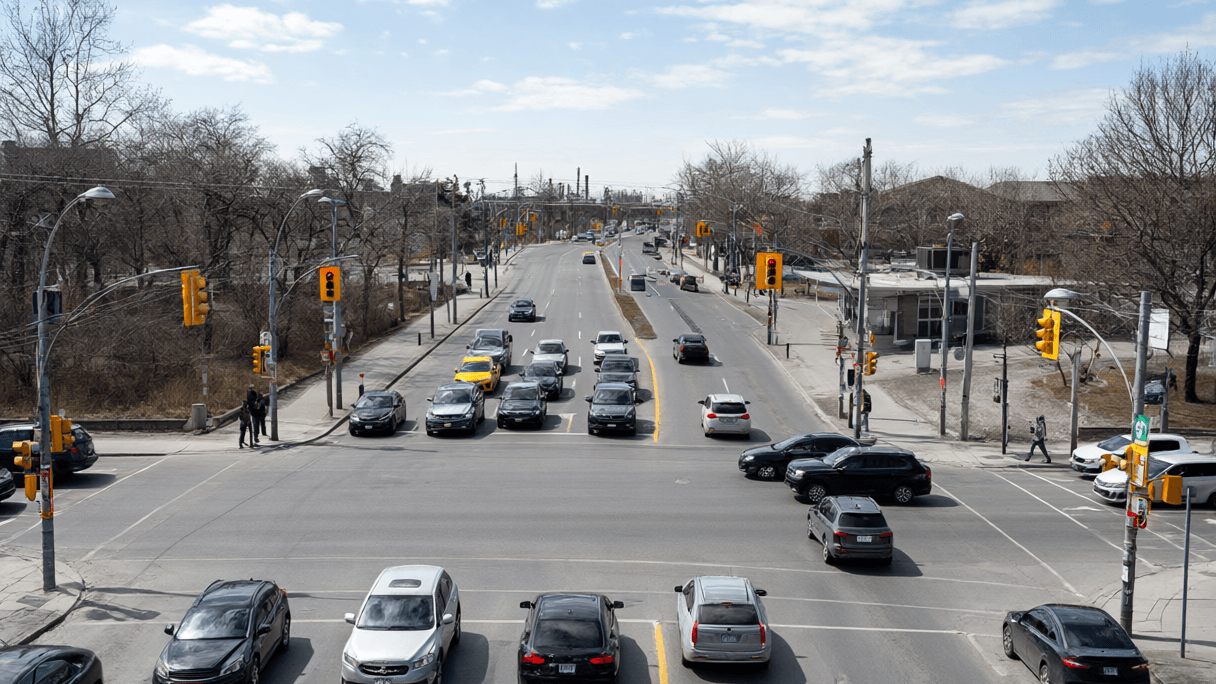
AI-generated image · Bay Street Wire
Opinion: Data from Toronto police reveals a surge in fatalities that cannot be dismissed as a random spike; it is the direct result of dismantled enforcement and a glacial approach to urban safety.
As a data journalist, I look for the patterns hidden beneath the press releases. Based on reporting first published by CBC Toronto, a look at the numbers provided by Toronto police reveals that the narrative of 'random accidents' is actually a map of systemic failure. We are not witnessing a statistical anomaly; we are witnessing the consequences of a city where safety infrastructure is being dismantled faster than it can be replaced.
Police data shows that so far this year, 21 pedestrians have been killed in traffic collisions across the city. This represents a 24 per cent increase over last year. If this trajectory continues, the city is on track to possibly exceed the 44 deaths recorded in 2022, which stood as the highest number in recent years.
To be clear: this is an opinion piece, but my position is rooted in the receipts. When fatalities rise in tandem with the removal of safety measures, the correlation is not a coincidence—it is a cause.
Last November, the province removed speed cameras. The fallout was immediate. A city report from June, as cited by CBC Toronto, found a significant increase in speeding specifically in areas where those cameras once stood. Jess Spieker, a spokesperson for the road safety advocacy group Friends and Families for Safe Streets, has noted that driving behavior is worsening because the province has essentially permitted drivers to speed wherever and whenever they choose.
When you remove the primary deterrent for speeding, you aren't just changing a policy; you are redesigning the risk profile of every intersection in the city. The result is a bloodbath in slow motion. Spieker estimates that Toronto is averaging roughly four deaths per month in total traffic collisions, putting the city on a path toward approximately 49 fatalities by the end of the year.
But the failure isn't limited to pedestrians. The data reveals a broader collapse of road safety. Toronto police data shows a five-year high in motorcyclist deaths, with 11 fatalities recorded as of Oct. 5 this year—a staggering 57 per cent increase compared to the same period last year.
The official response from the government is a masterclass in bureaucratic stalling. Dakota Brasier, a spokesperson for the Ministry of Transportation, argues that traffic calming measures like roundabouts and speed bumps are the superior way to ensure safety. The province has provided $10 million through a road safety initiative fund for these measures, provided they do not alter vehicle lanes.
On paper, $10 million sounds like a commitment. In reality, it is a pittance. A February city staff report, reported by CBC Toronto, indicates that installing comprehensive traffic calming measures throughout Toronto could cost approximately $52 million and take up to 13 years to implement.
Let that number sink in: 13 years.
We are being told to wait over a decade for the infrastructure required to keep us alive, while the tools that actually worked—speed cameras—were stripped away in a single stroke of a pen. The gap between the current budget and the required $52 million is a void filled by the lives of people like the woman struck by an SUV in midtown Toronto on Sept. 4, who later died in the hospital.
Toronto police spokesperson Nadine Ramadan claims that traffic enforcement has remained consistent despite the camera removals, asserting that officers use analytics to target risky driving. However, the data suggests that 'consistent' enforcement is insufficient when the systemic guardrails are gone.
For residents like Gary Smith in the St. Lawrence Market area, this isn't a data point; it's a daily gauntlet. Smith, who has begun tracking pedestrian collisions in news stories across Ontario, describes the experience of crossing the street as a 'life and death issue' characterized by aggressive driving, red-light runners, and distracted motorists using cellphones.
When the city and province prioritize the flow of traffic over the lives of the people walking beside it, they are making a conscious urban planning choice. The current spike in deaths is not an accident of fate; it is the logical outcome of a policy that removes enforcement and offers a 13-year waiting list for safety alternatives.
We cannot afford to wait 13 years. We cannot accept a 'five-year high' as a baseline. If the province and the city refuse to bring back the cameras that worked, they are not just failing at urban planning—they are presiding over a preventable crisis.