
The 'Data-Driven' Filter: Halton Police Deploy GOVWORKX AI to Screen 911 Call Takers

AI-generated image · Bay Street Wire
Halton Regional Police are leveraging American-made AI to slash candidate evaluation times by 50%, but legal experts warn of a regulatory vacuum in Ontario's criminal justice system.
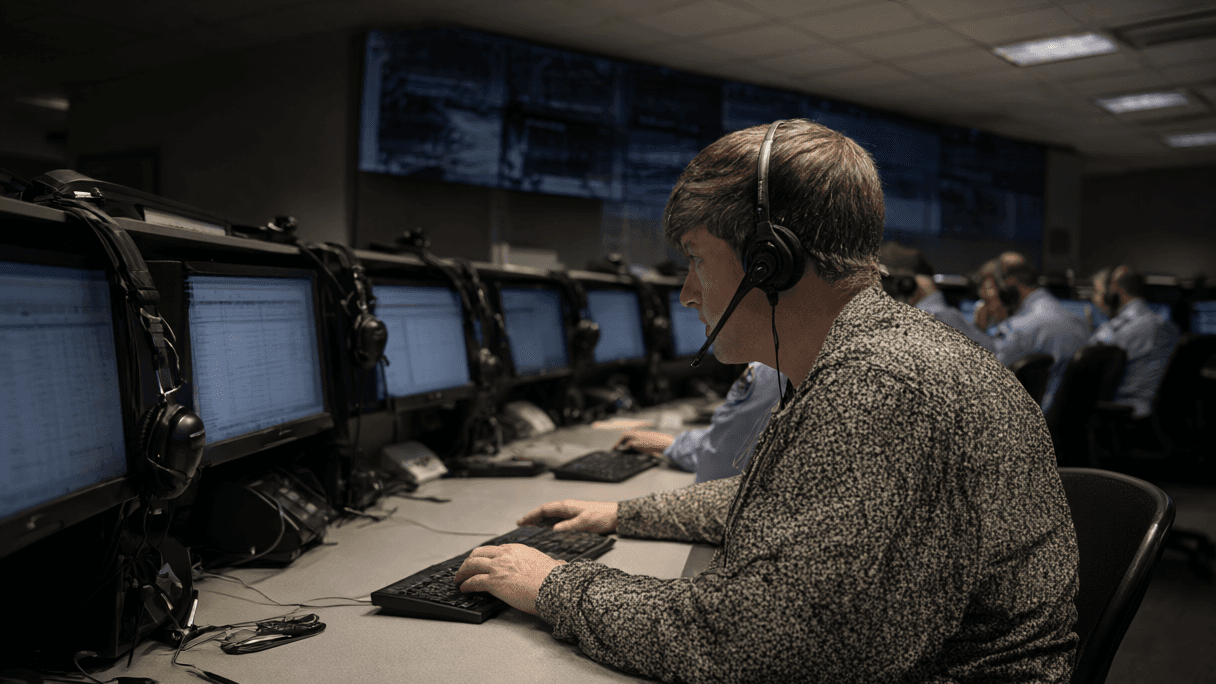
Halton Regional Police are integrating artificial intelligence into the recruitment and training of 911 call takers and dispatchers, moving toward a hiring process they describe as "more data driven."
According to reporting from CBC Toronto and Global News, the police service has partnered with GOVWORKX, an American AI firm, to implement technology that creates emergency call simulations. These simulations are designed to test candidates' communication, crisis management, and decision-making skills.
For Halton police, the shift is a matter of operational efficiency. Brian Dodd, the 911 communications manager, told Global News that the department has faced a staffing crisis because many candidates fail to succeed in the training process. Dodd noted that training can take nearly a year, including 360 hours on the floor and a five-week course. If a candidate fails, the force loses a full year of time. By using GOVWORKX to identify the "right candidates" at the start, the police service aims to reduce candidate evaluation time by 50%.
However, the "data-driven" nature of this tool extends beyond the initial hire. Dodd told CBC Toronto that the same software will be used for training successful candidates and will provide "automated quality assurance" throughout their careers.
While the police service emphasizes efficiency, legal experts are raising alarms about the lack of oversight. Ryan Fritsch, a lawyer for the Law Commission of Ontario, told CBC Toronto that Ontario currently has no specific laws governing the use of AI within the criminal justice system. While the Employment Standards Act requires employers to disclose the use of AI in job screenings, Fritsch warns that "human in the loop" safeguards can be illusory. He noted that personnel working under heavy caseloads and high pressure may simply defer to the AI, assuming the technology is correct to expedite their workflow.
Fritsch further cautioned that AI can mischaracterize events, get facts wrong, and misinterpret linguistic or cultural cues. He argued that when AI is used in contexts that could result in evidence for court proceedings or police investigations, the risk is "really high." Fritsch is calling for AI-specific legislation in Ontario, including mandatory assessments and reporting to police oversight agencies for high-risk systems.
This deployment is part of a broader trend of AI integration within the Halton police force. The service previously implemented SARA AI to handle specific non-emergency calls. According to police data cited by Global News, SARA AI has handled 95,367 calls this year, spending 1,195 hours interacting with residents and sending over 2,470 text messages. Halton police report that SARA AI reduced 911 wait times by nearly two seconds per call, helping the force meet the North American standard of answering 90% of 911 calls within 15 seconds.
Currently, Halton police employ 75 dispatchers and call takers and intend to hire between four and eight new employees this year using these new tools.