
The Etched Valuation Mirage: Speculation Over Substance in the AI Chip Race

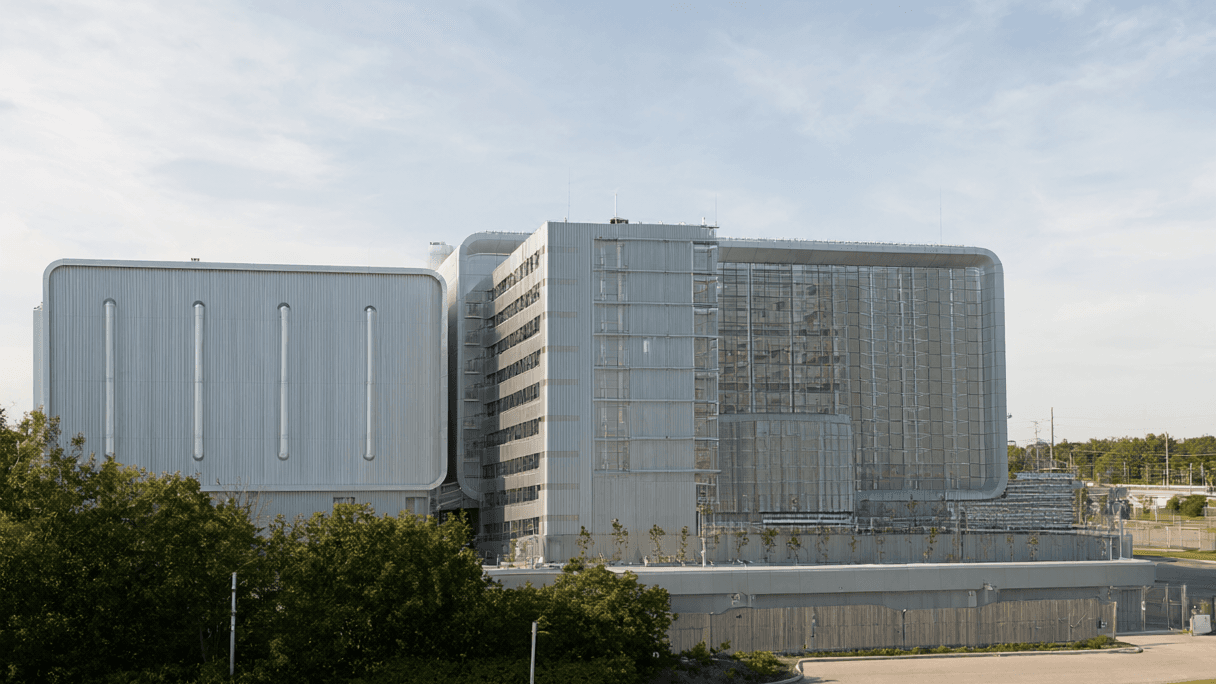
AI-generated image · Bay Street Wire
Opinion: The sudden leap to a potential $50 billion valuation for Etched isn't a victory for hardware innovation—it's a symptom of a speculative bubble ignoring the risks of concentrated power.
The math currently governing the AI hardware sector has ceased to be about engineering and has become entirely about adrenaline. The latest example is Etched, a four-year-old startup that has managed to turn the venture capital world into a bidding war, not based on long-term stability, but on the desperate hope of finding a viable alternative to Nvidia.
As first reported by TechCrunch, Etched is currently reviewing investment offers that would value the company between $40 billion and $50 billion. To put the absurdity of this trajectory into perspective, we only have to look back a few months. In July, Etched announced a $300 million round led by Sequoia at a $10.3 billion valuation. A subsequent round in September brought in $700 million, pushing the valuation to $21 billion. Now, barely two months later, investors are plied with offers that could more than double that value again.
This is not growth; it is a fever dream. When valuations jump from $10 billion to $50 billion in a single quarter, we are no longer discussing the intrinsic value of a company's intellectual property or its projected cash flows. We are discussing a speculative bubble where the primary goal is to capture a piece of the 'next big thing' before the market corrects itself.
Etched's pitch is seductive. Co-founders Gavin Uberti and Chris Zhu, who met at Harvard, along with COO Robert Wachen, claim to have designed two new components from scratch to accelerate inference—the computing process that occurs after a user submits a prompt. According to Wachen, as cited by TechCrunch, the company's chips can process tokens faster and at a lower cost than those produced by Nvidia. This speed is exactly what attracted Jane Street, the quant trading firm that led the $700 million round and has already taken delivery of an early system. For a firm like Jane Street, where a microscopic speed advantage translates into massive profits, the utility of Etched's hardware is clear.
But utility for a single high-frequency trading firm does not justify a $50 billion valuation for a startup that is still in the early stages of manufacturing. While Etched claims to have secured $1 billion in customer orders after manufacturing a test chip at a TSMC factory this summer, the gap between a test chip and a scalable, market-dominating hardware ecosystem is a chasm that many have fallen into before.
Furthermore, the industry's obsession with Etched reveals a systemic risk: the desperate need to break Nvidia's monopoly. Investors are so eager to find a challenger that they are ignoring the sheer volatility of the hardware game. Etched is attempting one of the most expensive gambles in tech: building full AI hardware systems powered by its own proprietary chips. This requires immense capital, which is why the company is seeking these mega-rounds. A person familiar with the offers told TechCrunch that if Etched raises as much as its last round, it could secure a runway of up to 3.5 years.
There is also the matter of talent poaching. The Wall Street Journal reports that roughly 15% of Etched's 400-person workforce consists of former Nvidia employees. While this is framed as a sign of strength, it also highlights the concentrated nature of the industry's expertise. The 'innovation' here is often just a migration of personnel from one giant to the next, rather than a fundamental shift in how AI hardware is conceived.
Etched has certainly made the necessary infrastructure moves—operating a 10-megawatt data center in Silicon Valley and establishing a facility in Taiwan to coordinate production near TSMC. But these are the baseline requirements for entry, not the hallmarks of a company worth $50 billion.
When venture capitalists engage in back-to-back funding rounds that act as single financing split into tranches with separate, skyrocketing valuations, they are not investing in a business; they are betting on a momentum curve. The current frenzy surrounding Etched is less about the actual utility of its inference chips and more about a speculative race to see who can claim the throne of the AI chip world.
If we continue to value hardware startups based on the hope that they can simply 'be the next Nvidia,' we are ignoring the systemic risk of concentrating immense power and capital into a handful of proprietary systems. The Etched valuation spike is a warning sign. It suggests that the market has decoupled from reality, replacing rigorous financial analysis with a frantic desire to own whatever is fastest—regardless of whether the business model can actually sustain the price tag.