
The Edge of Experience: Why SiMa.ai's Valuation is a Wake-Up Call for Interactive Media

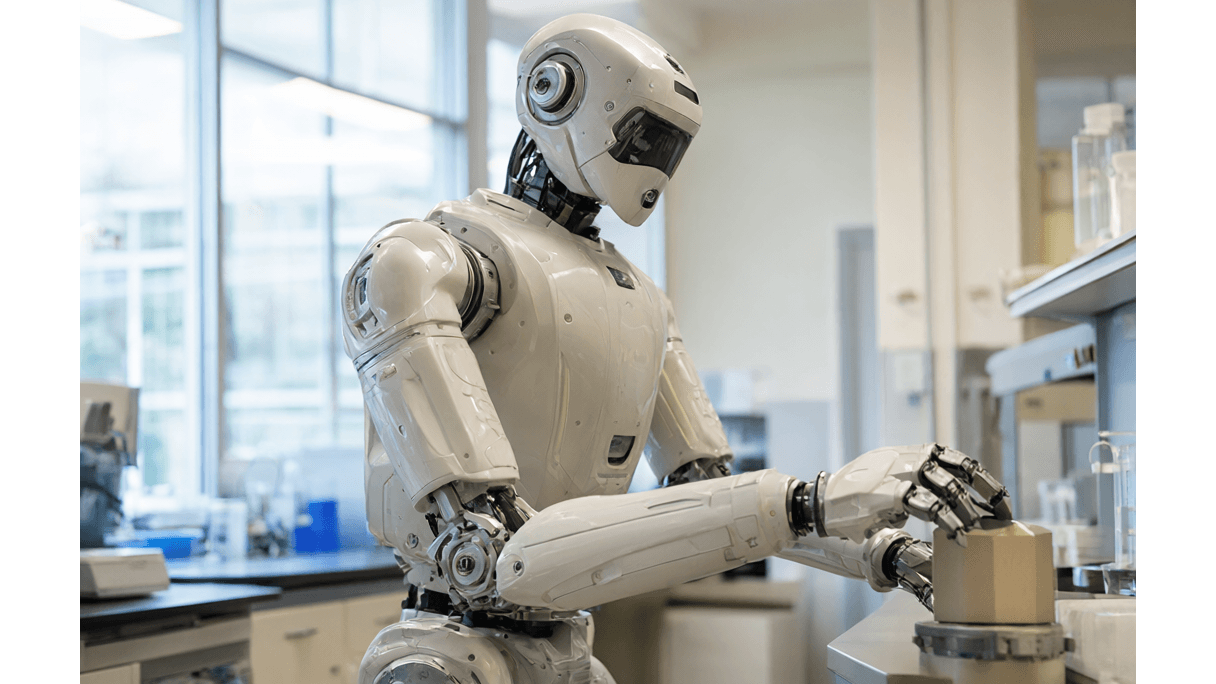
AI-generated image · Bay Street Wire
Opinion: The shift toward 'physical AI' hardware suggests a future where gaming and immersive experiences leave the cloud behind for the real world.
For years, the trajectory of interactive entertainment has been a steady climb toward the cloud. We've been told that the future of gaming and immersive media is centralized, processed in massive server farms and streamed to our screens. But the market is starting to signal a correction.
As TechCrunch first reported, the startup SiMa.ai recently secured a $150 million Series C funding round, pushing its valuation to $1.45 billion. This is a significant jump from the $960 million valuation the company held after its July 2025 Series B, as reported by PitchBook. While the venture capital world focuses on the numbers, I believe this valuation spike represents something more fundamental: a pivot toward 'physical AI.'
SiMa.ai, founded in 2018 by former Groq COO Krishna Rangasayee, isn't building another cloud-based LLM. Instead, the company is developing energy-efficient chips and software designed to run AI directly on the device. TechCrunch notes that this technology is aimed at drones, cameras, robots—including humanoid robots—and other hardware.
From a gaming and interactive perspective, this is the missing link. The 'cloud' has always been a bottleneck, introducing latency and dependency on high-speed connectivity that breaks immersion. By eliminating the need to send data back and forth to the cloud, as TechCrunch reports SiMa.ai's chips do, we open the door to interactive experiences that are truly untethered. Imagine augmented reality (AR) games or robotic companions that react in real-time to the physical environment without a millisecond of lag.
Crucially, SiMa.ai is positioning itself as a more affordable alternative to Nvidia's GPUs. In the business of interactive media, cost-per-unit is everything. If developers can integrate high-performance AI into consumer hardware without the prohibitive cost of top-tier GPUs, the 'physical AI' market will explode.
This shift is backed by some of the heaviest hitters in finance and tech. TechCrunch reports that the Series C was co-led by Amplify and Fidelity Management & Research Company, with additional participation from StepStone Group, Dell Technologies Capital, and Alter Venture Partners. When firms of this caliber push a company's total capital raised to over $500 million, they aren't betting on a niche product; they are betting on a structural shift in how computing happens.
We are moving away from the era of the 'screen' and toward an era of 'presence.' For that to happen, the intelligence cannot live in a data center in Virginia or Oregon; it must live in the device in your hand or the robot in your room. SiMa.ai's valuation is more than just a win for Krishna Rangasayee; it is a signal that the future of interactive entertainment is physical.