
The Data Divide: How IRCC's Presentation of Immigration Numbers Risks Public Trust

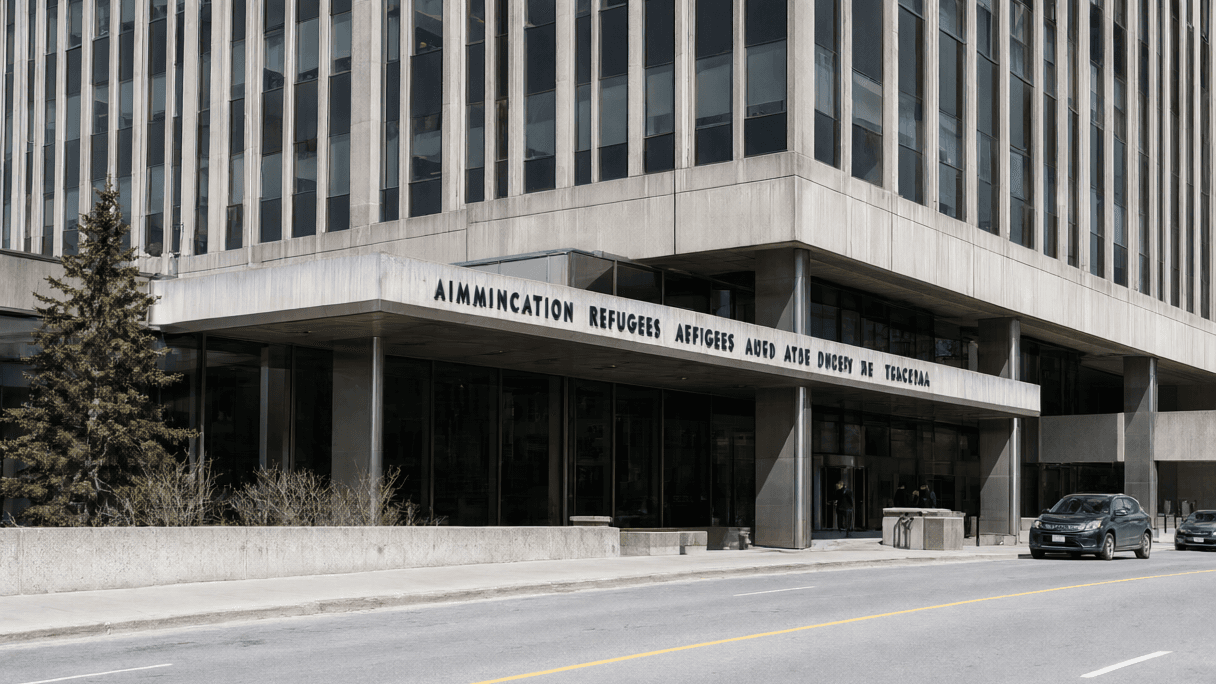
AI-generated image · Bay Street Wire
A dispute over a government graph reveals a deeper tension between official targets and the actual number of people receiving permanent residency.
When a government presents data to the public, the medium is often as important as the message. For Immigration, Refugees and Citizenship Canada (IRCC), a recently published graph intended to showcase efforts to return immigration to "sustainable levels" has instead become a flashpoint for accusations of data manipulation.
As CBC News first reported, the federal Conservatives are accusing the government of exaggerating the decrease in new permanent residents. The controversy centers on a specific visualization of monthly permanent residency numbers starting in 2023. CBC News reports that while the graph initially showed a single bar for total permanent residents, it shifted its presentation in 2026 to break those numbers into three separate bars.
**The Mechanism of the Dispute**
The friction arises from how IRCC is accounting for specific cohorts. IRCC spokesperson Briannah Dale told CBC News that the graphic distinguishes individuals granted permanent residency under two one-time programs, as these individuals are not being counted toward the official permanent resident target. These temporary initiatives for 2026 and 2027 include:
* **The In-Canada Workers Initiative:** An effort to accelerate permanent residency for 33,000 people working in in-demand sectors within small communities. * **Protected Persons Program:** A process for up to 115,000 eligible protected persons and their in-Canada dependents.
By separating these groups, the government's visual narrative suggests a sharper decline in immigration levels. However, the raw data tells a more complex story. CBC News notes that in August 2026, the total number of new permanent residents was 40,155—a figure higher than the 26,080 recorded in December 2025 and higher than several months in 2024.
**What It Means**
This is more than a clerical disagreement; it is a signaling failure. The federal government has set a permanent resident goal of 380,000 for 2026, which represents a 4% decrease. But when the data is visualized using a longer timeline and stacking all residency programs together, the picture changes. While there are 14,155 fewer new permanent residents in 2026 compared to the previous year, the decision to split the bars in the official graphic creates a perception of a steeper drop than the totals suggest.
Conservative immigration critic Michelle Rempel Garner has characterized this approach as "cooking the books." Speaking at a news conference on Thursday, Rempel Garner argued that the government is not providing the full picture and is designing data in a way meant to "fool" beat reporters and parliamentarians. She is calling for transparent data disclosure and improved exit tracking to restore a national consensus on immigration.
*Opinion: When the metrics used to manage national growth are perceived as curated rather than transparent, the government risks eroding the very public trust required to implement its levels plan. If the data is viewed as a tool for political messaging rather than an objective ledger, the resulting skepticism may overshadow the actual policy goals.*