
The Courthouse Door is the Only Shield That Works

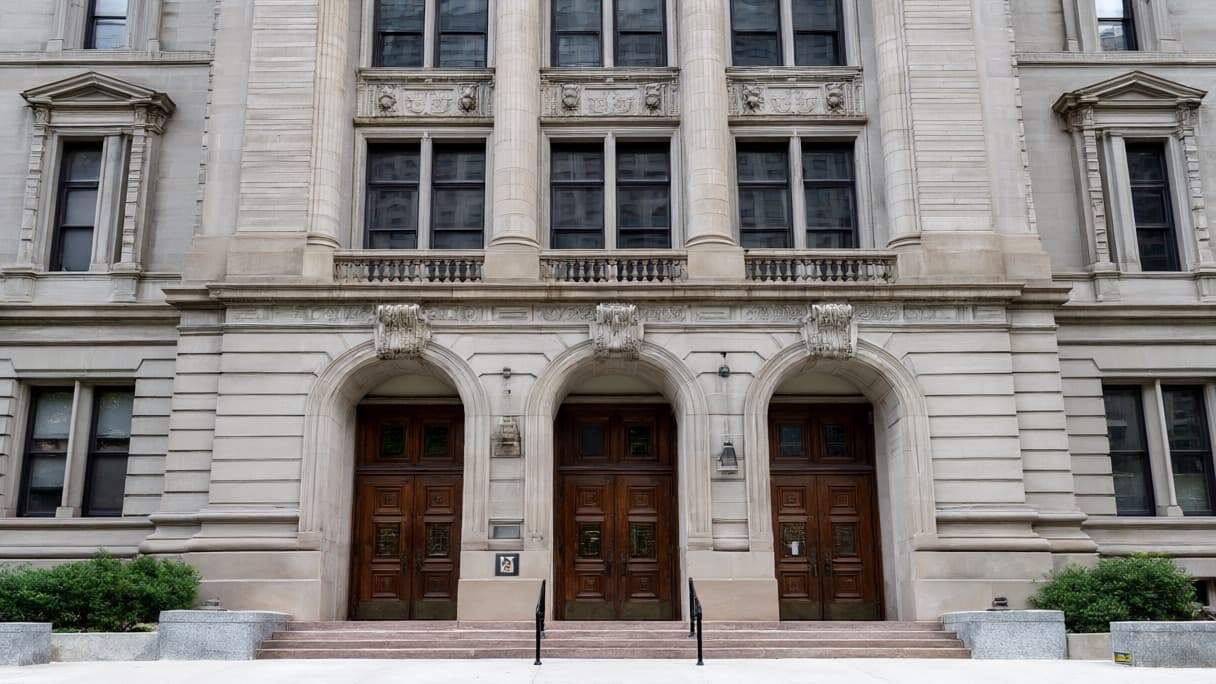
AI-generated image · Bay Street Wire
Opinion: As Congress scrambles to end forced arbitration and combat deepfakes, lawmakers must resist Big Tech's lobbying to ensure these protections aren't gutted before they can even be applied.
For years, the giants of Silicon Valley have operated under a convenient delusion: that they can self-regulate the safety of their users while simultaneously insulating themselves from the legal consequences of their failures. We have seen this play out in a cycle of public apologies followed by quiet, corporate-mandated settlements. But as first reported by The Verge, we are witnessing a pivotal moment where lawmakers are finally waking up to the systemic failure of platform moderation. The question now is whether they have the stomach to keep the courthouse doors open, or if they will allow Big Tech to lobby these protections into toothless compromises.
The current battleground is not just about what content is allowed on a platform, but who is allowed to seek justice. A Senate Judiciary subcommittee recently held a hearing specifically targeting the practice of forced arbitration—a corporate legal maneuver that strips users of their right to a jury trial. The primary target of this scrutiny is Roblox. As The Verge reports, Roblox has been accused of using forced arbitration clauses to evade legal complaints regarding the alleged grooming of children on its platform. Most disturbingly, these clauses were enforced against users who agreed to the terms as minors, some of whom were under the age of 10.
Roblox's response, delivered by global head of public policy Nicky Jackson Colaço, is a classic example of corporate deflection. Colaço claimed that safety is central to the company, citing age checks for chat and protective defaults for users under 16. More tellingly, Colaço argued that a legal position on arbitration is not a measure of a safety record. This is a dishonest framing. Arbitration is not a neutral legal preference; it is a shield designed to keep the dirty laundry of corporate negligence out of the public eye.
As Sen. Josh Hawley (R-MO), chair of the Judiciary subcommittee, rightly noted, the jury system is "corruption-proof" and serves as an "incredibly big hammer." When cases are forced into arbitration, the public is denied the transparency of legal discovery—the kind of evidence that has recently surfaced in cases against Meta. By forcing disputes into private rooms, companies like Roblox can maintain a curated public image while ignoring systemic harms. Indeed, Roblox is currently facing approximately 180 lawsuits in a consolidated case over its alleged failure to protect children.
Lawmakers are now attempting to break this cycle. Sen. Hawley and ranking member Dick Durbin (D-IL) have introduced a bill to make arbitration agreements unenforceable for disputes involving "child cyber injury" or alleged child sexual exploitation. The scope of "child cyber injury" is intentionally broad, covering death, mental suffering, and reputational harm. In a parallel effort, Sens. Richard Blumenthal (D-CT), Katie Britt (R-AL), and Cory Booker (D-NJ) have introduced a similar bill that explicitly extends these protections to cover data privacy violations.
Beyond the issue of arbitration, there is the escalating crisis of nonconsensual intimate deepfakes. To advocate for the Defiance Act, Reps. Alexandria Ocasio-Cortez (D-NY) and Laurel Lee (R-FL) recently brought Paris Hilton to Capitol Hill. This legislation would provide a critical path for victims of deepfake abuse to sue the creators of that content. While Congress has made some strides with the Take It Down Act, the Defiance Act represents a necessary shift toward individual accountability.
We must be clear: litigation is often the only language Big Tech understands. Despite the broad protections offered by Section 230, individual plaintiffs and attorneys general have managed to secure significant legal wins and settlements. As Northwestern University law professor Myriam Gilles testified during the Roblox hearing, the impact of public litigation is profound. Gilles, who expressed shock at the use of arbitration against nine-year-olds, noted that companies change their behavior with remarkable speed once they are sued in public court.
However, the window for action is perilously small. With only a few weeks remaining in the 2026 session, there is a high risk that these bills will be swallowed by the lame-duck session's priorities. As The Verge notes, Republicans are focused on President Donald Trump’s nominees for the executive branch and judge ships, as well as the National Defense Authorization Act. In the chaos of year-end legislative maneuvering, the rights of groomed children and deepfake victims are easily traded away for political expediency.
If these bills are passed, they will create a new wave of legal vulnerability for tech companies and perpetrators of online harm. This is exactly what is required. For too long, the cost of doing business for these platforms has included a manageable amount of user harm, shielded by fine-print contracts and legislative loopholes.
Lawmakers must resist the inevitable lobbying efforts that will follow. Big Tech will argue that arbitration is "efficient" or that the Defiance Act is "overbroad." They will offer watered-down versions of these bills that preserve their immunity while appearing to offer protection. We cannot accept these compromises. The only way to ensure that safety is truly "central" to these companies is to ensure that they cannot hide their failures from a jury. The courthouse doors must stay open, and they must stay open for everyone.