
The Collateral Damage of a Government Audit

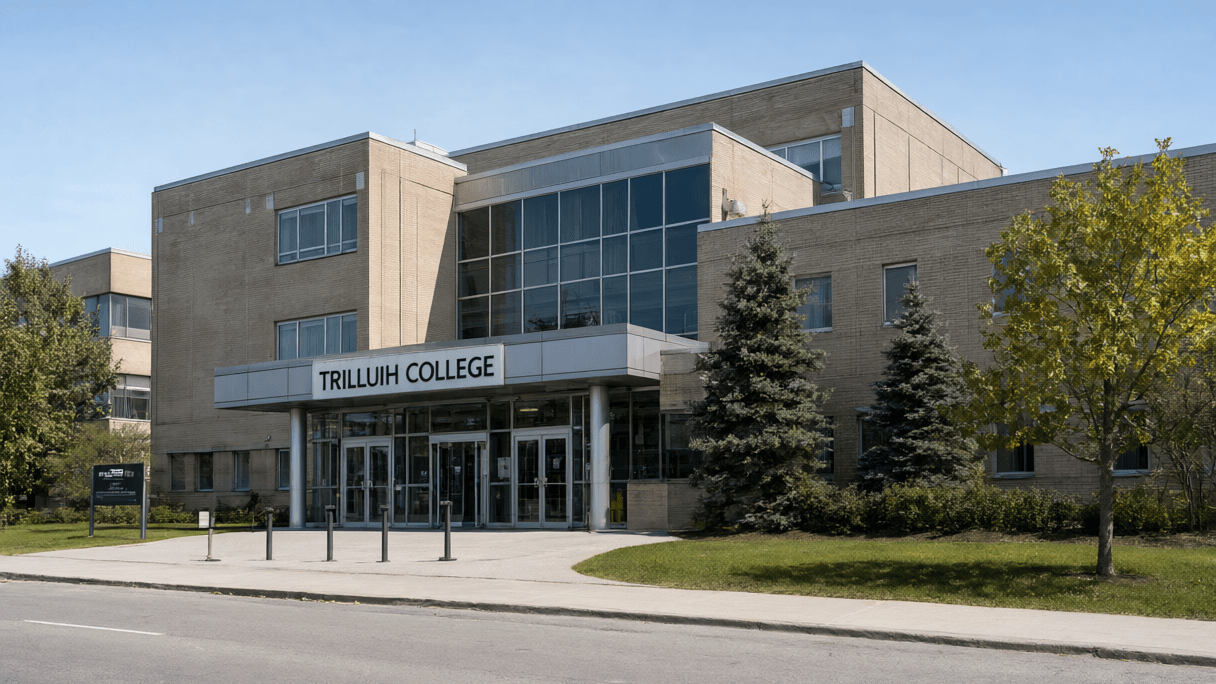
AI-generated image · Bay Street Wire
When the province pulls the plug on funding to hunt for 'bad actors,' it is the students—not the administrators—who are left paying the price for a broken private education gamble.
The machinery of government is often slow, but when it decides to move with sudden, sweeping force, the casualties are rarely the people who designed the system.
As reported by CBC Toronto and CityNews Toronto, Colleges and Universities Minister Nolan Quinn has implemented a province-wide pause on Ontario Student Assistance Program (OSAP) payments to all private post-secondary institutions. The justification, according to a statement from Bianca Giacoboni of Quinn's office, is the need to protect taxpayer dollars and hold "bad actors" accountable following evidence of systemic issues that compromised the OSAP system's integrity.
But while the government hunts for these ghosts in the machine, the real-world consequences are landing squarely on the shoulders of students.
Take the case of Trillium College. With campuses in Cobourg, Oshawa, Kingston, St. Catharines, and Sudbury, the institution has suspended both online and classroom instruction. In a notice to students confirmed by The Canadian Press, Trillium argued that continuing operations without a viable funding solution would put the "orderly completion of student programs at greater risk."
Trillium is attempting to soften the blow by offering interest-free payment arrangements, but the reality is stark: many students simply cannot afford to pay for their education out of pocket without OSAP. They are now left to "assess their financial circumstances" and wonder if they can realistically continue their studies.
What makes this particular gamble so cruel is the lack of precision. The pause isn't just hitting career colleges; it extends to private universities, naturopathic and chiropractic medicine colleges, and performing arts schools, including Canada's National Ballet School.
According to reporting from CBC Toronto, data obtained via freedom-of-information requests by The Canadian Press reveals that some schools saw OSAP usage spike by several hundred, or even over 1,000 per cent, over three years. Career Colleges Ontario had previously warned the government about this suspicious activity. Yet, Trillium College's usage grew by a comparatively low 64 per cent between 2021-22 and 2024-25—a figure that includes the addition of a new campus. Furthermore, Trillium was not among the six schools Minister Quinn denied OSAP eligibility for earlier this year.
Despite this, the government has opted for a scorched-earth policy. Minister Quinn has noted that many concerns stem from online-only programs—a category the government made OSAP-eligible during the pandemic—and plans to introduce legislation this fall to make those programs ineligible again.
In the interim, the government's solution for students in limbo is a vague promise. Bianca Giacoboni stated the government is exploring "low-interest, third-party loans facilitated by financial institutions." There is no clear timeline for when these options will materialize.
When the state decides to audit a sector, it should do so with a scalpel, not a sledgehammer. By freezing funding across the board, the Ford government has ensured that the students—the most vulnerable participants in this equation—are the ones bearing the cost of the province's failure to regulate its own eligibility rules.