
The Bug Trap That Watches Back: Mosqitter's AI Surveillance Pivot

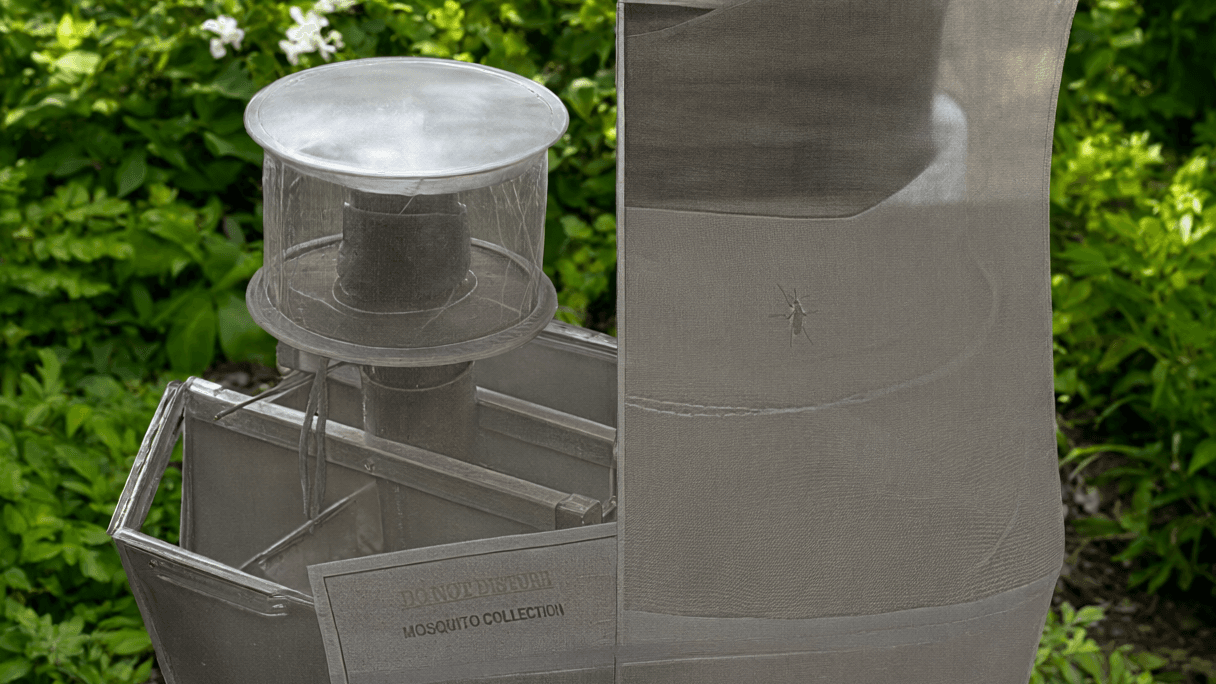
AI-generated image · Bay Street Wire
What started as a chemical-free pest solution is evolving into a global data grid for governments and institutions.
On the surface, it is a classic hardware play: a chemical-free trap that lures female mosquitoes by mimicking human heat, scent, and breathing. But as I dig into the roadmap for Mosqitter, the 30-person Pennsylvania-based startup, it becomes clear that the hardware is just the Trojan horse for something much more expansive.
As TechCrunch first reported, Mosqitter is pivoting its fleet of traps into an AI-powered monitoring network. While the company frames this as a public health necessity—citing World Health Organization data that shows dengue cases surged from 6.5 million in 2023 to 14.6 million in 2024—the mechanism is pure surveillance.
Here is how the 'grid' works: Mosqitter uses a computer-vision system to analyze the biological characteristics of caught insects. As CEO and co-founder Anastasiia Romanova explained to TechCrunch, the company runs images through a neural network, compares them against external datasets, and employs entomologists to validate the results. This 'three judges' approach assigns a confidence score to identify specific species.
But it doesn't stop at the bugs. Mosqitter is feeding environmental data—including wind, humidity, and weather—into the system to forecast population changes and health risks. This is the foundation of the Febris Monitoring System, a data layer launching next month. While Romanova told TechCrunch that Febris does not diagnose diseases, it identifies the presence of species that increase the potential risk of transmission.
From a business model perspective, this is a textbook shift from one-time hardware sales to recurring data revenue. The company sells the Mosqitter Mini for $199 and the professional Grand system for $1,999, but the real money is in the Febris dashboards and analytics. Romanova projects the data business could generate over $3.5 million next year, based on current contract bids.
Who is buying this data? According to COO and co-founder Olga Diachuk, the company is targeting institutional customers. This includes municipalities, universities, public-health agencies, and airports. The startup is currently coordinating with the U.K. Health Security Agency to implement Febris at the Gatwick and Heathrow airports.
With more than 5,000 devices already operating across five continents, Mosqitter is building a global biological sensor network. They are currently raising a $5 million funding round (split into $1 million and $4 million tranches) to scale this vision. It is a fascinating piece of engineering, but it transforms a simple backyard gadget into a tool for institutional surveillance. We wanted a way to stop the itching; instead, we're getting a global AI map of every buzzing insect on the planet.