
The Brampton Standoff: A Game of Political Chicken Over the EV Transition

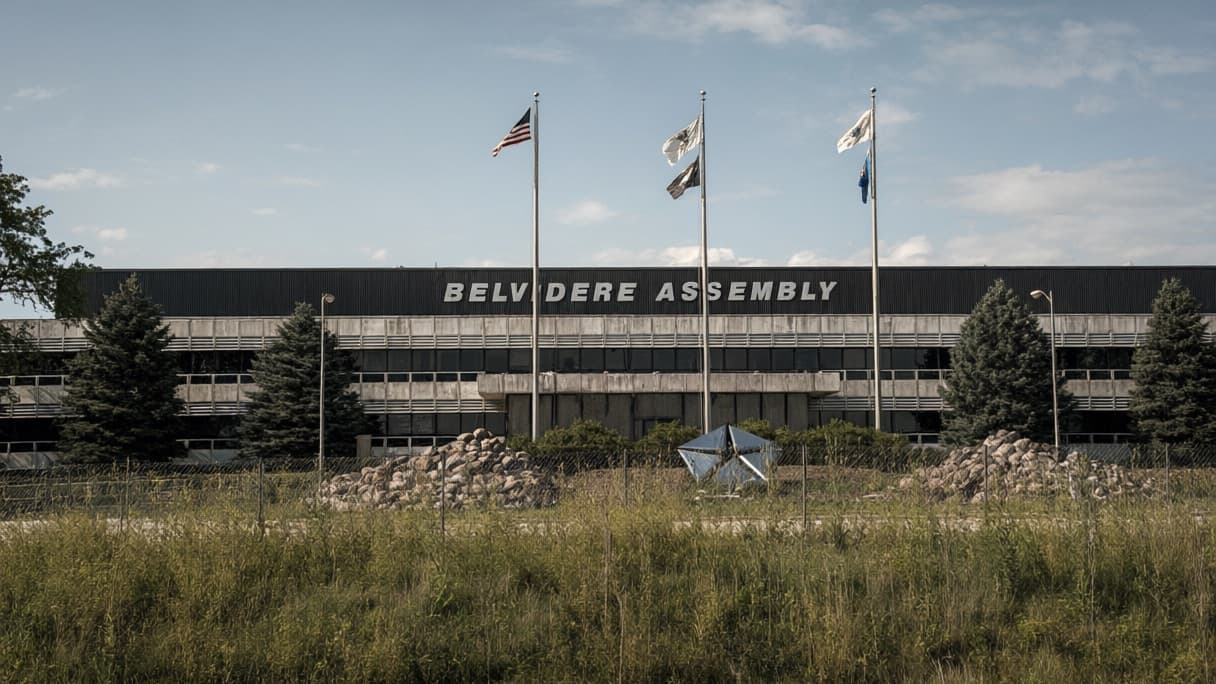
AI-generated image · Bay Street Wire
As Premier Doug Ford and Prime Minister Mark Carney clash over the Stellantis plant sale to Roshel, the dispute reveals a deeper struggle over who pays the price for industrial failure.
Opinion: The battle over the future of the Stellantis assembly plant in Brampton has devolved into a high-stakes game of political chicken. As Global News Toronto first reported, while the surface-level conflict concerns the survival of 2,000 jobs, the underlying friction between Premier Doug Ford and Prime Minister Mark Carney is a struggle to determine which level of government will hold the bill for the electric vehicle (EV) transition.
According to reporting from Global News Toronto, the tension reached a boiling point ahead of a meeting with the global CEO of Stellantis. Premier Ford has explicitly placed the onus on Ottawa to handle the fallout of Stellantis selling the idled Brampton plant to Roshel, a Canadian defence manufacturer. Ford's logic is rooted in the ledger: he told reporters that the federal government provided the funds, whereas his provincial government did not, concluding that any decision to step in or cancel the sale is "up to the federal government."
However, the financial history of the plant suggests a more shared burden. Global News Toronto reports that in 2022, the federal government committed up to $529 million and the Ontario government committed $513 million to help Stellantis retool its Windsor and Brampton facilities for EV production. Despite this near-equal split in initial support, the two governments are now locked in a dispute over who is responsible for the current crisis.
Ottawa is currently attempting to claw back its investment. Federal Industry Minister Melanie Joly sent a letter dated Nov. 12 claiming that Stellantis had breached a federal funding agreement signed in 2022. Joly argues that the automaker failed to restore jobs, halted Jeep Compass production, and failed to identify a replacement vehicle, meaning Stellantis must now repay "hundreds of millions of dollars" to the federal government.
While Prime Minister Mark Carney initially described the sale to Roshel as a "betrayal" before later calling it a "partial solution," the Ford government is using the crisis to push for broader regulatory relief. Ford is calling on Ottawa to reduce emissions regulations that he claims burden companies like Stellantis, noting the automaker spends approximately $340 million in emissions taxes.
The political risk is high for both sides. Premier Ford faces mounting pressure to protect Ontario workers, while Federal Industry Minister Melanie Joly has urged the Ford government and Unifor to "play their part" and work as one to save the 2,000 jobs at stake. The union, representing over 9,000 workers, has condemned the Roshel sale, fearing that the 2,000 employees laid off in 2023 will never be recalled.
As Interim Liberal Leader John Fraser suggests, the Ford government has the tools to act, yet the province continues to point toward Ottawa. With both governments having invested over half a billion dollars each into the EV transition, neither side is willing to blink first in a dispute that is as much about political optics as it is about industrial strategy.