
The Bloor Street Standoff: Desperation and Duty in Etobicoke

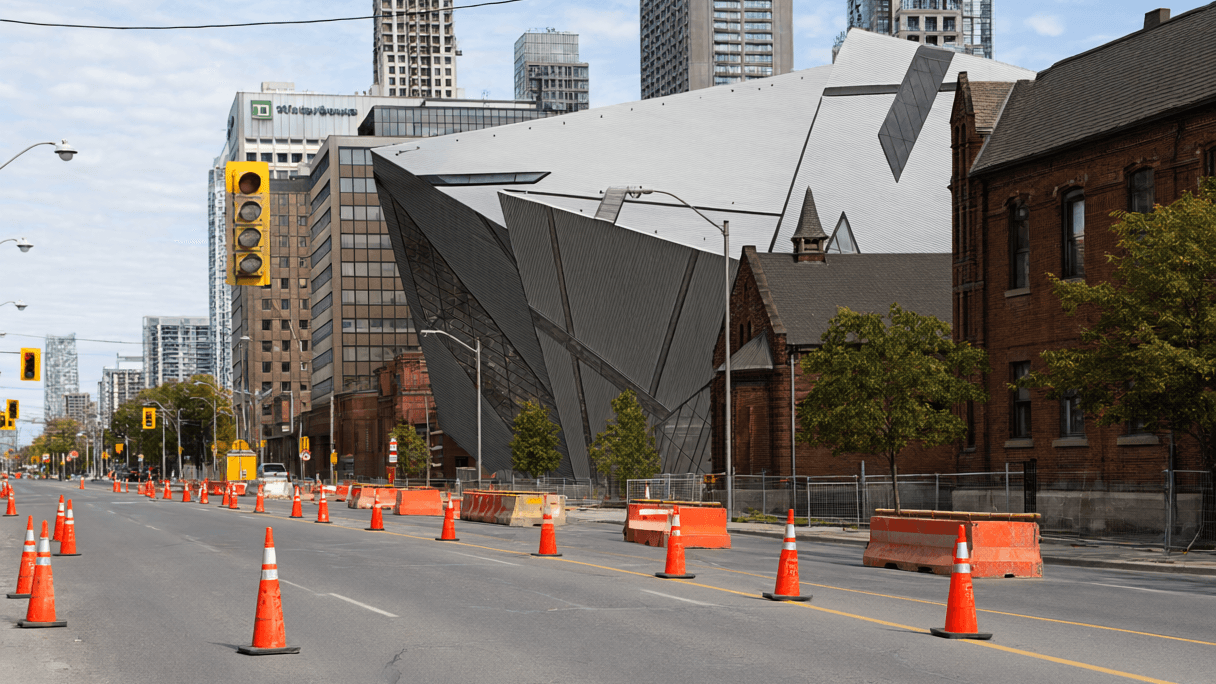
AI-generated image · Bay Street Wire
As crews dismantle bike lane infrastructure under a provincial mandate, a community is split between those fighting for cyclist safety and those prioritizing motor-vehicle flow.
For the advocates gathered along Bloor Street West in Etobicoke, the removal of bike lanes is not merely a matter of urban planning, but a fight for survival. As first reported by CityNews Toronto, protesters have spent more than a week attempting to obstruct work crews tasked with dismantling infrastructure as part of a mandate from the Ford government.
The visceral nature of the conflict became evident starting Oct. 13, 2026. In an effort to signal their opposition to the removal of what they describe as life-saving safety infrastructure, advocates have admitted to trying to make the process as inconvenient as possible. CityNews Toronto reports that these efforts have already seen success; work trucks were forced to turn around or leave the site on two separate occasions—once on the night of Oct. 13 before work commenced, and again during a rally on Oct. 20.
However, this desperation has met a hard line from law enforcement. On Wednesday, Oct. 21, Toronto Police released a statement warning that the right to protest does not cover the damage of property, the interference with officers, or the unlawful obstruction of work. The police confirmed that four individuals have already been arrested over the past week, facing charges of mischief and obstructing police after refusing orders to move for the crews. The department stated it will not hesitate to arrest others who engage in criminal activity to ensure the work proceeds safely.
The tension is not only between citizens and police, but among neighbors. CityNews Toronto notes that the issue has deeply divided the community. While advocates fight to keep the lanes, other area residents and community groups argue that the bike lanes were poorly executed from the start and that the volume of bicycle traffic does not justify the loss of road space required by motor-vehicle traffic.
As the conflict persists, the stakes are shifting from the pavement to the health of the protesters. The advocacy group Cycle Toronto warned participants on Instagram to exercise extreme caution, noting that police have escalated their tactics and numbers. Furthermore, the group highlighted a hidden danger: the airborne dust created by the milling process, which they described as extremely toxic.
Despite the arrests and the police warnings, the resistance shows no sign of waning. Cycle Toronto characterized the struggle as a "marathon, not a sprint," pledging to continue defending the remaining 18 kilometres of bike lanes scheduled for removal in the coming months.