
The Attrition Game: Manfred’s Hardline Cap Stance is a War on Player Leverage

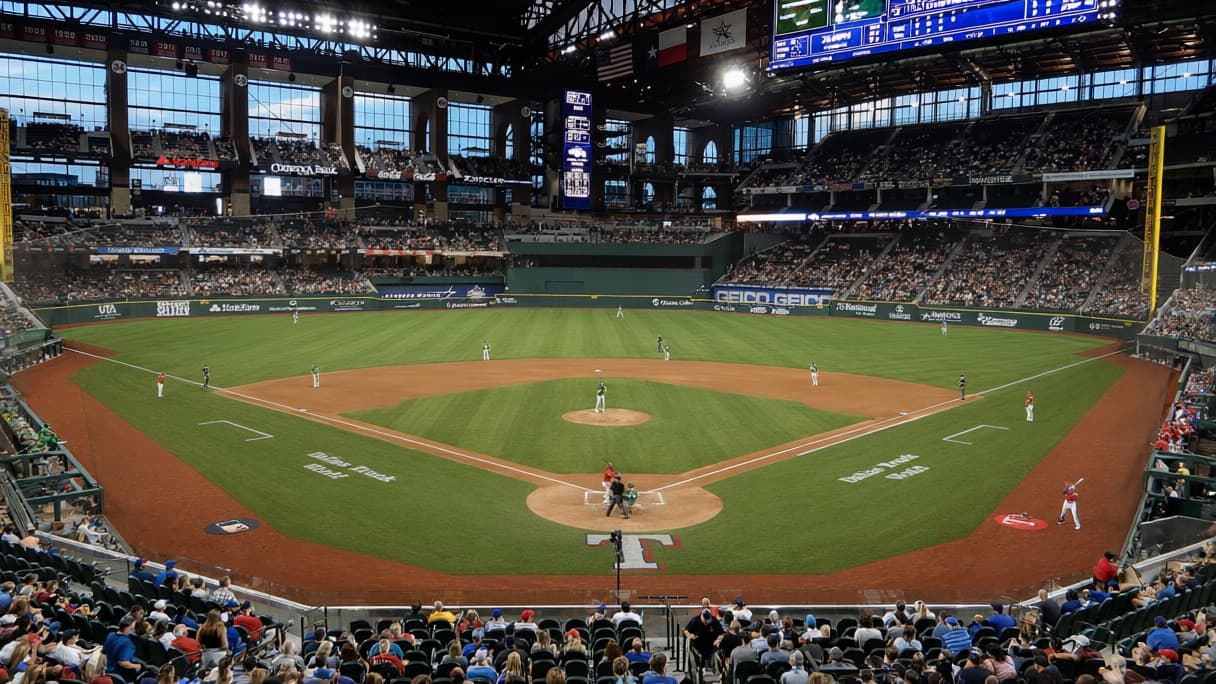
AI-generated image · Bay Street Wire
By framing a salary cap as a non-negotiable demand for 'competitive balance,' MLB ownership is attempting to fundamentally rewrite the economics of the game.
Major League Baseball Commissioner Rob Manfred has drawn a line in the sand, and it is one that threatens to dismantle the financial foundations of the player association. In a recent news conference, Manfred stated that owners will not compromise on the demand for a salary cap and floor, effectively turning the current labor negotiations into a war of attrition.
**Opinion: This is not about 'competitive balance.' This is a calculated strike at the long-term leverage of the players. By insisting on a hard cap, ownership is attempting to shift the sport from a system of shared growth to one of artificial suppression.**
According to reporting from Sportsnet, MLB has proposed a hard cap of $258.2 million for 2028, paired with a floor of $180.2 million. The plan includes a provision where teams can spend as low as 90 percent of that floor in 2028—roughly $162.18 million—provided they spend the full floor amount over a three-year window. Further tightening the screws, individual contracts would be capped at 15 percent of payroll, rising to 16 percent for players re-signing with their own teams.
Manfred has attempted to shield this hardline stance behind the facade of the fans, claiming that 70 percent of supporters want a cap and floor to address competitive balance. He argued that the recent World Series victory by the Milwaukee Brewers—the first small-market champion since 2015—is an outlier. This sentiment was echoed by MLB Executive Vice President Morgan Sword, who described the Brewers' success as "truly aberrational" during a presentation reported by Sportsnet. Sword cited data suggesting that since 1998, only one team without a top-20 payroll has won the title, and that eight of the top-10 payroll teams reached this year's playoffs.
However, the MLBPA sees this for exactly what it is: a power grab. Interim Executive Director Bruce Meyer stated that the league's insistence on a cap is a "radical change to the system" designed to strip players of fundamental rights, including the ability to secure truly guaranteed contracts. Meyer explicitly accused owners of seeking to increase profits and franchise values by "artificially suppressing player salaries."
The economic divide is stark. While MLB claims to have proposed a 50-50 revenue split, the union argues that players currently hold a share of over 55 percent. To counter the cap, the MLBPA has proposed a "competitive integrity tax" to penalize teams that fall below a payroll floor, alongside requests for increased salary arbitration rights and a nearly doubled minimum salary.
Manfred continues to frame the union as the obstacle, claiming the MLBPA has offered no significant economic proposals since their opening bid. Yet, the stakes are historic. The last time management pushed for a cap in 1994, it resulted in a 7 1/2-month strike and the first canceled World Series in 90 years. With the current collective bargaining agreement expiring at 11:59 p.m. EST on Dec. 1, the sport is staring down a potential lockout on Dec. 2 that could jeopardize the 2027 season.
Manfred insists he is devoted to the bargaining process, but his refusal to move on the cap suggests that the league is comfortable with the prospect of a work stoppage to achieve its goal. This isn't a negotiation; it's an ultimatum.