
The Accessibility Gap: Why Toronto's 'World-Class' Image Fails the Disability Community

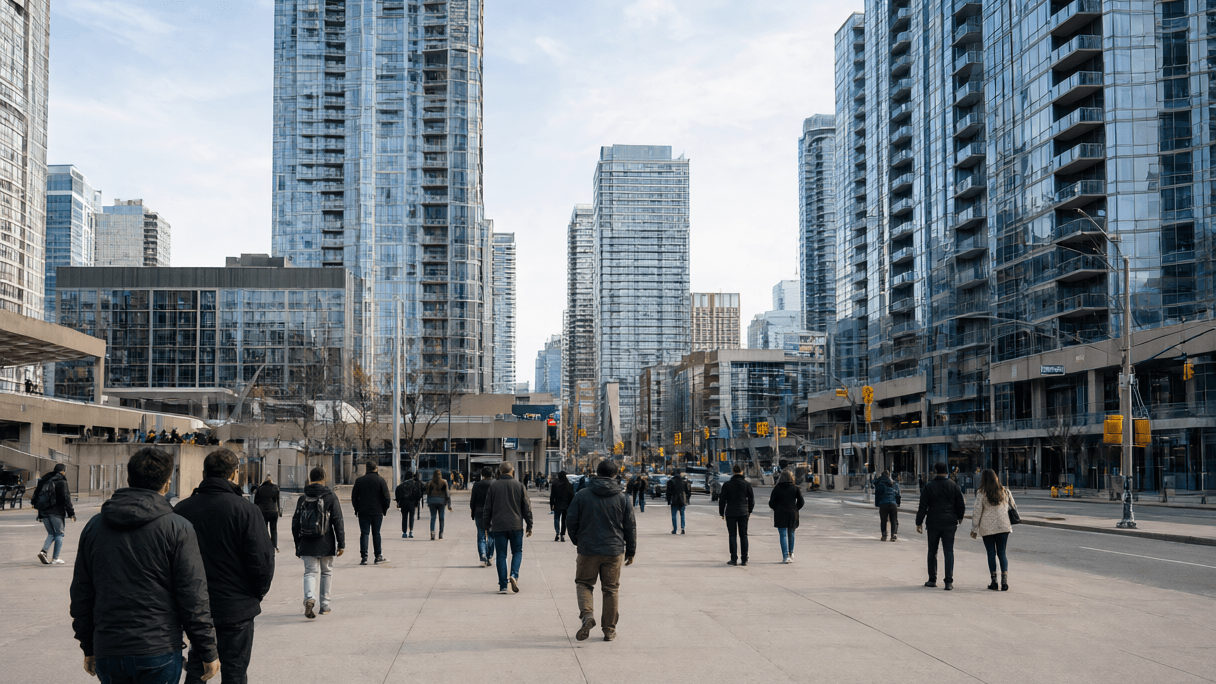
AI-generated image · Bay Street Wire
As activists use 'scavenger hunts' to map the city's barriers via the AccessNow app, the push for inclusion reveals a systemic failure in urban planning.
Opinion: Toronto often markets itself as a global hub of culture and commerce, but for many residents, the city's physical layout remains a series of obstacles. When the basic ability to enter a building or use a washroom is a gamble, the city's 'world-class' ambitions ring hollow.
This disconnect is the driving force behind MapMission Day, an annual event where residents and advocates gather to audit the accessibility of public spaces. As first reported by CBC Toronto, these events function as accessibility 'scavenger hunts' designed to populate the AccessNow app. The goal is to provide real-time data that allows people with disabilities to make informed decisions about where they can safely go.
Maayan Ziv, a disability activist and the founder and CEO of the AccessNow app, created the platform out of her own frustrations as a wheelchair user navigating Toronto and traveling. Ziv told CBC Toronto that she often found herself coming up short when searching for accessibility information, leading her to develop a tool that provides definitive answers before a person ever leaves their home.
The mechanism of the app is straightforward but revealing. Participants explore their neighborhoods and rate local spots based on specific criteria, including elevators, lighting, entryways, doors, accessible ramps, and washrooms. These ratings are then displayed as color-coded pins: green for accessible, yellow for partially accessible, and red for not accessible.
While the app provides a necessary workaround, advocates argue that the burden of mapping accessibility should not fall on the community. Anthony Frisina, founder of the disability advocacy group Above and Beyond, told CBC Toronto that while the AccessNow app has 'changed the game' for inclusion, systemic change is still required at the local, provincial, and federal levels.
Ziv emphasizes that accessibility cannot be treated as an afterthought. She notes that over 27 per cent of Canadians experience a disability, and stresses that any person can enter this community at any time. For Ziv, the solution involves a shift in mindset for business owners, who she encourages to clear clutter from pathways, add accessibility details to their websites, or create entries on the app.
Ultimately, the existence of MapMission Day highlights a critical failure in the city's infrastructure. Until accessibility is a primary consideration in urban design—rather than a data point collected by volunteers in a park—Toronto's claim to be a leading global city will remain incomplete.