
The 500-MW Mirage: Why Canada's Compute Pledge Lacks Hardware Teeth

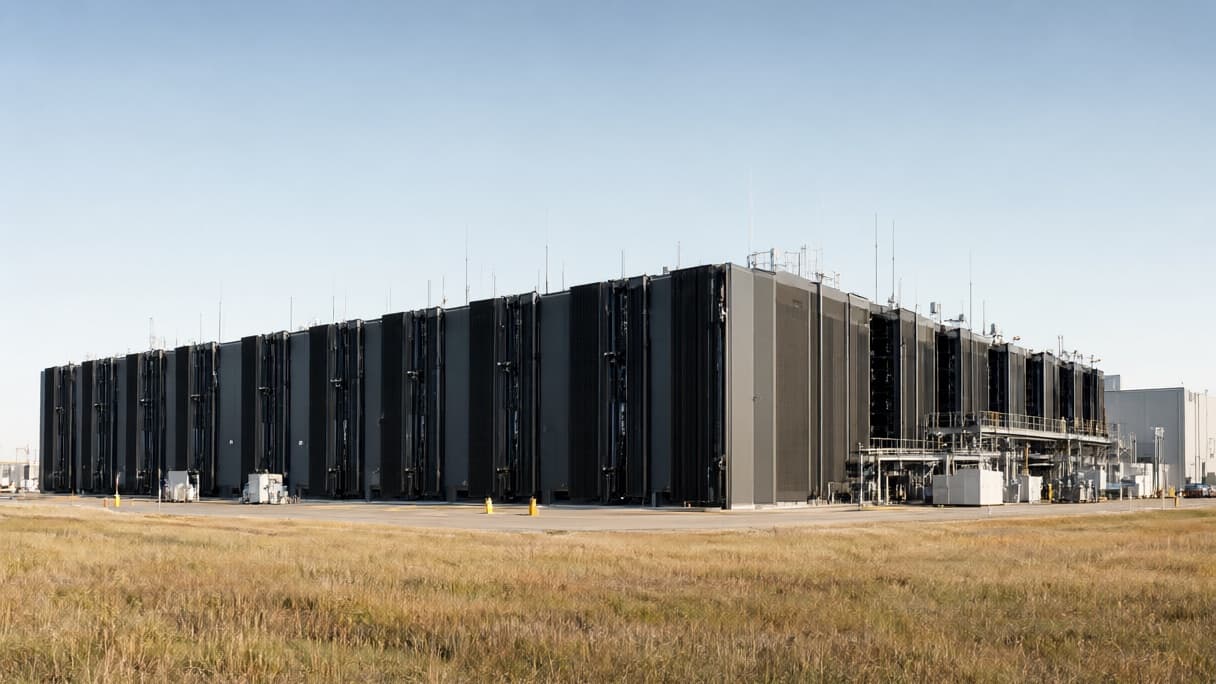
AI-generated image · Bay Street Wire
The federal government's plan to mobilize private capital for AI capacity addresses financing, but ignores the brutal reality of GPU scarcity and the 'non-starter' terms of current hardware vendors.
On paper, the Canadian government's latest commitment to enable 500 megawatts (MW) of sovereign AI compute looks like a strategic pivot. As first reported by BetaKit, the feds aim to utilize financial tools such as offtake agreements and backstops to mobilize private capital and solve what Sean Mullin—former lead economic advisor to the Prime Minister and current senior fellow at the University of Toronto’s Munk School of Global Affairs & Public Policy—describes as a "chicken-and-egg, Catch-22 problem" for domestic startups.
The goal is to de-risk data center projects by providing guarantees that compute will be purchased, preventing smaller Canadian firms from being crowded out by foreign giants with deeper balance sheets. With a Boston Consulting Group report placing Canada’s current AI data center capacity at 300 MW, adding 500 MW would be a significant leap. We are already seeing massive scale-up efforts, such as Bell’s plan to build a 1.2-gigawatt (GW) facility in Saskatchewan.
**Opinion:** Here is where the hardware nerd in me bristles. A power pledge is a vanity metric if it isn't coupled with a concrete strategy for High Bandwidth Memory (HBM) and GPU supply. Power density is only half the battle; the other half is the silicon.
Ali Asaria, co-founder and CEO of Transformer Lab, told BetaKit that securing the graphics processing units (GPUs) necessary for AI is currently "close to impossible." According to Asaria, the current market is predatory: vendors often demand three-year commitments with upfront payments of 25 to 50 percent. Even after multimillion-dollar deposits, hardware may not be online for six months. For cash-strapped startups, these terms are a "non-starter."
While Finance Minister François-Philippe Champagne views this infrastructure as a pillar of the future, the reality is that data center builders have "their pick of the litter" when it comes to buyers. If the federal government merely provides the financial scaffolding for buildings without securing the actual chips, the "compute brain drain" will continue. As Jaxson Khan, CEO of Aperture AI and senior fellow at the Munk School, notes, countries are scrambling for compute; if Canada doesn't set the terms appropriately, the capacity will simply be absorbed by the highest bidder.
There is an opening here. BetaKit reports that shifts in U.S. politics—including the Democrats seizing control of the House and Senate and the approval of data center moratoriums—could drive firms like Microsoft, Meta, and Anthropic to look north. Ideogram CEO and co-founder Mohammad Norouzi has expressed a desire to bring a meaningful portion of his company’s compute spending to Canada, provided the capacity exists.
But let's be clear: 500 MW of power is not 500 MW of intelligence. Until the feds address the supply-chain bottleneck described by Asaria, they are funding the shell of a building and hoping the hardware arrives.