
The $433 Billion Mirage: Record Spending Fails to Solve the Patient Crisis

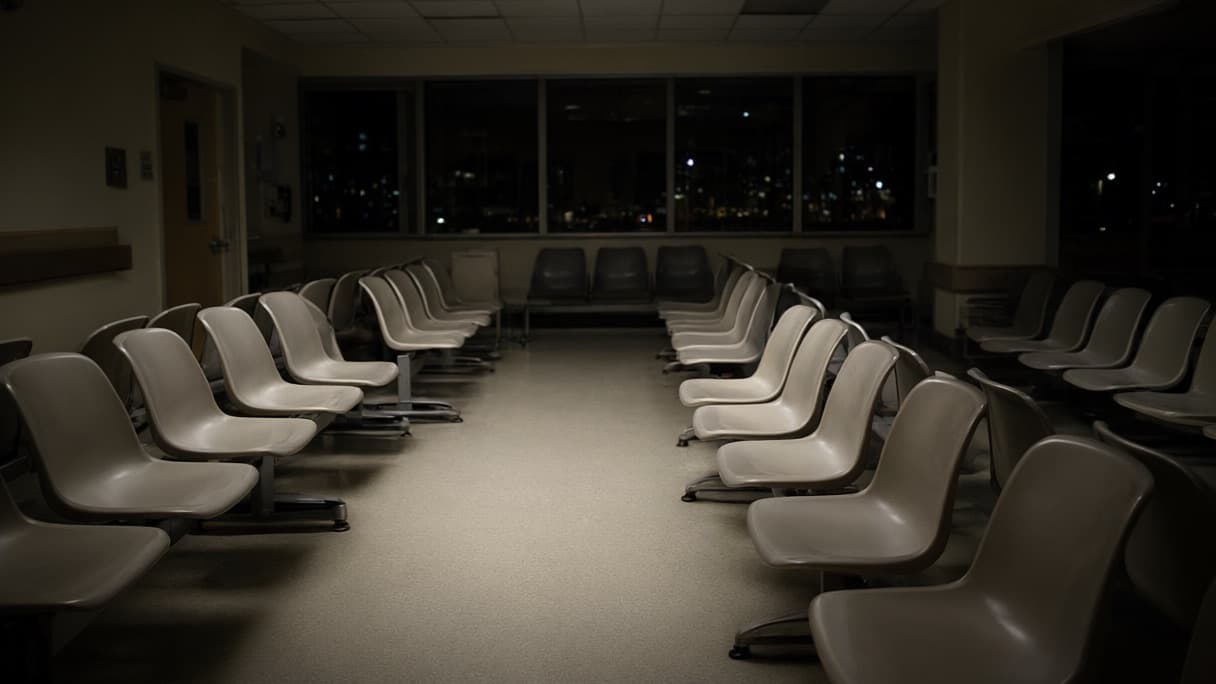
AI-generated image · Bay Street Wire
As health-care spending is projected to hit record highs, patients remain trapped in overcrowded ERs and a system plagued by delivery failures.
### Opinion: The Cruel Joke of Record Spending
For the patient shivering in a plastic chair during a twelve-hour emergency room wait, the latest macroeconomic projections are more than just irrelevant—they are a cruel joke. As CBC News first reported, when policymakers tout record-breaking budgets, they are describing a financial abstraction that masks a systemic collapse of basic care.
Adding billions to a broken machine does not fix the machine; it simply funds the inefficiency. To the person who cannot find a family doctor or the patient whose care is delayed by administrative directives, these numbers are a facade. We are spending more to get less, and until the focus shifts from the amount of money spent to the actual delivery of care at the bedside, the patient's experience will remain one of abandonment despite the record-breaking price tag.
***
### The Spending Surge
According to reporting from CBC News, a new report from the Canadian Institute for Health Information (CIHI) projects that health-care spending in Canada will reach a record $433 billion in 2026. This equates to $10,398 per person, representing a 4.8 per cent increase over the previous year.
CIHI, an independent, non-profit organization, reports that for the first time since the pandemic, inflation-adjusted spending per capita is projected to exceed the 2021 peak. This total figure encompasses both publicly and privately funded care, including doctors, hospitals, prescription drugs, and services paid for by patients or private insurance.
### Global Context and Systemic Performance
Despite the rising costs, experts cited by CBC News question if the investment is yielding results. Jason Sutherland, a professor at the University of British Columbia and director of the Centre for Health Services and Policy Research, stated that current record spending is merely "buying us more of the same." Sutherland argues that without fundamental changes to the organization and delivery of health care, additional funding is unlikely to create meaningful improvements for patients.
Data from the CIHI report highlights Canada's position as a high-spending nation. In 2024, Canada allocated 11.5 per cent of its gross domestic product (GDP) toward health care. This exceeds the OECD average of 9.3 per cent and puts Canada ahead of Sweden (11.2 per cent) and France (11.3 per cent), though it remains below Germany (12.2 per cent) and the United States (17.2 per cent).
Sara Allin, an associate professor at the University of Toronto's Institute of Health Policy, Management and Evaluation, told CBC News that while Canada performs well in vaccination rates and life expectancy, it lags in service delivery and access. Allin characterized Canada as a "middle performer" among high-spending nations, citing persistent challenges with care coordination and long wait times.
### The Patient Reality: ERs and Access
The disconnect between spending and experience is most evident in emergency departments. A CIHI report indicates that in 2024-2025, one in 10 patients in emergency departments spent more than 14 hours waiting for care. Dr. Michael Herman, representing the Canadian Association of Emergency Physicians, told CBC News that these results were expected.
Beyond the ER, the system is facing pressure from both the administrative and pharmaceutical sides:
* **Provincial Directives:** In Ontario, the Ontario Medical Association (OMA) has expressed concern over letters from the provincial Ministry of Health urging doctors to delay patient care and reduce their hours. Dr. Rebbeca Hicks, President of the OMA, has called for an apology from the province, fearing these letters could intimidate doctors into scaling back services. * **Pharmaceutical Costs:** Frontline oncologists have warned CBC News that surging cancer drug prices are pushing the public health system toward a breaking point, with some drugs costing as much as $90,000 per month.
### Where the Money Goes
CIHI's analysis suggests a shift in spending patterns. Adam Rondeau, CIHI's manager of health spending and operations analytics, notes that public-sector spending is estimated to increase by more than $5 billion beyond what is required to account for demographic changes and inflation.
Inflation-adjusted spending per person is projected to grow by 2.3 per cent this year, a significant jump from the 0.4 per cent growth projected for 2025. While the capital is flowing, the central question remains whether the problem is a lack of funding or a failure in how that money is utilized to provide basic care.